




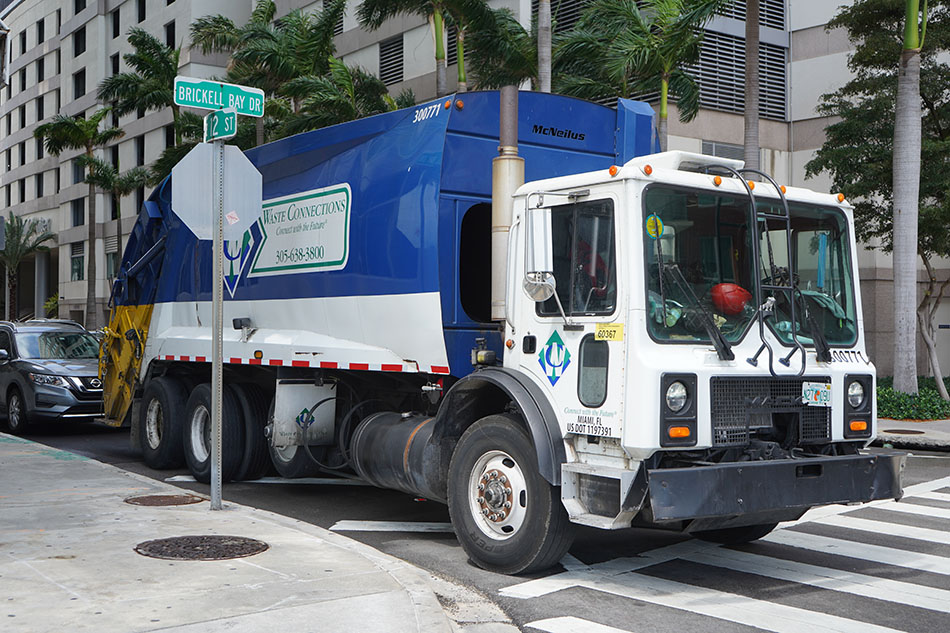
Strong pricing and a rebound in recycled commodity values boosted Waste Connections (TSX/NYSE: WCN) second-quarter 2026 expectations, prompting the company to raise its full-year outlook for revenue and adjusted EBITDA.
The company reported Q2 revenue of $2.562 billion, up 6.4% year over year from $2.407 billion, and adjusted EBITDA of $840.1 million, up 6.8% from $786.4 million, with margin expanding to 32.8% of revenue from 32.7% a year earlier.
President and CEO Ron Mittelstaedt said the company was “extremely pleased by the strength” of its first-half performance, which drove growth of over 6% in both revenue and EBITDA. The outperforming expectations are amid what he called “ongoing uncertainty in the geopolitical environment.”
He pointed to multi-year gains in employee retention and safety, along with early returns from the company’s AI investments, describing the quarter as reflecting “disciplined operational execution.”
Recycled commodities, landfill gas climb
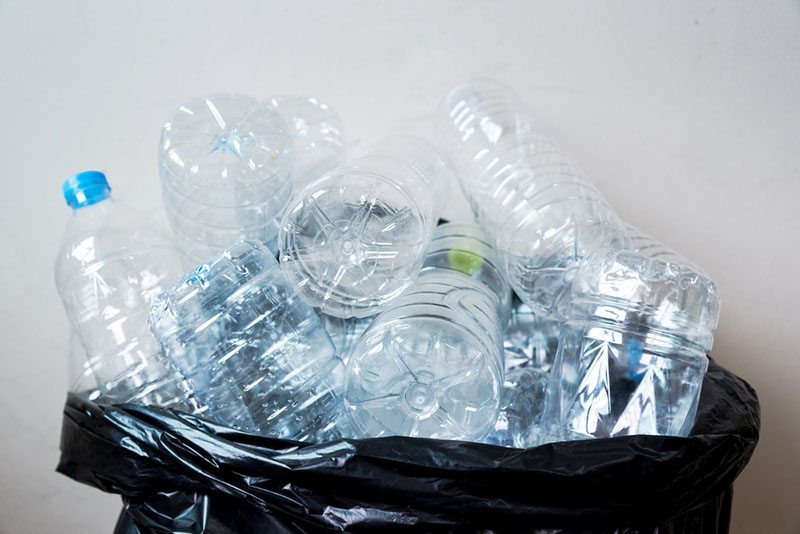
Mittelstaedt noted recycling as a bright spot after several quarters of drag, telling analysts the recycled commodity basket was up 10% to 15% from end of 2025, making it the second straight quarter of sequential improvement.
Landfill gas sales also climbed, up 15% sequentially from Q1 on higher gas generation and stronger renewable energy credit values.
WC’s earnings release cited “ongoing drags” from comparatively lower commodity values weighing on underlying margin. In other words, commodities are improving quarter to quarter, but haven’t yet caught up to where they were a year ago.
Solid waste recycling revenue for the quarter was $61.4 million, net of intercompany eliminations, down 8.1% from $66.8 million a year earlier, and recycling continued to subtract slightly from organic growth: a 0.2 percentage point drag in the quarter and 0.3 points year-to-date, the company reported.
WC experienced total solid waste price growth of 6.7% with core pricing of 5.6% plus 1.1% in fuel and material surcharges, which helped offset a 1.9% decline in volume.
CFO Mary Anne Whitney told investors the company is “actually outperforming” its original 2026 expectations, even with what she called cost “creep” tied indirectly to the spring spike in fuel prices.
M&A pace steady
Waste Connections has closed acquisitions totaling roughly $100 million in annualized revenue so far in 2026, with another $30 million in exclusive franchise deals expected to close “very soon” in the third quarter, Mittelstaedt said.
He described the pipeline as “down the middle of the fairway” deals, with traditional solid waste collection, transfer and disposal assets rather than larger or unusual transactions.
The company also noted record year-to-date share repurchases of $614.5 million, up sharply from just $389,000 in the same period last year. Leverage held roughly flat at 2.76 times debt to EBITDA.
Facility expansions and waste-to-rail
Waste Connections said it has cleared most of the legal and political hurdles tied to its long-pending expansion of the Seneca Meadows Landfill in New York.
Mittelstaedt told analysts the company has had “very important recent legal victories,” adding: “in fact, all of them at this point in time.”
A state technical permitting process is still underway, with final approval expected “closer to the end of this year,” though he cautioned there are “no guarantees” given the process’s remaining technical and political steps.
In the meantime, the company is managing limited airspace at the site by shifting some volume by rail to its Arrowhead Landfill network, alongside continued truck deliveries.
The company also confirmed a new PFAS treatment facility at a landfill in North Carolina, using mobile foam-fractionation technology to separate and solidify PFAS from leachate on-site before discharge, with the residue buried in the landfill.
Mittelstaedt called the approach, which has been deployed at multiple sites over the past four to five years, a “hedge against” rapidly rising leachate treatment costs at publicly owned treatment works amid tightening state and federal PFAS rules.
He said the North Carolina site will also serve as a regional hub, treating leachate trucked in from nearby company-owned landfills, with similar installations planned at additional sites.
Waste Connections began a new rail operation Q2 sending waste out of Miami-Dade County to landfills in north-central Florida, which Mittelstaedt linked to “disposal incineration issues” in the Miami area.
He said Waste Connections and a public-company peer were awarded long-term agreements to handle the volumes, with the operation ramping through the third quarter.
This is a departure from the company’s more established rail corridors in the upper Northeast, where landfill capacity constraints and higher regional tip fees have driven rail growth for years, and the Pacific Northwest, where about a third of waste moves by rail, according to the company.
WC spent $51 million on undeveloped land in the second quarter, signaling its first such purchase in six years. CFO Mary Anne Whitney called it “strategic and opportunistic,” tied to future facility development, not landfill expansion, in a growing Florida market with limited available real estate.
A new outlook
Waste Connections raised its full-year 2026 revenue guidance to a range of $10.02 billion to $10.05 billion, up from a prior range of $10.00 billion to $10.03 billion issued in February 2026, and lifted its adjusted EBITDA outlook to $3.33 billion to $3.34 billion, from $3.30 billion to $3.325 billion.
Adjusted free cash flow guidance was unchanged at $1.4 billion to $1.45 billion, including $100 million to $150 million in cash outflows tied to closure activity at the Chiquita Canyon Landfill. Mittelstaedt said the figure is unaffected by the quarter’s $58.5 million impairment charge, which he described as “purely” an accounting true-up of closure liabilities, not higher spending.
Whitney said second-half adjusted EBITDA margin is expected to average about 33.7%, with the potential to exceed 34% in the third quarter depending on fuel and commodity trends.
Mittelstaedt said the company has not built a broader economic recovery into its second-half guidance, even after what he called encouraging construction and demolition activity in July.
Q2 2026 Highlights
- Revenue: $2.562 billion, up 6.4% from $2.407 billion
- Adjusted EBITDA: $840.1 million, up 6.8% from $786.4 million
- Adjusted EBITDA margin: 32.8%, up from 32.7%
- Adjusted net income: $381.7 million, or $1.50 per diluted share, up from $333.1 million, or $1.29 per share
- Net income: $296.4 million, or $1.17 per diluted share, up from $290.3 million, or $1.12 per share
- Updated FY2026 revenue outlook: $10.02 billion–$10.05 billion, up from $10.00 billion–$10.03 billion
- Updated FY2026 adjusted EBITDA outlook: $3.33 billion–$3.34 billion, up from $3.30 billion–$3.325 billion