
Editor’s note: This story has been updated to include an interview from PureCycle CEO Dustin Olson.
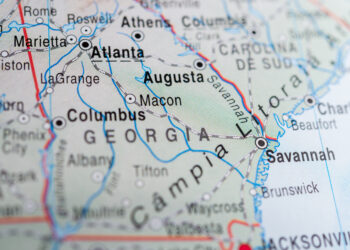
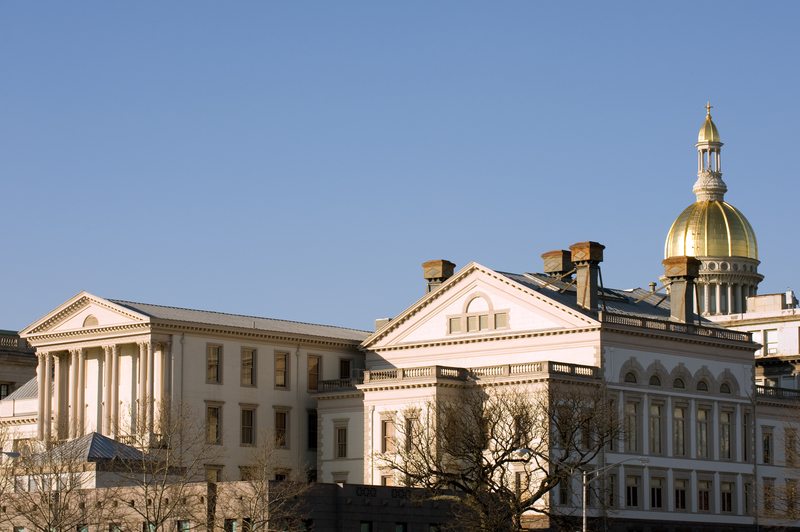
New Jersey has issued a one-year conditional approval for PP resin produced via PureCycle’s dissolution recycling process, to count toward the state’s minimum recycled content law for packaging.
In a quarterly earnings call this month, CEO Dustin Olson said the state represented the potential for 25 million to 50 million pounds per year in demand, comprising up to about half of the full 100 million pound capacity of the flagship Ironton plant in Ohio.
Over the next 12 months, PureCycle will work toward permanent approval by providing documentation of feedstock sources, the type of feedstock processed, end-use applications for PureFive resin, and compliance information.
“What that conditional approval basically says is that we need to prove to them that we use post-consumer recycled material, and we also make products that can go back into goods, and that our plant is in good standing from an operating permit perspective, which is all pretty much softballs for us,” Olson said in an interview with Plastics Recycling Update.
“This is a landmark moment for PureCycle and for every brand owner working to meet the mandates set by this law,” Olson said in a statement, adding that “significant” customer interest was waiting on regulatory clarity before moving forward. “Generating demand for recycled content is exactly the kind of policy action the world needs if we’re serious about creating circular economies.”
He told Plastics Recycling Update that some customers are already converting to PureFive resin, independent of the New Jersey outcome. “It takes the risk off the table for the customer to spend the time and get zero value out of it, and they’re going to start pushing it through their process now,” he said, adding that the company expects volumes to ramp up in the third and fourth quarters this year.
On its site, the state Department of Environmental Protection acknowledged the impact of supply and demand fundamentals including cheap virgin resin on the viability of recycling markets, adding, “Requiring manufacturers to meet minimum recycled content requirements helps to stabilize markets, increase the resiliency of the recycling industry when oil prices fluctuate, and shield municipal recycling programs from the volatility of the cost to recycle.”
PureCycle sourced more than 10.5 million pounds of post-consumer recycled plastic from New Jersey in 2025, more than any other state, the company said. As the Ironton facility continues to ramp up production, the company expects to increase these feedstock volumes.
PureCycle has a secondary sorting facility in Denver, Pennsylvania, roughly 70 miles from the New Jersey border. New Jersey is the 11th most populous state, with nearly 10 million residents, and numerous global brands with significant presence, including pharmaceutical and consumer brands Johnson & Johnson and Merck, as well as foods such as Campbell Soup.
‘Exercising government affairs muscles’
The New Jersey experience has also helped PureCycle’s team fine-tune its strategy for ensuring customers can leverage PureFive resin to comply with emerging state laws.
“We are exercising our government affairs muscles now,” Olson said. “We understand how important this is and how it works now, and so we’re reaching out to different constituents to get ahead of some of these things.”
And there are opportunities not just in so-called blue states but red states as well, he said.
One issue specific to New Jersey was that by being among early adopters of minimum PCR mandates, the state’s law uses language that has since gained nuance as the industry matures. “They actually got out there so far ahead of everybody, and wrote the rules so early, that the nomenclature for different technologies wasn’t well understood,” leading non-mechanical processes to be lumped together as chemical recycling, Olson said.
Even so, “the law was still very clear that they are good with plastic-to-plastic solutions,” a category PureCycle fits into, he added.
During numerous face-to-face meetings to help educate government officials, “they helped us understand what they wanted, and we helped them understand what we were,” Olson said.
What’s next
Customers have been waiting on the New Jersey outcome, to varying degrees.
Some customers have already begun trials, to be ready to proceed as soon as regulations become clear, Olson said. Others prefer to ensure that their time is spent on preparing for a more definite future.
“We’re at various stages with all of our customers, but we’ve got a lot of customers that were held up waiting for a positive result from New Jersey, and so I’m excited about where this is going to take us on the commercial front.”
And with New Jersey’s five-year waiver for food-grade packaging expiring in January 2027, companies are working to get recycled resin qualified so they can hit the ground running, Olson said.
Next year annual registration fees kick in for previously exempted manufacturers, and New Jersey will begin assessing non-compliance penalties for PCR content.
And with California’s SB 54 regulations finally approved and set for January 2027 implementation, “Customers want to be ready. These guys that are coming at us are looking to offset some of those risks, so the timing is good” for the New Jersey decision, Olson said.
Phasing in PCR content
The state implemented a 10% minimum recycled content requirement for rigid plastic containers, beverage containers and other regulated packaging in 2024 that began at 10%. That amount will increase to 20% in 2027, and rise by 10% every three years until reaching 50%.
The law takes a case-by-case approach to evaluating non-mechanical recycling processes including chemical methods (most often pyrolysis) and physical methods such as PureCycle’s dissolution process.
“This decision not only validates dissolution – a cutting-edge purification process – as an approved plastic-to-plastic recycling solution but identifies a critical supply partner for brands and manufacturers working to comply with the state’s recycled content requirements,” the company said in a statement.
The law included a temporary exemption for food-contact containers, which expires in January 2027. Despite the five-year time frame for the exemption, qualifying recycled content in food-contact applications can take many months, “which has led many brand owners to inquire about PureFive resin over the past year,” PureCycle said in a statement.
PureCycle has received several letters of no objection (LNOs) from the US FDA, typically the first step toward marketing recycled plastics for use in food-contact applications. Most recently, PureCycle announced partnerships with Wisconsin-based Plastic Ingenuity for use of PureFive in takeout coffee lids, and with Toppan on recycled PP films including snack bar wrappers, with an eye toward thermoforming applications.
In addition to the five-year exemption, the state may issue discretionary two-year waivers to address more specific end-use cases. The three grounds for waivers are technological barriers, supply shortages, or conflicts with other regulations that hamper compliance.
Companies including Coca-Cola, Sunny D, Dairy Farmers of America, Del Monte Foods, Molson Coors, PepsiCo and others have received waivers, expiring between April 2026 and January 2028.