





Resource Recycling
  • The Latest
  • Podcast
  • Analysis
    • All
    • Certification Scorecard
    • Industry Announcements
    • Opinion

    E-scrap feedstock competition mixed amid investments

    Open pit copper mine in Arizona.

    Trump touts aggressive US critical mineral goals

    From claims to custody: PCR procurement grows up

    Certification scorecard — week of Nov. 16

    Adam Gendell

    PET producers ride ‘local for local’ wave

    May pricing bullish for most bales

    HDPE resists seasonal, economic forces

    IT asset disposition and electronics recycling: Now and then

    Data center moratoriums cast development shadow

  • Conferences
    • Resource Recycling Conference
    • Plastics Recycling Conference
    • E-Scrap: The Longevity Conference
    • Textiles Recovery Summit
  • Publications
    • E-Scrap News
    • Plastics Recycling Update
    • Policy Now
    • Resource Recycling
    • Other Topics
      • All Topics
      • Brand Owners
      • Critical Minerals
      • Glass
      • Grant Watch / RFPs
      • Markets
      • Organics
      • Packaging
      • Research
      • Technology
      • Textiles
Subscribe
No Result
View All Result
Resource Recycling
No Result
View All Result
Home E-Scrap

Data sanitization helps reduce premature device destruction

Antoinette SmithbyAntoinette Smith
October 16, 2025
in E-Scrap
Data sanitization helps reduce premature device destruction

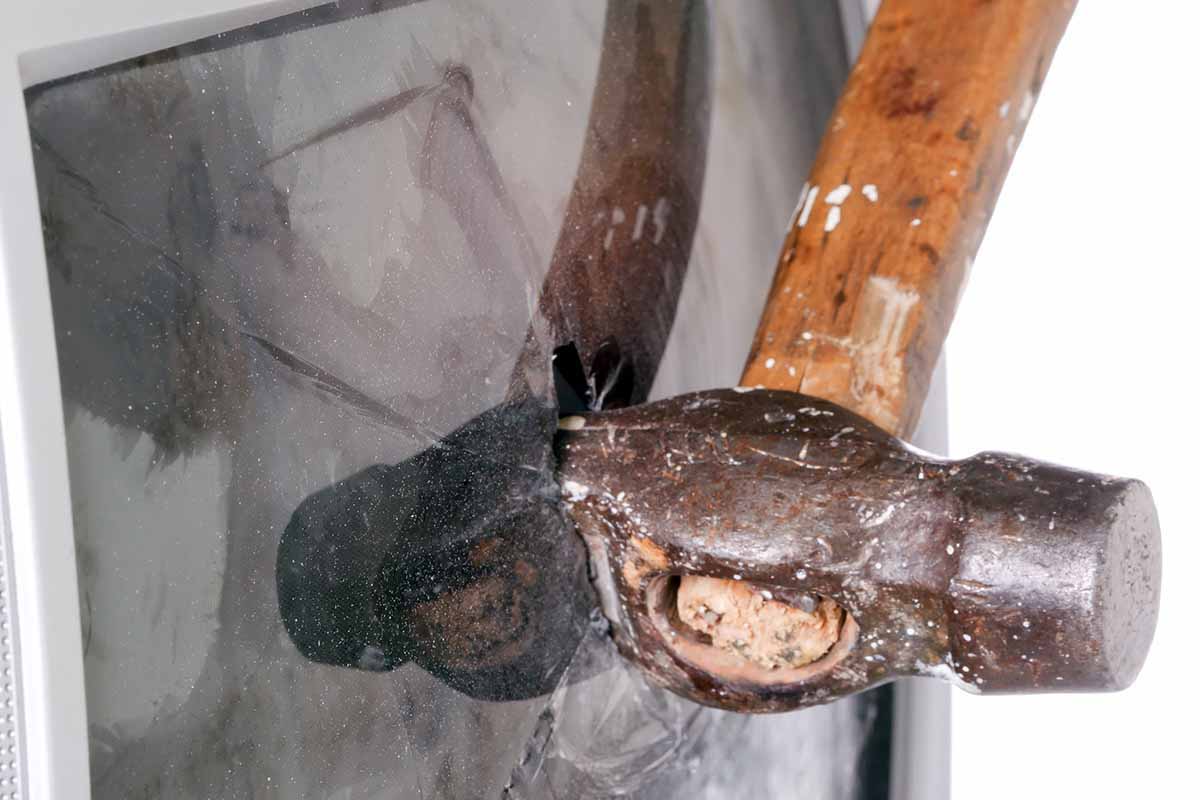
old TV screen smashed with a hammer

Editor’s note: Learn more at the “Cybersecurity in ITAD: Insights from Law Enforcement, Insurance and Industry” panel during the 2025 E-Scrap Conference Oct. 27-29 in Grapevine, Texas.

Key Takeaways

  • Compliance, sustainability targets driving data security demands
  • Nearly half of end-of-life devices are unnecessarily destroyed
  • Data explosion and device upgrades are accelerating device turnover

Emerging compliance and sustainability requirements as well as the exponential growth of data generated by artificial intelligence are driving home the role of responsible data destruction, according to an executive from data-erasure firm Blancco.

Alongside data privacy compliance, the environmental aspect plays a significant role. “It is simply not acceptable to destroy valuable functioning IT equipment in today’s world with today’s technology and opportunities,” Fredrik Forslund, vice president and general manager of international business at Blancco, told E-Scrap News. 

“We probably have 10 times more data just today than we had a few years ago,” Forslund said. “So the explosion of data and being able to actually manage the data lifecycle and make an active decision, because this data should be removed, is absolutely critical.” 

Several technological developments are accelerating device refresh timelines, Forslund said. For example, companies are replacing IT equipment in favor of AI-ready laptops, as well as in response to the end of support for Windows 10, which tech company Dell expects to last into 2026. 

“Windows 10 is a perfect platform for some users, but cannot be accepted for other corporate high-end users, because they have to be fully up to date and run with the latest Windows environments,” Forslund said. “So it will also drive the migration of technology reaching new users, new areas, new organizations based on being sort of pushed down from the development in the markets.”

For example, organizations such as Compudopt and PCs for People refurbish and redistribute devices to those in need. 

The missed opportunity inherent in premature destruction was significantly shortened device life – shorter by two to six years depending on the device, the report indicated.

Over nearly 30 years, Blancco has seen a billion-dollar market evolve for secondhand IT, including in procurement policies requiring a certain percentage of refurbished equipment, Forslund said. 

Industry standards enforce data security principles

Most ITAD certifications include data destruction and security standards, and the most prominent ones provide detailed data security criteria and require regular audits to verify compliance with those standards, said David Daoud, president and principal analyst for the Compliance Standards consultancy. Daoud also is a contributing writer for E-Scrap News. 

Some certifications emphasize data destruction, while others have environmental management or broader operational practices as the primary focus and may or may not specify guidelines for handling data. 

Industry certifications that explicitly include data destruction and security criteria are iSigma’s NAID AAA, SERI’s R2 and Basel Action Network’s e-Stewards.

In July, a group of ITAD data security stakeholders called for the three industry certifications to investigate whether a data breach represented a violation of certifications held by Wisetek.

Another instance of improper disposal procedures that led to criminal charges: Used electronics from The Ohio State University were artificially undervalued and disposed of as “scrap,” then sold by downstream vendors who paid kickbacks to the manager of the university’s surplus department.

In fact, the Blancco report noted that electronics thefts were responsible for more data loss than ransomware and stolen credentials, for which the response could lead to the destruction of reusable devices.

Blancco also found that up to half of all devices – from smartphones and tablets, to laptops/desktops and data center assets – were destroyed, and up to 47% of those assets were still operational. 

The most common method of destruction also varied by device, with smart devices mostly being factory reset rather than destroyed. As a result of the prevalence of the relatively simple process, the destruction rate for smartphones and tablets is far lower than for the other two categories. However, the manual nature of a factory reset limits efficiency, does not provide erasure verification and lacks an audit trail. 

Last month the federal National Institute of Standards and Technology (NIST) released updated guidance on a global security standard that builds on the IEEE Standard for Sanitizing Storage (IEEE 2883) released in 2022. Used in tandem, the standards promote secure sanitization practices that reduce overreliance on hardware destruction, the Blancco report said.

But many enterprises still resort to physical destruction when retiring hardware, due to its simplicity and perception as a secure method, Forslund said, adding that most companies are unaware that efficient processes are available to meet compliance requirements but retain device function. 

These organizations “are doing a lot of manual work, one-to-one handling, instead of having something that they can just push through their IT policies as part of workflows and automation.” 

That awareness of the available technology is of utmost importance for stakeholders. “You don’t have to take out your hammer and your screwdriver, pull out the drive from the computer and then smash it, because you think that’s your only option,” Forslund said.


Tags: Data SecurityRepair & Reuse
TweetShare
Antoinette Smith

Antoinette Smith

Antoinette Smith has covered commodity plastics and supply chains for more than a decade, with a special focus on economic impacts and consumer behavior. She brings a balanced, thoughtful view to recycling stories, and isn't afraid to ask "why?" Contact Antoinette at antoinette@resource-recycling.com.

Related Stories

The AI tsunami

The AI tsunami

byJim Puckett
November 19, 2026

AI data centers and the devices they make obsolete could generate 8.6 to 13.1 million metric tons of e-waste a...

Vessel gives excess inventory a second life

Vessel gives excess inventory a second life

byPaul Lane
November 13, 2026

The recently rebranded company helps manufacturers redistribute product more cheaply than destroying it.

Logitech increases use of recycled plastics

Manufacturers look to meet the call of designing for reuse

byPaul Lane
November 9, 2026

Leaders of companies like Google and Panasonic say advancements continue in incorporating second-life functions into new electronics.

UC Riverside expands reusable takeout program

UC Riverside expands reusable takeout program

byKeith Loria
November 6, 2026

UC Riverside has expanded its reusable takeout options, bringing national chains into the picture.

Designing repairability empowers device users

byPaul Lane
November 2, 2026

E-Scrap Conference presenters tout the advantages of building fixability into electronics.

Business thrives in giving industrial products new life

Business thrives in giving industrial products new life

byPaul Lane
October 15, 2026

Repurposed Materials set for more expansion as it works to help businesses find reuse for unneeded products and parts.

Load More
Next Post

News from EGA Spectro Alloys, VLS Environmental Solutions and more

2026 Buyers’ Guide

Equipment, services and technology suppliers serving the recycling industry.

Browse the Guide

More Posts

Closeup of PP with a chasing arrows recycling symbol.

PureCycle, WM sign rare 3-year bales contract

November 16, 2026

Goodwill eyes EPR revenue, starting with waste audit

November 12, 2026

Alphabet’s Materra wants recyclers to see molecules, not bottles

November 13, 2026
Adam Gendell

PET producers ride ‘local for local’ wave

November 16, 2026
Solarcycle, Korea Zinc merge in critical mineral venture

Solarcycle, Korea Zinc merge in critical mineral venture

November 18, 2026

E-scrap feedstock competition mixed amid investments

November 19, 2026
RecyClass hits 500 EU recyclability evals

EU PET import codes set to begin

November 18, 2026
The missing link in e-plastic recycling

The missing link in e-plastic recycling

October 28, 2026
NexPoint Materials to shutter Alabama plastics plant

NexPoint Materials to shutter Alabama plastics plant

November 4, 2026
Open pit copper mine in Arizona.

Trump touts aggressive US critical mineral goals

November 19, 2026
Load More

About & Publications

About Us

Staff
Job Listings

Archive

Magazines

Work With Us

Advertise
Contact
Terms and Privacy

Newsletters

Get the latest recycling news and analysis delivered to your inbox every week. Stay ahead on industry trends, policy updates, and insights from programs, processors, and innovators.

Subscribe

Welcome Back!

Login to your account below

Forgotten Password?

Retrieve your password

Please enter your username or email address to reset your password.

Log In

Add New Playlist

No Result
View All Result
  • The Latest
  • Podcast
  • Analysis
  • Recycling
  • E-Scrap
  • Plastics
  • Policy Now
  • Conferences
    • E-Scrap Conference
    • Plastics Recycling Conference
    • Resource Recycling Conference
    • Textiles Recovery Summit
  • Magazines – Old
  • About Us
  • Advertise
  • Archive
  • Job Listings
  • Staff
Subscribe
This website uses cookies. By continuing to use this website you are giving consent to cookies being used. Visit our Privacy and Cookie Policy.