
Resource Recycling
  • The Latest
  • Analysis
    • All
    • Certification Scorecard
    • Industry Announcements
    • Opinion
    HP receives ocean plastics certification

    HP Inc. earnings point to memory inflation challenge

    Certification scorecard for the week of Feb. 23, 2026

    Umicore highlights strength in recycling, catalysis

    Apto, Tusaar partner on rare earths recovery

    Apto, Tusaar partner on rare earths recovery

    Certification scorecard for the week of Feb. 16, 2026

    Sims Lifecycle leverages hyperscale decommissioning

    Sims Lifecycle leverages hyperscale decommissioning

    The electronics recycling industry is undergoing a transformation from labor-intensive manual operations to highly automated, AI-driven facilities that use advanced robotics, cleaner chemistry and digital tracking systems to extract critical materials.

    The cyber-physical MRF: AI and robotics reshape e-waste recovery

    Certification scorecard for the week of Feb. 9, 2026

    Meta-Corning deal signals IT hardware retirement wave

    Meta-Corning deal signals IT hardware retirement wave

  • Conferences
  • Publications

    Other Topics

    Textiles
    Organics
    Packaging
    Glass
    Brand Owners

    Metals
    Technology
    Research
    Markets
    Grant Watch

    All Topics

Subscribe
No Result
View All Result
Resource Recycling
  • The Latest
  • Analysis
    • All
    • Certification Scorecard
    • Industry Announcements
    • Opinion
    HP receives ocean plastics certification

    HP Inc. earnings point to memory inflation challenge

    Certification scorecard for the week of Feb. 23, 2026

    Umicore highlights strength in recycling, catalysis

    Apto, Tusaar partner on rare earths recovery

    Apto, Tusaar partner on rare earths recovery

    Certification scorecard for the week of Feb. 16, 2026

    Sims Lifecycle leverages hyperscale decommissioning

    Sims Lifecycle leverages hyperscale decommissioning

    The electronics recycling industry is undergoing a transformation from labor-intensive manual operations to highly automated, AI-driven facilities that use advanced robotics, cleaner chemistry and digital tracking systems to extract critical materials.

    The cyber-physical MRF: AI and robotics reshape e-waste recovery

    Certification scorecard for the week of Feb. 9, 2026

    Meta-Corning deal signals IT hardware retirement wave

    Meta-Corning deal signals IT hardware retirement wave

  • Conferences
  • Publications

    Other Topics

    Textiles
    Organics
    Packaging
    Glass
    Brand Owners

    Metals
    Technology
    Research
    Markets
    Grant Watch

    All Topics

Subscribe
No Result
View All Result
Resource Recycling
No Result
View All Result
Home E-Scrap

Repair rift continues among Basel stakeholders

Colin StaubbyColin Staub
May 16, 2019
in E-Scrap
Repair rift continues among Basel stakeholders

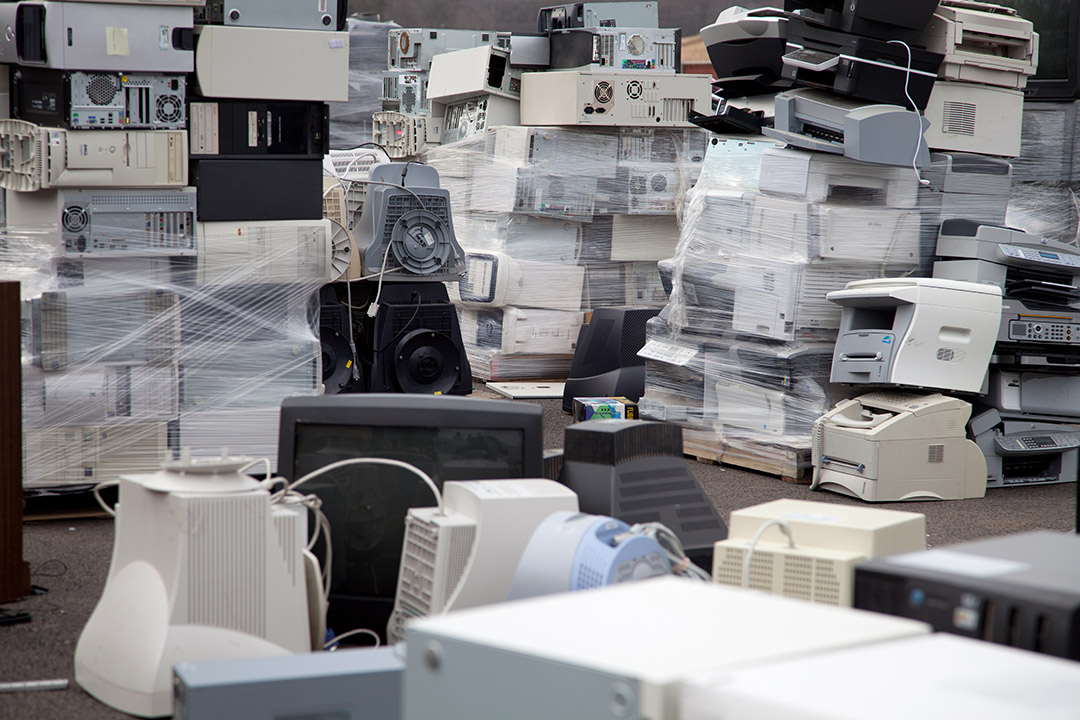
Photo Caption

Final adoption of key international guidelines for e-scrap exports was once again punted as debate drags on over the definition of “repairable” devices.

The Basel Convention on the Control of Transboundary Movements of Hazardous Wastes and Their Disposal, which went into effect in 1992 and is supported by the United Nations, is an international pact that has the goal of limiting trade in hazardous wastes, especially between developed and developing countries. The United States has signed but not ratified the agreement, meaning it did not have a vote in last week’s discussions.

Basel countries have been deliberating since at least 2015 on technical guidelines to help countries that are party to the convention set their own national policies on e-scrap imports and exports. During the biannual Basel meeting of parties, which brings together all 187 countries, the guidelines were passed on an interim basis in the past two conferences (2015 and 2017).

Once again, during the 2019 conference held April 29 through March 10 in Geneva, Switzerland, the Basel countries “adopted, on an interim basis, the e-waste technical guidelines, which have been ‘in the works’ for some years now,” wrote the International Institute for Sustainable Development (IISD) Reporting Services division, an independent organization that provided detailed summaries of Basel conference activities.

“This was a compromise reached in order to allow time for the guidelines to be amended to ensure no loopholes remain,” the organization continued.

The guidelines were not finalized because of a key sticking point, one that has come up multiple times over the years: the language for what constitutes a repairable device, and how those devices are treated.

“The longstanding complaint from some developing countries is that it is easy for entities in developed countries to designate end-of-life products as repairable and ship them to developing countries,” where they immediately become waste, IISD wrote.

The Basel e-waste guidelines adopted on an interim basis include a section stating that devices will not be considered waste (and therefore won’t come under the purview of Basel controls) if they are destined for “failure analysis, or for repair or refurbishment with the intention of reuse … ” or several other scenarios. There are several steps shippers must take to prove the device falls into that category. But this section of the guidelines has raised significant concern among some Basel party countries, as well as environmental advocacy organizations.

The Basel Action Network (BAN), a watchdog organization focused on e-scrap exports, has long opposed the language surrounding repairable devices. In a release, BAN wrote that the exemption “would allow traders that claim their exports were for repair to avoid the trade controls of the Convention, which normally calls for countries to be notified before receiving such wastes and provides them with the right of refusal.”

However, proponents of a looser definition of repairable devices say overly strict language could deter refurbishment and reuse, and send repairable devices to disposal. For instance, the U.S. commented on the guidelines during a 2017 deliberation period.

“Guidelines that consider reusable goods as wastes could significantly impede trade in used equipment legitimately sent for repair or refurbishment by subjecting such trade to unnecessary procedures,” U.S. officials wrote.

BAN has issued an alternative set of guidelines, which are far more stringent about what constitutes a working device. Under BAN’s proposal, if a device is not “fully functional” and if any part of it is destined for disposal or recycling, the device is considered waste and falls under Basel controls.

According to a draft of the agreement voted on at the recent conference, the Basel parties acknowledge the need to address concerns “on the distinction between waste and non-waste to advance the work towards the finalization of the guidelines.”

In the meantime, according to the draft approval, party countries are invited to use the interim guidelines on a pilot basis.

In its summary of next steps, IISD included an “attempt to resolve long-standing impasses in the e-waste guidelines” as a significant priority for the group prior to the next gathering in two years.

Photo copyright ©BRSMEAS
 

Tags: Industry GroupsPolicy NowTrade & Tariffs
TweetShare
Colin Staub

Colin Staub

Colin Staub was a reporter and associate editor at Resource Recycling until August 2025.

Related Posts

Borealis, Borouge aim to bolster PE, PP recycling in Indonesia

byPaul Lane
February 27, 2026

Plastics recycling in the Southeast Asian nation focuses on PET and on industrial and commercial waste, while post‑consumer polyolefin packaging...

Recycling education needs consistency, simplicity 

byBrian Clark Howard
February 25, 2026

Several members of Circular Action Alliance team shared insights during a workshop at the 2026 Resource Recycling Conference in San...

State policy is redefining plastics recycling in the US

State policy is redefining plastics recycling in the US

byKate Bailey
February 19, 2026

This year marks the midpoint of a decade defined by major shifts in plastics and recycling policy. Here’s what to...

SWANA, Fire Rover partner on reporting tool

byAntoinette Smith
February 19, 2026

Industry stakeholders can use the new site to report fires occurring at their facilities or in vehicles, to help support...

Carton recycling reaches 63% of US households

byScott Snowden
February 17, 2026

Carton recycling access rose to 63% of US households in 2025 after 2.5M homes gained service, with 86% of recycling...

Wisconsin proposes E-Cycle target revisions

Wisconsin proposes E-Cycle target revisions

byScott Snowden
February 17, 2026

The state proposed updates clarifying target calculations, waiver standards and adding select battery devices to eligible collections, with public comment...

Load More
Next Post

Basel changes may further disrupt e-plastic movement

More Posts

WM opens new $90m MRF in south Florida 

WM opens new $90m MRF in south Florida 

February 23, 2026
PET bales stacked for recycling.

Evergreen closing RPET plants in Ohio, New York

February 24, 2026
Battery fire risk isn’t going away. Insurance is responding

Battery fire risk isn’t going away. Insurance is responding

February 24, 2026
Chinese processing group details goals for US visit

AMP lays out vision of next-generation, AI-driven MRFs

July 24, 2024
Study links tagging tactics to lower contamination rates

Arizona, Reynolds reach settlement on Hefty bag lawsuit

February 23, 2026
Minnesota publishes prelim EPR assessment

Minnesota publishes prelim EPR assessment

February 20, 2026
How will 2026 unfold for plastics recycling?

How will 2026 unfold for plastics recycling?

February 19, 2026
Recycled plastic lumber firms report diverging results

Trex CEO to retire after 23-year run

February 25, 2026
Polyolefins producer provides PCR updates

Economic downturn forces LyondellBasell to trim sustainability goals

February 23, 2026
Where textile MRFs fit in a global recovery system

Where textile MRFs fit in a global recovery system

February 19, 2026
Load More

About & Publications

About Us

Staff

Archive

Magazine

Work With Us

Advertise
Jobs
Contact
Terms and Privacy

Newsletter

Get the latest recycling news and analysis delivered to your inbox every week. Stay ahead on industry trends, policy updates, and insights from programs, processors, and innovators.

Subscribe

Welcome Back!

Login to your account below

Forgotten Password?

Retrieve your password

Please enter your username or email address to reset your password.

Log In

Add New Playlist

No Result
View All Result
  • The Latest
  • Analysis
  • Recycling
  • E-Scrap
  • Plastics
  • Policy Now
  • Conferences
    • E-Scrap Conference
    • Plastics Recycling Conference
    • Resource Recycling Conference
    • Textiles Recovery Summit
  • Magazine
  • About Us
  • Advertise
  • Archive
  • Jobs
  • Staff
Subscribe
This website uses cookies. By continuing to use this website you are giving consent to cookies being used. Visit our Privacy and Cookie Policy.