





Resource Recycling
  • The Latest
  • Analysis
    • All
    • Certification Scorecard
    • Industry Announcements
    • Opinion
    Europe’s recyclers miss most of the critical materials

    Europe’s recyclers miss most of the critical materials

    Chemical recycling roundup: New plant, partnerships

    Polystyrene’s circular future is already taking shape

    IBM logo on building

    What IBM’s quantum foundry means for ITAD

    Certification Scorecard — Week of May 25, 2026

    CommanderAI launches searchable hauler database

    Underwater data centers drive shift in ITAD models

    EU recyclers make case for solvent-based methods

    The electronics recycling industry has a plastics problem

  • Conferences
    • Resource Recycling Conference
    • Plastics Recycling Conference
    • E-Scrap: The Longevity Conference
    • Textiles Recovery Summit
  • Publications
    • E-Scrap News
    • Plastics Recycling Update
    • Policy Now
    • Resource Recycling
    • Other Topics
      • All Topics
      • Brand Owners
      • Critical Minerals
      • Glass
      • Grant Watch / RFPs
      • Markets
      • Organics
      • Packaging
      • Research
      • Technology
      • Textiles
Subscribe
No Result
View All Result
Resource Recycling
  • The Latest
  • Analysis
    • All
    • Certification Scorecard
    • Industry Announcements
    • Opinion
    Europe’s recyclers miss most of the critical materials

    Europe’s recyclers miss most of the critical materials

    Chemical recycling roundup: New plant, partnerships

    Polystyrene’s circular future is already taking shape

    IBM logo on building

    What IBM’s quantum foundry means for ITAD

    Certification Scorecard — Week of May 25, 2026

    CommanderAI launches searchable hauler database

    Underwater data centers drive shift in ITAD models

    EU recyclers make case for solvent-based methods

    The electronics recycling industry has a plastics problem

  • Conferences
    • Resource Recycling Conference
    • Plastics Recycling Conference
    • E-Scrap: The Longevity Conference
    • Textiles Recovery Summit
  • Publications
    • E-Scrap News
    • Plastics Recycling Update
    • Policy Now
    • Resource Recycling
    • Other Topics
      • All Topics
      • Brand Owners
      • Critical Minerals
      • Glass
      • Grant Watch / RFPs
      • Markets
      • Organics
      • Packaging
      • Research
      • Technology
      • Textiles
Subscribe
No Result
View All Result
Resource Recycling
No Result
View All Result
Home Plastics

Study: Recycling, reusing plastics pose chemical risk

Marissa HeffernanbyMarissa Heffernan
May 31, 2023
in Plastics
California provides funding to boost thermoform recycling

Konektus / Shutterstock

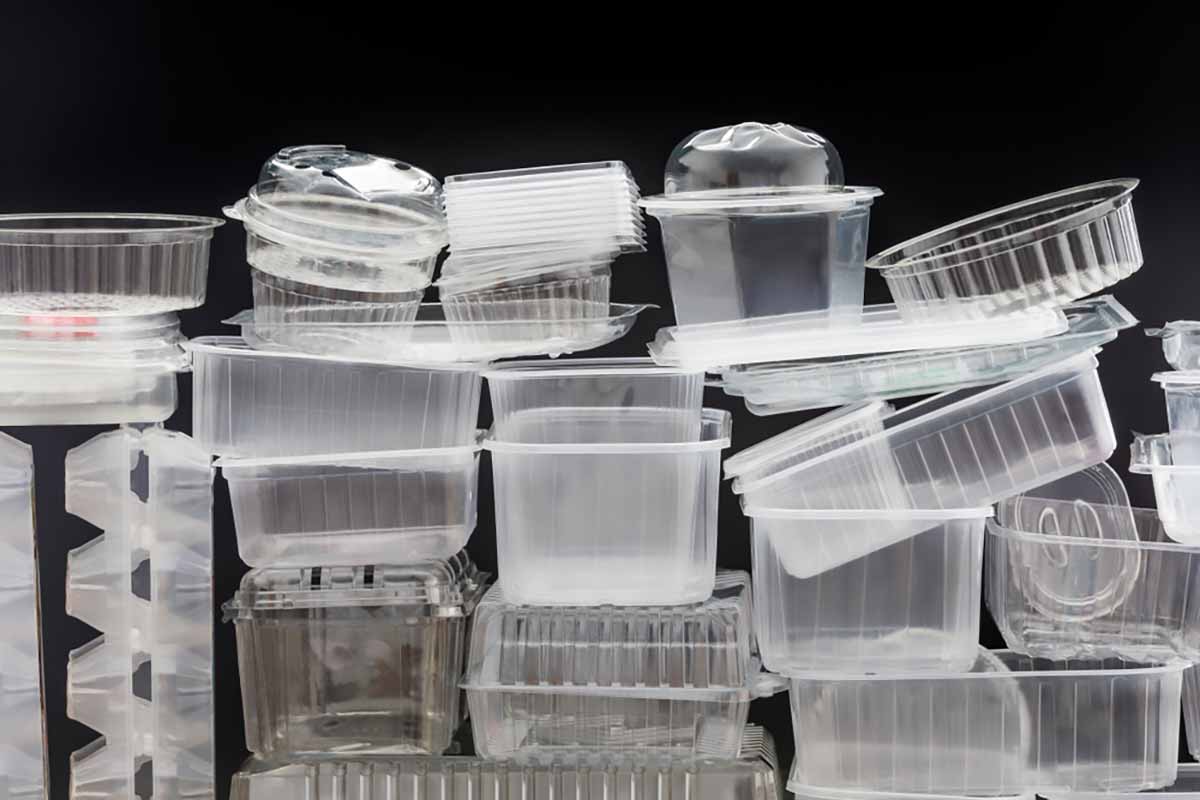
After examining over 700 publications, researchers concluded that reused and recycled plastics are likely to transfer toxic chemicals to the foods they contain. | Konektus Photo/Shutterstock

A recent analysis by Switzerland-based Food Packaging Forum reviewed hundreds of scientific studies and concluded that recycled and reused food-contact plastics can accumulate and release chemicals of concern. 

Published by Cambridge University Press, the study noted that reusing and recycling plastics can lead to “unintended negative impacts, because hazardous chemicals, like endocrine disrupters and carcinogens, can be released during reuse and accumulate during recycling.” 

“In this way, plastic reuse and recycling become vectors for spreading chemicals of concern,” the report noted. “This is especially concerning when plastics are reused for food packaging, or when food packaging is made with recycled plastics. Therefore, it is of utmost importance that care is taken to avoid hazardous chemicals in plastic food contact materials.”

Greenpeace also recently released a review of studies that reached a similar conclusion. 

The Food Packaging Forum is a nonprofit foundation that shares information on chemicals in all food packaging materials and their impacts on human health.

The review used the Database on Migrating and Extractable Food Contact Chemicals, which is based on over 700 scientific publications on plastic food contact materials, such as packaging, utensils, plates and baby bottles.

Troubling findings

The researchers noted in the study that discussion of chemical accumulation is often overlooked when talking about plastics. It’s especially important with regard to recovered plastic from ocean cleanups because “persistent organic pollutants may be present.”

In addition, the study pointed out that some tableware labeled as natural or compostable is actually melamine resin mixed with bio-based powders or fibers, such as bamboo. Melamine affects the kidneys, the study noted, and bio-based fillers decrease the stability of the materials that contain them, making migration of melamine and formaldehyde in the products more likely. 

There is experimental evidence, the study stated, that RPET contains chemical contaminants, such as the endocrine-disrupting chemical BPA and the carcinogens benzene and styrene, that are introduced during use, processing and recycling, and those can migrate into the food or beverages contained by the packaging. 

“The question of how to assess the safety of the high number of chemicals found not only in recycled plastic polymers, but also in virgin plastics, needs to be urgently addressed,” the report noted.

The authors called for more study into chemical migration, especially as the U.S. FDA and the European Food Safety Authority have been issuing more and more favorable opinions on the suitability of recycling processes for producing food-contact packaging. 

“A shift towards materials that can be safely reused due to their favorable, inert material properties could be a promising option to reduce the impacts of single-use food packaging on the environment and of migrating chemicals on human health,” the study noted. 
 

Tags: Research
TweetShare
Marissa Heffernan

Marissa Heffernan

Marissa Heffernan worked at Resource Recycling from January 2022 through June 2025, first as staff reporter and then as associate editor. Marissa Heffernan started working for Resource Recycling in January 2022 after spending several years as a reporter at a daily newspaper in Southwest Washington. After developing a special focus on recycling policy, they were also the editor of the monthly newsletter Policy Now.

Related Posts

Chemical recycling roundup: New plant, partnerships

Polystyrene’s circular future is already taking shape

byJustin Riney
May 29, 2026

A new study from the Polystyrene Recycling Alliance (PSRA), conducted with Resource Recycling Systems (RRS), offers new insights into the...

What Netflix’s ‘Plastic Detox’ gets wrong – and right

byKeith Loria
April 23, 2026

Advocates are excited about the attention brought on plastics by the documentary, but scientists say more nuance is needed.

Hawaii trials asphalt made with plastic debris and nets

Hawaii trials asphalt made with plastic debris and nets

byScott Snowden
April 20, 2026

Researchers at Hawaii Pacific University test asphalt made with fishing nets and plastic debris, with early results showing no increase...

Amazon, DOE partner on critical materials recovery

byScott Snowden
April 13, 2026

DOE and Amazon will study recovery of graphite from textiles and gallium from IT hardware, aiming to strengthen US supply...

Rice researchers use lemon juice to boost battery recycling

byScott Snowden
April 9, 2026

Rice researchers reported a battery recycling process that uses plasma and mild solvents to recover most metals from black mass...

Packaging sector sees shift from AI pilots to wider use

byScott Snowden
April 1, 2026

AI adoption is expanding across packaging operations as costs fall and use cases widen, though concerns around accountability, ROI and...

Load More
Next Post

Circulate Capital, Closed Loop announce investments

More Posts

Recycling industry addresses Beyond Plastics report

Recycling industry addresses Beyond Plastics report

May 26, 2026
What a report on Starbucks cups reveals about recycling

What a report on Starbucks cups reveals about recycling

May 26, 2026
EU recyclers make case for solvent-based methods

The electronics recycling industry has a plastics problem

May 26, 2026
New York bill would strengthen device repair rules

New York packaging EPR bill faces June 10 deadline

May 26, 2026
Federal PACK Act aims to preempt ‘patchwork’ of state laws

House advances Recycling Infrastructure and Accessibility Act

May 21, 2026
Illinois expands battery recycling as lithium-ion fire concerns mount

Illinois expands battery recycling as lithium-ion fire concerns mount

May 27, 2026
Bottle bill backers see opportunity for action

PET collapse exposes gaps in US recycling infrastructure

May 15, 2026
Plastic packaging

Why SB 54 source reduction planning is becoming the industry’s most challenging EPR test

May 19, 2026
EPR rules take shape in Oregon, as first test

Oregon OKs end-market verification from CAA

May 20, 2026
CommanderAI launches searchable hauler database

Underwater data centers drive shift in ITAD models

May 26, 2026
Load More

About & Publications

About Us

Staff

Archive

Magazine

Work With Us

Advertise
Jobs
Contact
Terms and Privacy

Newsletter

Get the latest recycling news and analysis delivered to your inbox every week. Stay ahead on industry trends, policy updates, and insights from programs, processors, and innovators.

Subscribe

Welcome Back!

Login to your account below

Forgotten Password?

Retrieve your password

Please enter your username or email address to reset your password.

Log In

Add New Playlist

No Result
View All Result
  • The Latest
  • Analysis
  • Recycling
  • E-Scrap
  • Plastics
  • Policy Now
  • Conferences
    • E-Scrap Conference
    • Plastics Recycling Conference
    • Resource Recycling Conference
    • Textiles Recovery Summit
  • Magazine
  • About Us
  • Advertise
  • Archive
  • Jobs
  • Staff
Subscribe
This website uses cookies. By continuing to use this website you are giving consent to cookies being used. Visit our Privacy and Cookie Policy.