




Resource Recycling
  • The Latest
  • Analysis
    • All
    • Certification Scorecard
    • Industry Announcements
    • Opinion
    CompuCycle brings e-plastic recycling upgrade online

    Quantum expands e-plastics recovery

    Certification Scorecard — Week of May 4, 2026

    Building a cleaner future through digital transformation

    Q1 earnings confirm wave of ITAD decommissioning

    Sundry Photography / Shutterstock

    Iron Mountain puts ITAD at the center of its growth

    Industry announcements for January 2026

    Industry announcements for May 2026

    Apple store

    Apple leads on inputs, faces questions on ITAD

  • Conferences
    • Resource Recycling Conference
    • Plastics Recycling Conference
    • E-Scrap: The Longevity Conference
    • Textiles Recovery Summit
  • Publications
    • E-Scrap News
    • Plastics Recycling Update
    • Policy Now
    • Resource Recycling
    • Other Topics
      • Brand Owners
      • Critical Minerals
      • Glass
      • Grant Watch
      • Markets
      • Organics
      • Packaging
      • Research
      • Technology
      • Textiles
      • All Topics
Subscribe
No Result
View All Result
Resource Recycling
  • The Latest
  • Analysis
    • All
    • Certification Scorecard
    • Industry Announcements
    • Opinion
    CompuCycle brings e-plastic recycling upgrade online

    Quantum expands e-plastics recovery

    Certification Scorecard — Week of May 4, 2026

    Building a cleaner future through digital transformation

    Q1 earnings confirm wave of ITAD decommissioning

    Sundry Photography / Shutterstock

    Iron Mountain puts ITAD at the center of its growth

    Industry announcements for January 2026

    Industry announcements for May 2026

    Apple store

    Apple leads on inputs, faces questions on ITAD

  • Conferences
    • Resource Recycling Conference
    • Plastics Recycling Conference
    • E-Scrap: The Longevity Conference
    • Textiles Recovery Summit
  • Publications
    • E-Scrap News
    • Plastics Recycling Update
    • Policy Now
    • Resource Recycling
    • Other Topics
      • Brand Owners
      • Critical Minerals
      • Glass
      • Grant Watch
      • Markets
      • Organics
      • Packaging
      • Research
      • Technology
      • Textiles
      • All Topics
Subscribe
No Result
View All Result
Resource Recycling
No Result
View All Result
Home Plastics

Study explores what works — and what doesn’t do much — in curbside recycling

byJared Paben
December 13, 2016
in Plastics

A report from The Recycling Partnership and U.S. EPA lays bare the reality there is no silver bullet for creating a stellar curbside recycling program. That being said, researchers did paint a detailed portrait of what successful programs look like.

“There was not one individual attribute that indicates success, but several that affect performance and trends became evident,” according to the report. “The majority of the highest-performing programs collect material single-stream, collect curbside recycling automatically, use an automated cart-based system, and have public engagement that influences curbside recycling to occur in their community.”

The 2016 State of Curbside Report, released Tuesday, Dec. 13, was written by the nonprofit group The Recycling Partnership with grant funding from the U.S. EPA. The project’s lead researcher was Cody Marshall of The Recycling Partnership (see the related question-and-answer piece with Marshall). He and other experts gathered data on recycling programs in 465 cities across the U.S., making sure to include the 250 most-populous cities and each state capital. In all, the communities represent 29 percent of the homes in the U.S. that could potentially receive curbside recycling service.

Their report points to steps communities can take that are likely to significantly increase recycling weights. But the report also demonstrates that other oft-discussed strategies, such as collecting recycling on a weekly basis, may not boost recycling weights all that much.

Factors driving diversion

The research found the 465 communities collected an average of 357 pounds per household per year (note: This refers to all households in the studied jurisdictions, not just the households that actively recycle).

More than 8 in 10 of the communities utilized single-stream collection, and more than half of them collected material every week.

To find factors potentially driving higher recycling weights, researchers examined 20 percent of the top-performing communities, or those collecting at least 400 pounds per household per year.

More details on what they found:

One bigger stream: Among top performers studied, 96 percent utilized single-stream collection. Across the country, single-stream programs collected an average of 364 pounds per household annually. In contrast, communities that collect fibers and containers separate in dual streams averaged 277 pounds per households.

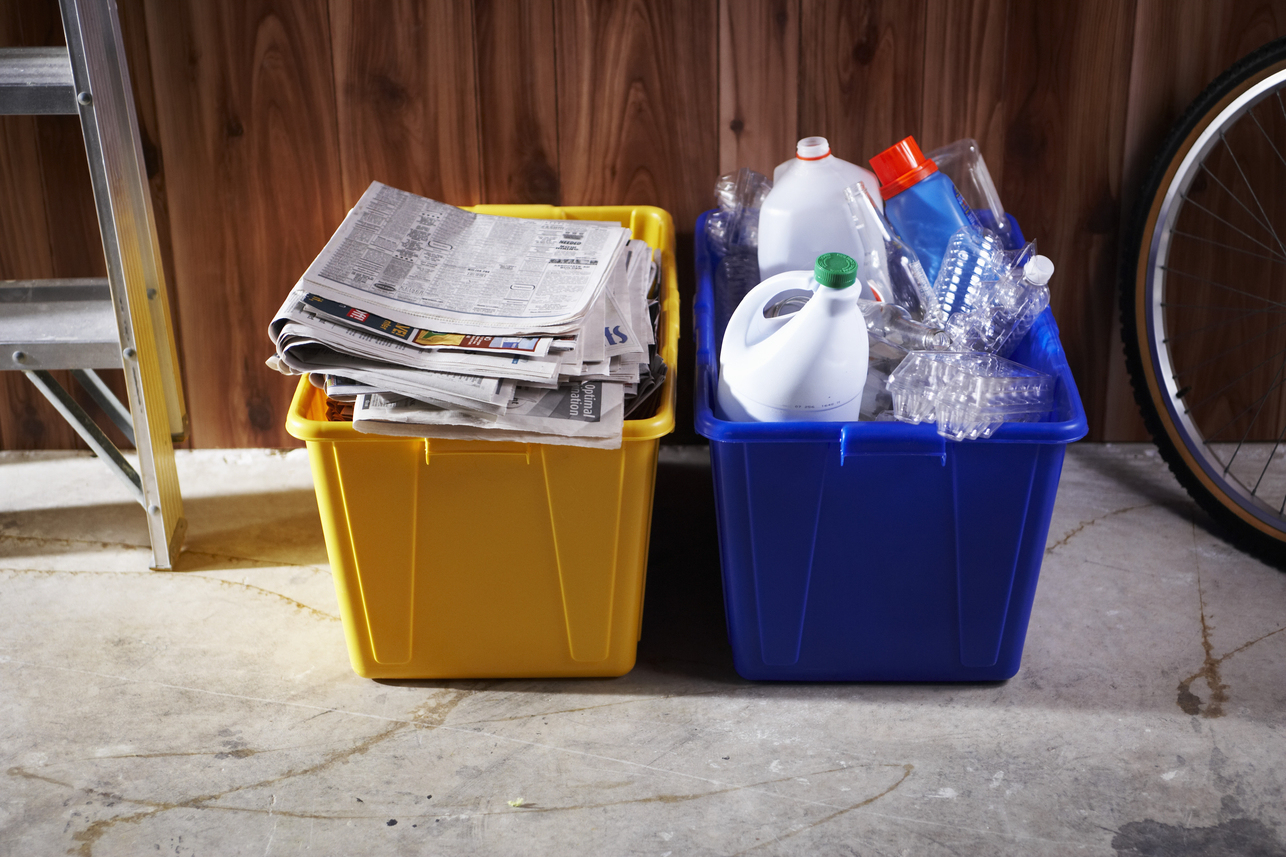
Cart before the bin: Among the top-performers, 83 percent use carts instead of bins. Nationwide, carts collected an average of 389 pounds per household, compared to 271 pounds for bins.

If you provide it, they will come: Among the top-performers, 93 percent provide recycling containers and service to residents automatically, without requiring the household to take any action. Across the country, communities that did this collected 374 pounds per household, compared to 264 pounds per household for those requiring residents to opt-in to service.

Key role of government: Among the top-performers, 100 percent took some action to incentivize recycling. One example is creating licensing agreements or franchises that bundle garbage and recycling service together, regardless of whether residents have to opt-in to garbage service. Across the country, programs taking “public actions” to incentivize recycling collected 359 pounds per household, compared to 247 pounds for those that didn’t.

Less important factors

The report found other attributes that may not have as significant of an impact as some may guess.

For example, researchers found that jurisdictions with high landfill tip fees tended to collect more recyclable materials than those with lower fees, but it wasn’t as big of a spread as they expected. Jurisdictions with tip fees in excess of $40 a ton collected about 380 pounds of per household per year. Those with tip fees less than $40 collected 340 pounds per household.

“This was largely due to a number of municipalities in high-tip fee environments with low recovery rates, as well as municipalities in low tip fee environments having high recovery rates,” according to the report. “More detailed research on this specific topic is needed to draw further conclusions.”

Additionally, picking up recycling weekly, as opposed to once every other week, resulted in only a slight increase in collection weights. Communities collecting weekly brought in 366 pounds per household, and those collecting every other week brought in 362 pounds.

Lastly, who does the collecting doesn’t seem to matter too much: Researchers didn’t find a major weight difference between communities where private workers collect recyclable materials and those where municipal workers collect them, they wrote. Communities with private haulers averaged 371 pounds per household, while those with public haulers averaged 345 pounds per household.

“There appears to be no correlation to effective collection of recyclables and whether the material was collected by private or public entities,” according to the report.

Weima

Tags: CollectionIndustry GroupsLocal Programs
TweetShare
Jared Paben

Jared Paben

Related Posts

APR, industry groups testify on overcapacity

APR, industry groups testify on overcapacity

byAntoinette Smith
May 8, 2026

Steve Alexander, CEO of APR, pointed to China as driving global oversupply despite fluctuating PET imports to the US and...

Lawsuits hover days after SB 54 approval

Lawsuits hover days after SB 54 approval

byStefanie Valentic
May 6, 2026

NRDC and Californians Against Waste are suing CalRecycle over finalized EPR regulations they say unlawfully allow chemical recycling and other...

Liberty Waste expands in NC with Randolph deal

byStefanie Valentic
May 5, 2026

Allied-backed Liberty Waste has acquired Randolph County Garbage Services, further positioning the hauler in the North Carolina Triad market.

Upgrades completed on Connecticut Casella MRF

Casella’s Q1 margins expand as acquisition pace accelerates

byStefanie Valentic
May 4, 2026

Casella Waste Systems raised full-year revenue guidance to $2.06 billion–$2.08 billion after closing four acquisitions in 2026 totaling roughly $150...

Lithium-ion battery recycler to build New York facility

Why battery EPR doesn’t have a packaging problem

byStefanie Valentic
May 4, 2026

While packaging EPR fights injunctions, battery EPR has achieved a mostly harmonized legal framework across nearly every state that has...

Electronics are the fire risk battery EPR keeps missing

Electronics are the fire risk battery EPR keeps missing

byStefanie Valentic
May 4, 2026

Most battery EPR frameworks don't cover what's actually igniting in collection trucks.

Load More
Next Post
PetroChem Wire: Recycled HDPE loses pricing ground in 2015

PetroChem Wire: Recycled Nylon Prices Rise in Early December

More Posts

New version of California EPR regulations released

CalRecycle approves SB 54 regulations

May 2, 2026
Lawsuits hover days after SB 54 approval

Lawsuits hover days after SB 54 approval

May 6, 2026

Origin Materials to shut down, sell PET cap design

May 6, 2026
Texas plant in limbo after Eastman loses DOE grant

Eastman cites RPET adoption for growth

May 5, 2026
Fiber producers push for June price increases

Fiber producers push for June price increases

May 5, 2026
Plastic Ingenuity to use PureCycle PP for coffee lids

Plastic Ingenuity to use PureCycle PP for coffee lids

April 30, 2026
Electronics are the fire risk battery EPR keeps missing

Electronics are the fire risk battery EPR keeps missing

May 4, 2026
Study quantifies lithium battery threat to infrastructure

Battery fires remain elevated in early 2026: report

May 1, 2026
Sundry Photography / Shutterstock

Iron Mountain puts ITAD at the center of its growth

May 5, 2026
Lithium-ion battery recycler to build New York facility

Why battery EPR doesn’t have a packaging problem

May 4, 2026
Load More

About & Publications

About Us

Staff

Archive

Magazine

Work With Us

Advertise
Jobs
Contact
Terms and Privacy

Newsletter

Get the latest recycling news and analysis delivered to your inbox every week. Stay ahead on industry trends, policy updates, and insights from programs, processors, and innovators.

Subscribe

Welcome Back!

Login to your account below

Forgotten Password?

Retrieve your password

Please enter your username or email address to reset your password.

Log In

Add New Playlist

No Result
View All Result
  • The Latest
  • Analysis
  • Recycling
  • E-Scrap
  • Plastics
  • Policy Now
  • Conferences
    • E-Scrap Conference
    • Plastics Recycling Conference
    • Resource Recycling Conference
    • Textiles Recovery Summit
  • Magazine
  • About Us
  • Advertise
  • Archive
  • Jobs
  • Staff
Subscribe
This website uses cookies. By continuing to use this website you are giving consent to cookies being used. Visit our Privacy and Cookie Policy.