





At a Portland, Oregon-area transfer station, site superintendent Matt Tracy has noticed smaller lithium-ion batteries often behave like fireworks when they go into thermal runaway: They move erratically and can even become projectiles.
“Basically they’re like a flower spinner you’d see on the Fourth of July, but they’re heavier and they’re burning at about 700-plus degrees,” Tracy said during a recent panel discussion.
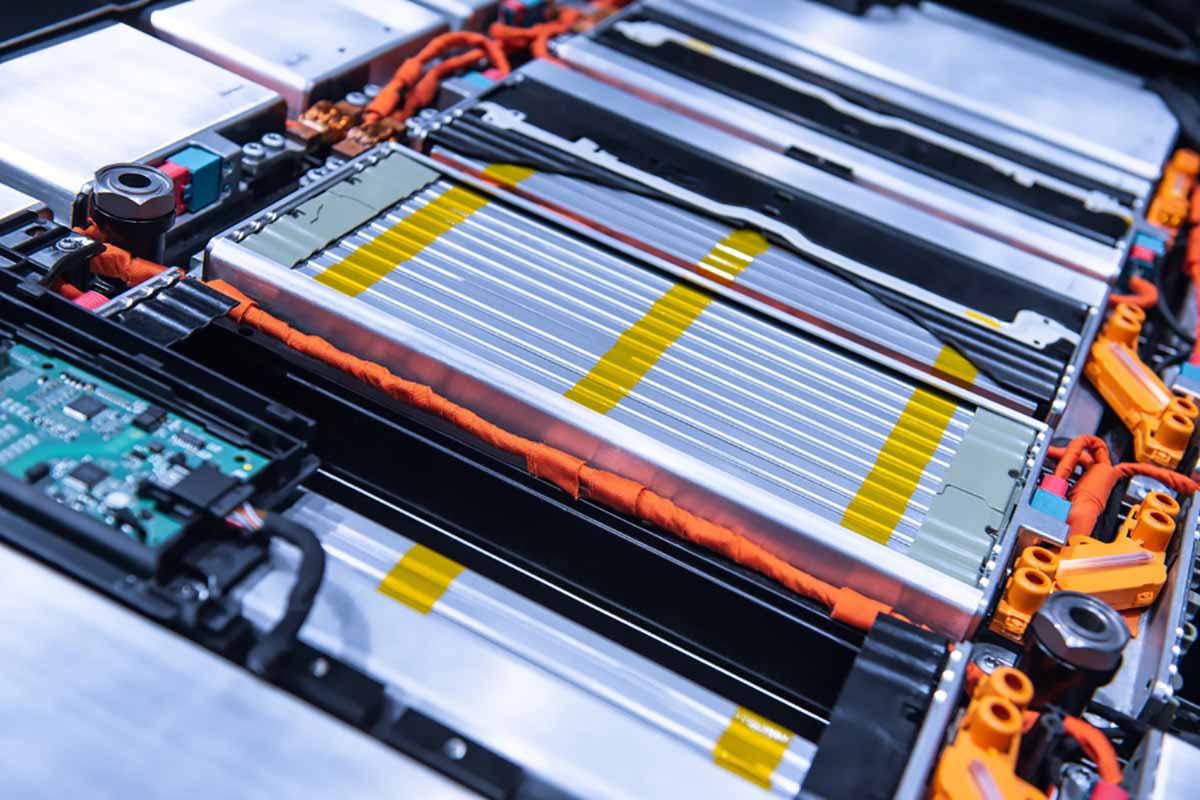
“Thermal runaway” is a familiar term for MRF operators these days. It’s what happens when a battery gets damaged or otherwise jostled to the point that an internal separator breaks, and the energy within begins to create heat, which feeds on itself to create more and more heat and can start a fire. It’s a huge problem for recycling facilities and has generated management tips from industry professionals, dire warnings and regulatory interest.
“Battery Disposal Challenges and Recycling Opportunities in Oregon,” a Feb. 20 forum hosted by the Association of Oregon Recyclers, highlighted why batteries are such a focus area for MRF operators today. Tracy, site superintendent for the Metro South transfer station outside Portland, spoke alongside facility operators from throughout Oregon.
The discussion came on the heels of a recent report commissioned by the National Waste & Recycling Association (NWRA), a trade group representing haulers and facility operators, that quantified various metrics of battery fires.
That report, which found the rate of catastrophic recycling facility losses from fires has increased by 41% over the past five years, was researched and authored by consultancy Resource Recycling Systems. Study author Michael Timpane presented the findings to kick off the Oregon discussion, and Carin Stuart, steward relations manager at battery stewardship organization Call2Recycle, presented on the U.S. regulatory landscape for battery management.
Fires require a suite of response tactics
Besides the small firework-like batteries, Tracy’s facility is also seeing its share of larger-format battery incidents. He said two e-bike batteries recently made it to the facility and went into thermal runaway. They contain a “huge amount of energy,” Tracy said, noting his facility recorded the batteries burning at temperatures up to 780 degrees Fahrenheit.
“These things are nasty, they burn really fast and they burn really hot,” he said. Once they get going, the batteries burn their own oxygen, he added.
The facility has a handful of tactics for dealing with and preventing these fires, including burying the batteries in CellBlockEX, a dry medium made from recycled glass and specifically designed to extinguish or suppress lithium-ion battery fires. The facility was also an early adopter of FireRover, the well-known recycling facility remote fire monitoring and suppression system. Tracy said FireRover has been activated in a dozen fires at the Metro South facility, including one in which the system deployed 2,200 gallons of water.
Smaller fires are becoming “harder to extinguish,” Tracy said, because the substantial heat created by small batteries in thermal runaway can quickly ignite dry recyclables, even those that are several feet away.
And beyond piles of collected recyclables, there are plenty of other flammable objects in a transfer station. Tracy described a January 2023 fire where a battery ignited and hit part of a nearby discarded lawnmower, which had a half-full gas tank. Suddenly, the facility had a fire involving both flammable (easily ignited at ambient temperatures) and combustible (less easily ignited, having a higher flash point) materials.
“A lot of this fire activity becomes really based on what you have around the fire,” Tracy said.
Collaboration with fire officials is key
Metro South coordinates closely with the local Clackamas County Fire Department, so fire officials know what level of fire the transfer station and FireRover can handle in-house and which incidents require a full fire department response. Oftentimes, a fire crew will respond in an observation role, keeping a distance just in case the blaze requires a full crew response.
“I would advise anyone in operations, get close with your fire department,” Tracy said.
Kristin Leichner of Sherwood, Oregon-based Pride Disposal and Pride Recycling, highlighted another key benefit of close collaboration with fire departments.
Her company provides collection as well as transfer station operation – meaning, she added, “we get to have fires in our trucks, and in our facilities, really just the best of both worlds.” The truck fires present a particular concern, especially because fire departments may not be familiar with the specific hazards of those incidents.
In one such fire in one of Pride’s front-load vehicles, images posted to social media showed a firefighter leaning over to spray water into the truck hopper – unaware that he was leaning right over the release valve for the truck’s compressed natural gas fuel. CNG-powered trucks have a temperature sensor that releases the gas if it reaches a certain temperature to prevent explosions.
Thankfully, nobody was injured during that incident, Leichner said, but it illustrated the need for close communication and education between recycling operations and fire departments.
Pride now outfits its trucks with laminated diagrams of the truck’s gas release valves, so the driver can grab the diagram while exiting the vehicle and provide it to fire responders.
Facility costs turn exponential
All of those suppression systems – FireRover, additional training for employees, suppressive material like CellBlockEX – carry a price tag. But it’s just one of many emerging recycling facility costs associated with battery fires.
Vinod Singh, outreach manager at Portland-based Far West Recycling, said insurance for his company’s two facilities has increased by 300% in the last five years.
“That’s a direct cost to run those facilities,” he said.
And insurance options are dwindling. Some insurance companies that used to service the recycling industry won’t touch MRFs anymore, Singh said.
That’s in part because damages can quickly get out of control.
Denise Barnes, recycling and community outreach coordinator at Rogue Disposal & Recycling, described a May 2021 “catastrophic fire” at her company’s Klamath Falls, Oregon transfer station, a relatively small facility processing 45,000 to 50,000 tons per year of material.
“This little fire has cost us over $3 million in damage,” she said.
It also proved hugely disruptive for recycling in the area, affecting collection routes and self-hauling options. The facility had to be completely rebuilt, which was only completed in spring 2023, meaning there were two years of significant disruption.
In response, Rogue installed two FireRover systems at its much-larger transfer station in White City, Oregon, one for the garbage and one for the recycling side of the facility.
Although that meant even more cost to the company, within a month of installing the system, the facility had a middle-of-the-night fire that FireRover effectively put out.
“We felt like it paid for itself after that first incident,” Barnes said. “We sleep better at night knowing we have this system in place.”
Besides the suppression system, Rogue’s main line of defense is its community outreach and education efforts. The company uses social media, its website, paid advertising and “every option that we can” to educate customers about proper battery management, Barnes said. That means retail recycling locations for batteries, like Best Buy, or Rogue’s once-a-year hazardous waste event.
That limited range of options is one reason batteries are ending up in the municipal waste stream.
“We get a lot of batteries at that event, but we would love to have something that could serve our community on a more regular basis,” Barnes said.