


This article appeared in the April 2021 issue of Resource Recycling. Subscribe today for access to all print content.
Like many smaller nonprofit organizations, the New Mexico Recycling Coalition (NMRC) began when a group of like-minded individuals united to tackle a specific issue, namely how to keep valuable material out of New Mexico’s landfills.
However, the simple goal brings with it many complexities, and a major consideration is of course money. While recycling groups and programs may have community support and great intentions, they must also find methods to cover basic expenses and then fund additional projects that lead to growth in material diversion.
For more than two decades, NMRC has worked to augment the organization’s core budget with grants to continue to expand recycling opportunities and awareness in the state. Over time, a number of key strategies have emerged when it comes to applying for and leveraging grant dollars successfully.
‘Keep the lights on’ budget
Before outlining NMRC’s story around grants, it can be helpful to explain the details around the group’s funding model in general.
In 1998, four years after the NMRC incorporated, the New Mexico Environment Department: Solid Waste Bureau (NMED:SWB) required that all registered recycling and compost facilities employ at least one certified facility operator. Certified operators are required to attend a three-day, comprehensive technical training. These classes are organized and executed as a partnership between NMRC and NMED:SWB. NMRC facilitates and teaches many of these classes in exchange for registration fees.
This effectively produced two results. First, it helped develop well-informed recycling and compost facility operators with knowledge of how to properly and safely establish and sustain programs. Second, the arrangement provided a funding mechanism to help NMRC grow as a nonprofit group and hire its first paid staff member in 1999.
Today, these certification classes are still a key part of the organization’s revenue and make up approximately 25% of NMRC’s core budget. We often refer to the core budget as the “keep the lights on” budget, and it includes revenue from trainings, conferences, membership dues and sponsor donations. With this moderate but predictable revenue stream, NMRC is secure as an organization even during unpredictable periods (not many forecasters had the wild vicissitudes of 2020 in their plans).
Our core budget funds one staff person to manage membership and provide general recycling support services to our members and the public, as well as the general administration activities that all organizations need, such as insurance, invoicing, payroll and web hosting.
One grant leads to another
Our more substantive work of program development and implementation, meanwhile, is supported by competitive outside funding sources, including federal grants. Notable examples include the development of a state-wide hub-and-spoke collection system and a collaboration with public land managers to incorporate composted mulch for erosion control.
These projects have their own budgets funded by specific sources. Once we initiate program work, we will identify complementary programs, either run by NMRC or other entities, to advance the objective of sustainable materials management. This work to build on existing projects helps to amplify the power of the initial work and is also key to securing future funding.
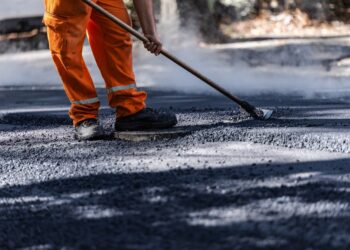
For example, in 2005 NMRC received a Jobs Through Recycling grant from the U.S. EPA to educate New Mexico Department of Transportation (NMDOT) district engineers on the value and application of composted mulch for roadside erosion control and reseeding projects.
Initial trainings demonstrated the effectiveness of composted mulch to prevent erosion on NMDOT projects. However, we identified that a shortage of materials prevented the widespread use of composted mulch as an erosion treatment. At that time, New Mexico just did not have the necessary material.
This realization led us to pursue and secure funding from the USDA Forest Services’ Collaborative Forestry Restoration Program in 2007 for a project entitled “Don’t Trash that Slash.” That three-year grant allowed us to provide technical assistance, trainings, educational outreach and demonstration projects to utilize forest residuals, or “slash,” as a compost feedstock.
The material, which includes small diameter trees and brush from thinning projects, was used to create composted mulch that could act as a highly effective erosion control product. By so doing, forest managers could move away from on-site burning of the material. The project also sparked the creation of two new small businesses that provide composted mulch materials to the state and community for use in erosion control.
Similarly, in 2008 and 2009, NMRC pursued and secured two consecutive USDA Rural Utilities Program grants to provide recycling technical assistance targeting rural, economically disadvantaged communities. The first year focused on identifying current processing capabilities within rural communities as well as providing technical trainings, developing a comprehensive rural recycling resource toolkit, and creating a “waste-shed” map.
Following this initial study, the second year focused on planning and research for a rural cooperative marketing program.
Having identified the needs and solutions that would work through our research and mapping project, we pursued and were awarded a $2.8 million rural recycling development grant from the U.S. Department of Energy American Recovery and Reinvestment Act. Under this grant, which was unprecedented in size for our organization, NMRC was able to sub-award nearly $2 million to rural and underserved communities to create a statewide hub-and-spoke recycling infrastructure.
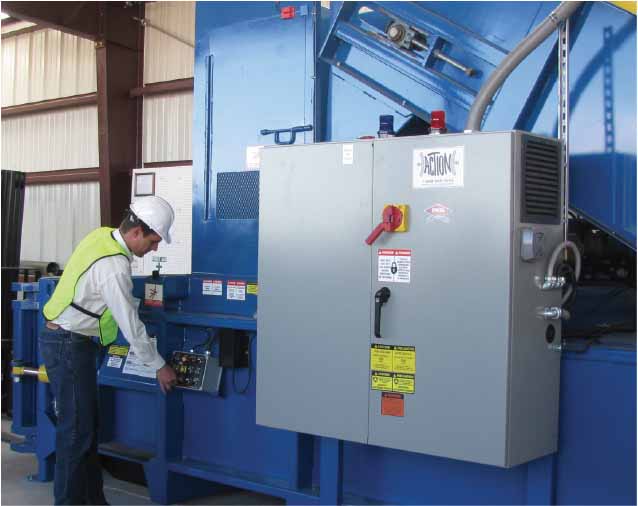
With this project we launched a recycled material marketing cooperative, and we performed education and outreach about pay-as-you-throw and the use of rate structures for our rural partners. Additionally, we used capital infrastructure grant monies and technical assistance to help these hub-and-spoke communities around the state to purchase equipment to start and expand recycling programs.
Both the compost mulch and hub-and-spoke examples demonstrate how NMRC used one round of funding to lead to a second funding opportunity. In so doing, we creatively built these waste diversion projects to suit the funding requirements of different grant-makers. None of these project outcomes could have been funded from NMRC’s core budget alone.
Now focusing on reduce and reuse
NMRC is a member-supported nonprofit group with approximately 230 members throughout the state, including municipalities, counties, federal entities, tribes and pueblos, solid waste authorities, universities and businesses. We rely heavily on these partnerships to identify and build grant proposals.
Often, governmental entities are not eligible for certain grants while nonprofit organizations are. When this type of funding becomes available, NMRC will reach out to its members to understand what they need, and we will author the grants that support this work. The opposite is also true on occasion, in which case NMRC may partner with a governmental entity to provide services as part of their funding.
In all cases, letters of support and commitment are included in the grant applications. This shows funders that there is an established relationship and an agreement on partners’ different roles and responsibilities.
One recent instance of the collaborative approach is an $88,000 USDA Rural Utilities Services Solid Waste Management Grant that covers 2020 and 2021.
Our proposal for this grant included letters of support from 10 rural communities and the NMED, including a commitment of $53,340 of in-kind support from these partners. Once funded, these established partnerships allowed for an efficient project launch to adhere to the grant’s tight timeline and a mechanism for us to update our changing outreach efforts due to the COVID-19 pandemic.
The purpose of the grant-funded project is to empower local communities to divert waste from landfills while keeping their waterways and landscapes clean. We are meeting these goals by establishing reuse centers, backyard composting projects, “fix it” clinics and zero waste activities in towns with populations of less than 10,000 people.
Due to the pandemic, the past 12 months have posed a variety of challenges for many of New Mexico’s rural communities as they work to sustain their recycling and waste reduction programs. This funding allows us to help empower these communities to cost-effectively enhance “reduce” and “reuse” activities in their own backyards and neighborhoods.
We have also had to be adaptable, and that’s been easier thanks to our strong partnerships. The original proposal included extensive travel throughout the state to provide technical assistance and trainings. All of these in-person activities were transformed into virtual gatherings, which was difficult in the very rural areas of the state with limited internet access.
To fix this, NMRC expanded our partnerships with municipalities and tribes to create a “train the trainer” model to give staff the tools they need to reach their local residents. This included the creation of a 15-minute backyard compost demonstration video that provides specifics about composting in a high desert environment. Instead of in-person trainings, NMRC hosts watch parties and virtual trainings multiple times each week, and the video is available for anyone to utilize.
A silver lining is that we are reaching a larger audience. At each training, there are a handful of attendees from larger cities, meaning a “fix it” clinic could have repair experts helping with the repairs from anywhere in the state. While anyone can attend the virtual trainings, only attendees from eligible, rural communities will receive additional support, such as backyard compost starter kits.
During the first two quarters of this grant cycle, the project focused on the creation of the backyard compost training video and virtual training partnerships and outreach. Under the second phase of the grant, we will establish up to three reuse centers at existing solid waste transfer stations, which will require more in-person technical assistance. We are hopeful that New Mexico’s vaccine timeline stays on track to allow for more in-person assistance before the Sept. 30, 2021 project deadline.
In the meantime, the current project has opened doors to new diversion partnerships. For instance, the New Mexico Department of Health and its Healthy Kids Community Schools program are creating community gardens to teach kids about the importance of growing and eating healthy, local food. NMRC will work with funded partners on their projects to establish composting operations at these gardens within rural communities and pueblos.
Always looking for opportunities
Through collaboration and a willingness to find creative opportunities, NMRC continues to work toward its core value of a beautiful New Mexico that values a vibrant and sustainable community for a better quality of life. Grant funding continues to be a vital part of this process.
Sarah Pierpont is the executive director of the New Mexico Recycling Coalition and can be contacted at sarah@recyclenewmexico.com.