











Resource Recycling
  • The Latest
  • Analysis
    • All
    • Certification Scorecard
    • Industry Announcements
    • Opinion

    Certification scorecard for the week of March 9, 2026

    Diversion Dynamics: Secondhand exports slow down fast fashion

    Certification scorecard for the week of March 2, 2026

    Industry announcements for January 2026

    Industry Announcements for March 2026

    HP receives ocean plastics certification

    HP Inc. earnings point to memory inflation challenge

    Certification scorecard for the week of Feb. 23, 2026

    Umicore highlights strength in recycling, catalysis

    Apto, Tusaar partner on rare earths recovery

    Apto, Tusaar partner on rare earths recovery

    Certification scorecard for the week of Feb. 16, 2026

  • Conferences
  • Publications

    Other Topics

    Textiles
    Organics
    Packaging
    Glass
    Brand Owners

    Metals
    Technology
    Research
    Markets
    Grant Watch

    All Topics

Subscribe
No Result
View All Result
Resource Recycling
  • The Latest
  • Analysis
    • All
    • Certification Scorecard
    • Industry Announcements
    • Opinion

    Certification scorecard for the week of March 9, 2026

    Diversion Dynamics: Secondhand exports slow down fast fashion

    Certification scorecard for the week of March 2, 2026

    Industry announcements for January 2026

    Industry Announcements for March 2026

    HP receives ocean plastics certification

    HP Inc. earnings point to memory inflation challenge

    Certification scorecard for the week of Feb. 23, 2026

    Umicore highlights strength in recycling, catalysis

    Apto, Tusaar partner on rare earths recovery

    Apto, Tusaar partner on rare earths recovery

    Certification scorecard for the week of Feb. 16, 2026

  • Conferences
  • Publications

    Other Topics

    Textiles
    Organics
    Packaging
    Glass
    Brand Owners

    Metals
    Technology
    Research
    Markets
    Grant Watch

    All Topics

Subscribe
No Result
View All Result
Resource Recycling
No Result
View All Result
Home Recycling

Indonesian import restrictions remain up in the air

Colin StaubbyColin Staub
July 23, 2019
in Recycling
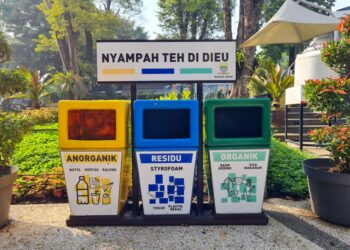
Indonesia has become the fourth largest importer of U.S. recovered paper. | Naruedom Yaempongsa/Shutterstock

A top importer of U.S. recovered paper continues to develop new quality criteria for inbound shipments, despite previous signs the country had settled on specific contamination thresholds.

The Indonesian government in March announced a plan to revise its scrap paper import guidelines. An initial proposal, to allow only loads with 0.5% or less contamination, met pushback from paper industry stakeholders, and the government postponed that decision.

Last month, communications from the country’s government indicated officials were revising the import standards to be in line with scrap material specifications provided by the Institute of Scrap Recycling Industries (ISRI). These would bring the contamination limits to 1-2% for certain materials and 3-4% for others, depending on the type of contaminant.

However, subsequent communications indicate the issue is not yet settled, and that there are varying opinions among Indonesian government entities as to which standards should be used. Meanwhile, environmental groups in Indonesia are calling for the stricter limit.

Differing opinions

During a trip to Indonesia this month, representatives from ISRI and Paper Stock Industries (PSI) learned that the import guidelines are still being discussed and finalized. For the time being, a policy remains requiring pre-shipment inspections for 100% of scrap shipments bound for Indonesia.

That policy took effect June 1, according to shipping company Hapag-Lloyd, but is seemingly temporary until the revised import policies are official.

Adina Renee Adler, vice president of international affairs at ISRI, and George Chen, former PSI chapter president and president of G&T Trading International, met with government agencies, industry representatives and inspection firms, according to a release from ISRI.During those meetings, Adler and Chen “learned that while the Ministry of Trade and Ministry of Industry accept ISRI specifications as import guidelines, the Ministry and Environment and Forestry leads the government’s import policy and it is not yet convinced it can accept the ISRI specs because they allow for a small percentage of contaminants/outthrows in imported scrap,” according to the release.

Officials in the environment ministry are concerned about even small amounts of contamination due to fears the waste management infrastructure lacks the capacity to dispose of the additional material, according to ISRI.

Meanwhile, the Alliance Zero Waste Indonesia (AZWI) environmental organization and a coalition of similar groups are urging officials to choose the initial 0.5% contamination rule. In a recent press release, the organizations called out plastic that comes into the country as contaminants in paper bales and cannot be recycled.

It’s unclear when the Indonesian rulemaking will be complete. In the meantime, in addition to the 100% pre-shipment inspection requirement, Indonesian customs officials are enforcing heightened inspection criteria at the country’s ports.
Learn more in person

Asian markets continue to fluctuate in the wake of China’s National Sword. At the upcoming Resource Recycling Conference and Trade Show, a panel of experts will dive into the issue in an exclusive session called “Where Things Stand in Asia.” The conference is taking place Aug. 26-28 at the Sheraton New Orleans. Go to the conference website to learn more and register.

“If Customs officials find any prohibitive materials, they will reject the entire shipment and return it to the port of origin,” ISRI stated.

The practice of flagging contaminant loads and returning them to their home country has gained steam across Southeast Asia in recent weeks.

Debate comes amid ‘significant demand’

Indonesia’s rulemaking comes as other Southeast Asian nations have enacted their own import restrictions on recycled materials. Malaysia, Thailand and Vietnam implemented regulations to stem the major increase in scrap paper and plastic material imports they saw after China scaled back imports of those materials last year.

Indonesia has seen a similar increase, particularly on the paper side. From January through May 2019, the most recent period for which figures are available, U.S. exporters shipped more than triple the weight of recovered paper they did during the same periods in 2016 and 2017, and 77% more than they did during that time in 2018. The plastic side has seen fluctuation but not as dramatic of a change – U.S. scrap plastic shipments during the first five months of 2019 are up compared with the same period in 2016 and 2018 but are lower than the volume shipped during that time in 2017.

Indonesia has become the fourth largest importer of U.S. recovered paper. From January through May, Indonesian importers brought in 628,000 short tons of U.S. scrap paper.

Experts say paper shipments into Indonesia are mostly feeding a large and established demand from that country’s papermaking industry. The Indonesian Pulp and Paper Association lists more than 60 member companies, and many of them operate mills using recovered fiber.

For instance, Jakarta-based Asia Pulp and Paper produces containerboard from recycled fiber. Fajar Paper, which runs six paper machines and produces more than 1.4 million short tons of paper products per year, says it uses 100% recycled paper as feedstock for its products, which include linerboard, corrugating medium and more. Mount Dreams Indonesia (MDI) similarly produces corrugating medium from 100% recycled fiber. Noree Indonesia bills itself as the “first private paper mill to recycle paper in Indonesia.”

“It’s a significant demand,” Adler said in an interview with Resource Recycling. “That’s why all that trade is happening.”

Still, Indonesian imports of U.S. paper dropped significantly in April, the same month the country announced major changes to its fiber import policies. Imports of U.S. recovered fiber averaged 156,000 short tons per month during the first quarter of 2019. But in April, the figure dropped to less than half that amount: 53,000 short tons.

The shipments climbed back up again in May, coming in at 105,000 short tons.

 

Tags: AsiaTrade & Tariffs
TweetShare
Colin Staub

Colin Staub

Colin Staub was a reporter and associate editor at Resource Recycling until August 2025.

Related Posts

How rising fuel and memory prices are impacting ITAD’s margins

How rising fuel and memory prices are impacting ITAD’s margins

byDavid Daoud
March 10, 2026

Current war in Iran is resulting in a noticeable change in cost pressures and risk considerations in electronics and IT...

Diversion Dynamics: Secondhand exports slow down fast fashion

byStefanie Valentic
March 5, 2026

Conference season has a cadence that industry professionals know well. The packed schedules, the badge swaps, the hallway conversations that...

Borealis, Borouge aim to bolster PE, PP recycling in Indonesia

byPaul Lane
February 27, 2026

Plastics recycling in the Southeast Asian nation focuses on PET and on industrial and commercial waste, while post‑consumer polyolefin packaging...

Sony heads renewable plastic supply chain

Sony heads renewable plastic supply chain

byScott Snowden
February 19, 2026

Sony and 13 partners formed a unique global supply chain to make circular plastics for Sony high-performance audiovisual products using...

UN trade data, tools aim to shape plastics treaty talks

UN trade data, tools aim to shape plastics treaty talks

byAntoinette Smith
February 17, 2026

UN agencies aim to use the harmonized trade data and a statistical framework to improve outcomes for the global negotiations,...

Alpek talks PET overcapacity, soft demand

byAntoinette Smith
February 11, 2026

Executives from the Mexico-headquartered polyester giant said the Chinese government has acknowledged issues and convened PET producers, but Alpek is...

Load More
Next Post

Cambodia rejects 3.2 million pounds of scrap plastic

More Posts

Chinese processing group details goals for US visit

AMP lays out vision of next-generation, AI-driven MRFs

July 24, 2024
Northeast recycled commodity values hit 5-year lows

Northeast recycled commodity values hit 5-year lows

March 6, 2026
ERI sues Revivn alleging raid on staff and trade secrets

ERI sues Revivn alleging raid on staff and trade secrets

March 10, 2026

Rising containerboard demand comes as OCC prices taper

November 5, 2024
E-scrap export pause urged to keep rare earth scrap in US

E-scrap export pause urged to keep rare earth scrap in US

March 11, 2026
EPR rules take shape in Oregon, as first test

Oregon passes battery EPR Law, banning lithium-ion disposal

March 6, 2026
How rising fuel and memory prices are impacting ITAD’s margins

How rising fuel and memory prices are impacting ITAD’s margins

March 10, 2026
Common goal of responsible end markets: transparency 

Common goal of responsible end markets: transparency 

March 5, 2026

Paper giants foresee continuing rise in OCC prices

August 28, 2023
Emerging US EPR programs spark harmonization talks

Washington designates CAA to lead EPR implementation

March 4, 2026
Load More

About & Publications

About Us

Staff

Archive

Magazine

Work With Us

Advertise
Jobs
Contact
Terms and Privacy

Newsletter

Get the latest recycling news and analysis delivered to your inbox every week. Stay ahead on industry trends, policy updates, and insights from programs, processors, and innovators.

Subscribe

Welcome Back!

Login to your account below

Forgotten Password?

Retrieve your password

Please enter your username or email address to reset your password.

Log In

Add New Playlist

No Result
View All Result
  • The Latest
  • Analysis
  • Recycling
  • E-Scrap
  • Plastics
  • Policy Now
  • Conferences
    • E-Scrap Conference
    • Plastics Recycling Conference
    • Resource Recycling Conference
    • Textiles Recovery Summit
  • Magazine
  • About Us
  • Advertise
  • Archive
  • Jobs
  • Staff
Subscribe
This website uses cookies. By continuing to use this website you are giving consent to cookies being used. Visit our Privacy and Cookie Policy.