



This article appeared in the March 2019 issue of Resource Recycling. Subscribe today for access to all print content.
It’s easy to get hung up on recycling rates, especially when it comes to polymers.
The latest materials diversion report from the U.S. EPA showed a 9.1 percent recycling rate for plastics nationally, a number that is cited often in the mainstream media as evidence of America’s plastics management struggles. Inside the plastics recycling business, attention has been given to the fact the U.S. bottle recycling rate has declined slightly for three straight years (it’s now at 29.3 percent).
Those statistics are certainly important measures of the state of the sector. But, increasingly, plastics recycling professionals are raising their voices to say a bigger issue sits on the other end of the spectrum.
Future growth, they note, depends not so much on boosting collection but on garnering more commitments and purchase orders from resin buyers.
“Demand for recycled materials is just not there,” said Joe Herring, sales and purchasing chief at Plastic Materials, Inc., a film-focused reclaimer in Lowell, N.C. “All of the talk about increased recycling rates will do no one any good unless there is demand for the material being recycled at a marketable price that makes it worth doing.”
Pushing forward material demand has always been an important talking point in plastics recycling. But the pressure to grow demand in meaningful ways is getting more intense as plastics become a bigger part of the product and packaging mix and as evolving government policies in Asia reduce export options.
“All this plastic that you would burn or send to China, what are you going to do with it?” asked Alfredo Faubel, CEO of Kountze, Texas-based Athyron LLC, which recently opened a plant to turn mixed plastics into construction materials. “That is the next frontier.”
Interviews with reclaimers, end users and other experts helped to illuminate a number of actions industry stakeholders can take (and, in some cases, are taking already) to move the needle on the demand side of the equation.
Start with the low-hanging fruit
In 2012 and again in 2016, the Association of Plastic Recyclers (APR) surveyed a variety of resin buyers and asked them what type of post-consumer resin (PCR) they were typically looking to purchase. The responses helped to underline one of the fundamental issues when it comes to selling higher levels of recycled plastics to buyers.
“The majority of demand for PCR was for food contact and colorable [applications], and the majority of supply was black and non-FDA,” said Liz Bedard, APR’s rigids program director. “We asked ourselves, ‘How do we address this?’”
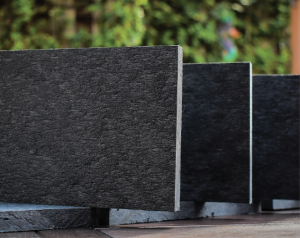
APR’s answer, in part, was to launch a program called Demand Champions in the fall of 2017. That initiative garners commitments from packaging companies, plastics recycling operators and others to purchase new volumes of PCR over the course of a year, often via “work in process” durable goods. Such items include trash bags, plastic pallets and other day-to-day manufacturing essentials.
The idea was to help bolster use of product applications that are well-suited to the PCR being delivered today by the plastics recycling sector. In the program’s first year, “champion” companies leveraged 7 million pounds of PCR they would not have otherwise used, Bedard said. Now in its second year, the program has 19 entities involved, up from 10 in year one.
“It’s OK to go for the low-hanging fruit,” Bedard said. “Does a detergent bottle care if it goes into packaging or a pallet or tote or slip sheet? It’s still finding a home. It’s not being stockpiled.”
Others in the industry are also focused on finding ways to move recovered plastics into end products that do not carry lofty requirements when it comes to color and other resin attributes.
Faubel’s company, Athyron LLC, is manufacturing a product out of its Texas factory called Miura Board, which is a composite wood alternative made of mixed plastics (primarily PE and LDPE) and recovered carpet. Faubel said the company has just under $5 million of outside investment behind it.
Miura Boards can be used in a variety of construction applications, replacing plywood on roofing jobs, for instance, and acting as a “mat” that vehicles drive over on muddy work sites.
“We are not there to provide 16 different shades of pink,” Faubel said. “If you’re going to make a 100 percent recycled product, the color will be whatever color the raw materials is.”
By continuing to find ways to move recycled resins into these more rough-and-tumble applications, reclaimers could be setting themselves up to move more PCR into higher-end goods down the line.
“If we had more demand at a workable price,” said Herring of Plastic Materials, Inc., “we would expand and be able to recycle more and more material.”
Shifts in acceptable aesthetics?
While shipping pallets and construction materials certainly represent a growing opportunity for bolstering the PCR market, some stakeholders note that the packaging realm could become more PCR-friendly.
For years, the recycling industry has had to face the fact that much of the PCR stock being produced does not provide the flawless look that brand owners need for their bottles, tubs and other items to stand out on the shelf.
However, as consumer shopping patterns change, the aesthetics of packaging might not remain quite so important.
“With e-commerce becoming more and more popular, people aren’t making that decision on the outer package all the time,” said John Bartell, vice president of communications at PAC Worldwide, which manufacturers plastic mailing supplies and is part of the Demand Champions program. “I think brands have a big opportunity to have a better environmental message by actually skewing graphics a bit.”
In addition, brand owners are continuing to set sustainability goals that often involve higher levels of PCR use. Procter & Gamble, for instance, has a stated goal of doubling its use of PCR between 2010 and 2020. PepsiCo last October announced a goal of hitting 25 percent PCR across its plastic packaging portfolio by 2025.
“Does a detergent bottle care if it goes into packaging or a pallet or tote or slip sheet? It’s still finding a home. It’s not being stockpiled.”
“They are all shooting for higher and higher content,” noted Byron Geiger, president of Athens, Ala.-based plastics reclaimer Custom Polymers PET. “They understand they are going to need to modify some of their expectations.”
Geiger said his company has worked with several brands to “re-evaluate their specifications on what is truly acceptable.” Those conversations center on questions such as whether a small amount of yellowness in otherwise clear plastic may be deemed OK by buyers.
“There is a lot of work to be done in that arena,” Geiger noted.
Partnerships in the chain
Discussions about expectations around resin attributes exemplify the growing cohesion between brands and the recycling industry, a trend that itself has significant potential to boost PCR demand.
Steve Sikra, associate director for global products stewardship at Procter & Gamble (P&G), noted that when it comes to recycled materials, his company has identified five “vectors of the value chain” – these include materials collection, outreach to materials generators, recyclables separation and processing, end market development, and product design. “We have roles in each of these,” Sikra said.
How exactly does all that tie into PCR demand? For one thing, when a major user of resin involves itself in numerous links in the recycling chain, it knows better what to reasonably expect in terms of supply capabilities – and where attention and investments can be most useful.
An example is P&G’s recent backing of a recycling operation in Ohio called PureCycle Technologies, which will decontaminate recovered PP and bring it back to “virgin-like” material, said Sikra. He noted the facility, which broke ground in summer of 2017, will be operating at full scale by 2020.
“We know demand for PP is just massive, but its recovery is in its infancy,” said Sikra. “We recognize no one company can do this alone.”
Similarly, Faubel of Athyron LLC said companies like his that currently rely on PCR could grow and use even more if they had stronger integration with the supply chain itself. He noted that his team is focused on engineering a product and system to turn recycled materials into a sellable product; what they lack is in-depth knowledge of sourcing and transportation.
“Let’s say we have an alliance with someone whose business is moving mountains of plastic waste,” he said. “That would be very interesting.”
Optimizing information
Some leaders note that another concrete step the industry can take to drive more PCR demand would be to deliver the specs around recycled resins to end users in a more organized manner.
Martin Baumann, vice president of sales at Erema Engineering, previously worked in the injection molding business. In that sector, he was familiar with turning to data sheets from virgin resin suppliers when a particular plastic type was needed. Those info sheets list out all the mechanical, physical and chemical properties of a given plastic.
“On the virgin side, there are books you can get of all the materials and resin makers and resin choices,” Baumann said. “If you are a designer, you search and get the options. We don’t have that on the recycling side.”
Indeed, when it comes to recovered resins, product details are typically communicated via email or one-on-one conversations between buyers and sellers. Without easily searchable databases of PCR, potential end users may not even know that recycled plastic options may be available to fit their needs.
“We need a catalog of made-to-spec resins that use recycled content,” said Baumann. “That would fundamentally change the demand discussion.”
Tie in public sector
As cities and states continue to set higher materials recovery targets and develop a deeper understanding of the importance of market development to support such goals, the plastics recycling sector has an opportunity to strengthen PCR demand through procurement commitments.
Governments can drive recycled resin usage by demanding that recycled content be part of the wide array of products used in public-sector offices, transportation projects and more.
Sikra of P&G is a member of the executive committee of The Recycling Partnership, a group that leverages private dollars to boost the North American municipal recycling infrastructure. He said that when the organization gives a grant to a city, it will also help municipal leaders take steps that can drive demand for the very materials being recovered.
“We are asking that PCR be used in the recycling carts that will be used out on the streets,” he noted.
APR’s Bedard said she has heard from a number of municipal leaders who want their cities to become part of the Demand Champions program, which in its first two years has only been open to private-sector businesses. “They want their purchasing power to result in demand pull,” she said.
According to Bedard, APR hopes to have a system in place by the end of 2019 to incorporate public-sector entities into the initiative.
Talk it up
A final critical step that industry stakeholders can take on the demand front is simply spreading the word about the possibilities (and importance) of boosting usage of PCR.
PAC Worldwide’s Bartell said that as his company has become increasingly focused on using more products that have recycled content, he and his colleagues have brought some of their suppliers into the conversation.
“I think evangelizing is a strong word, but we’re talking with anyone who will listen,” he said. “Why not talk to a customer about the [Demand Champions] program? They have huge distribution centers.”
Geiger of Custom Polymers PET said the chatter around using PCR is starting to make an impact, one that his company has felt firsthand.
In late December 2018, the reclaimer was acquired by Indorama Ventures, one of the world’s largest manufacturers of virgin PET. In a news release, Indorama stated that the reclaimer purchase will “open up new opportunities to meet the ever increasing food grade RPET demand for more sustainable packaging solutions by major brand owners.”
For Geiger, the Indorama move was indication that major packaging stakeholders are ready to play a bigger role in the recycling system, a fact that could have huge demand repercussions.
“The large resin manufacturers and chemical companies are realizing the circular economy is not just talk, that they need to put their money where their mouth is,” he said. “They are making sure they are part of sustainability. My expectation is we’ll see more of it.”
Dan Leif is managing editor of Resource Recycling and can be contacted at dan@resource-recycling.com.