






Resource Recycling
  • The Latest
  • Analysis
    • All
    • Certification Scorecard
    • Industry Announcements
    • Opinion
    The electronics recycling industry is undergoing a transformation from labor-intensive manual operations to highly automated, AI-driven facilities that use advanced robotics, cleaner chemistry and digital tracking systems to extract critical materials.

    The cyber-physical MRF: AI and robotics reshape e-waste recovery

    Certification scorecard for the week of Feb. 9, 2026

    Meta-Corning deal signals IT hardware retirement wave

    Meta-Corning deal signals IT hardware retirement wave

    Malaysia clamps down on illegal e-waste imports amid probes

    Malaysia clamps down on illegal e-waste imports amid probes

    URT builds alliance to remake electronics plastics at scale

    ICYMI: Top 5 e-scrap stories from January 2026

    The electronics recycling industry is undergoing a transformation from labor-intensive manual operations to highly automated, AI-driven facilities that use advanced robotics, cleaner chemistry and digital tracking systems to extract critical materials.

    Certification scorecard for the week of Feb. 2, 2026

    Auditors warn EU may fall short on critical metals

    Auditors warn EU may fall short on critical metals

    Industry announcements for January 2026

    Industry announcements for February 2026

    ICYMI: Top 5 recycling stories from January 2026

  • Conferences
  • Publications

    Other Topics

    Textiles
    Organics
    Packaging
    Glass
    Brand Owners

    Metals
    Technology
    Research
    Markets
    Grant Watch

    All Topics

Subscribe
No Result
View All Result
Resource Recycling
  • The Latest
  • Analysis
    • All
    • Certification Scorecard
    • Industry Announcements
    • Opinion
    The electronics recycling industry is undergoing a transformation from labor-intensive manual operations to highly automated, AI-driven facilities that use advanced robotics, cleaner chemistry and digital tracking systems to extract critical materials.

    The cyber-physical MRF: AI and robotics reshape e-waste recovery

    Certification scorecard for the week of Feb. 9, 2026

    Meta-Corning deal signals IT hardware retirement wave

    Meta-Corning deal signals IT hardware retirement wave

    Malaysia clamps down on illegal e-waste imports amid probes

    Malaysia clamps down on illegal e-waste imports amid probes

    URT builds alliance to remake electronics plastics at scale

    ICYMI: Top 5 e-scrap stories from January 2026

    The electronics recycling industry is undergoing a transformation from labor-intensive manual operations to highly automated, AI-driven facilities that use advanced robotics, cleaner chemistry and digital tracking systems to extract critical materials.

    Certification scorecard for the week of Feb. 2, 2026

    Auditors warn EU may fall short on critical metals

    Auditors warn EU may fall short on critical metals

    Industry announcements for January 2026

    Industry announcements for February 2026

    ICYMI: Top 5 recycling stories from January 2026

  • Conferences
  • Publications

    Other Topics

    Textiles
    Organics
    Packaging
    Glass
    Brand Owners

    Metals
    Technology
    Research
    Markets
    Grant Watch

    All Topics

Subscribe
No Result
View All Result
Resource Recycling
No Result
View All Result
Home Recycling

Exporter describes Southeast Asian shipment strife

Colin StaubbyColin Staub
June 12, 2018
in Recycling

Many exporters of recovered materials have increased the volume they send to Southeast Asia this year in an effort to fill the void left by China.

But recently, that strategy has become tenuous as well, because officials in several of the key Southeast Asian export destinations have signalled their interest in waste import restrictions. Government officials and shipping lines have made a number of announcements indicating tighter import controls for recovered plastic and paper are possible. And in the case of Vietnam, restrictions and increased regulation have already begun to take effect.

To get a better idea of the on-the-ground impact of these announcements for exporters of recovered material, Resource Recycling spoke with Pablo Leon, Asia manager for Fosimpe S.L., a major Spanish broker of recovered plastics.

In January, Leon described how Fosimpe had reacted to the turbulent export market during 2017. Part of the company’s strategy involved shipping more material into the Southeast Asian market. In a follow-up interview, Leon discussed the regulatory changes in that region during the past few months.

How has Southeast Asia played into your company’s export strategy?

By February, we were starting to shift to some Southeast Asian countries. We already had some partners there that were taking our materials, but not big quantities before everything in China happened. To keep developing these relationships, we began to ship more materials there. Mostly the good-quality [loads] because after what happened in China, it was very difficult to find an outlet for the lower grades.

They started taking these, they started more capacity. Most of our partners had bought more machines from their equipment suppliers so that they could process more, because they knew that it was a good opportunity for them since China could not process material anymore. Southeast Asia looked like the natural destination because it’s close to China. The demand for pellets is still in China because most of the marketers of finished products are still in China, so they need it there.

“Vietnamese ports, same as all Southeast Asian ports, they are not so big. They are not like in China. So they started to become congested.”

In this area they all have free trade agreements with China, so for the Chinese it was cheaper to buy pellets from there than from Europe or the U.S. That’s one of the most important things because if they buy the pellets from Europe or from the U.S. directly, then they need to pay import tax.

Pablo Leon, Asia manager for Fosimpe S.L.

Everything was going well; we started shipping big volumes. We also saw some Chinese recyclers that opened facilities in all Southeast Asian countries, but mostly in Malaysia, Thailand and Vietnam. We have been shipping big volumes for a few months. We got back to our biggest volumes, and we even shipped more than before because these factories enlarged their capacities so they could handle very big volumes. And then, they started having some problems in Vietnam.

When did you start hearing about these problems, and what were they at first? Was it ports filling up at capacity?

No, actually, it was mostly that the Vietnamese government cancelled some import licenses. I don’t know the exact reason why it happened. My clients there, they told me that suddenly they were canceled and the Vietnamese government was performing checks on most of the import licenses.

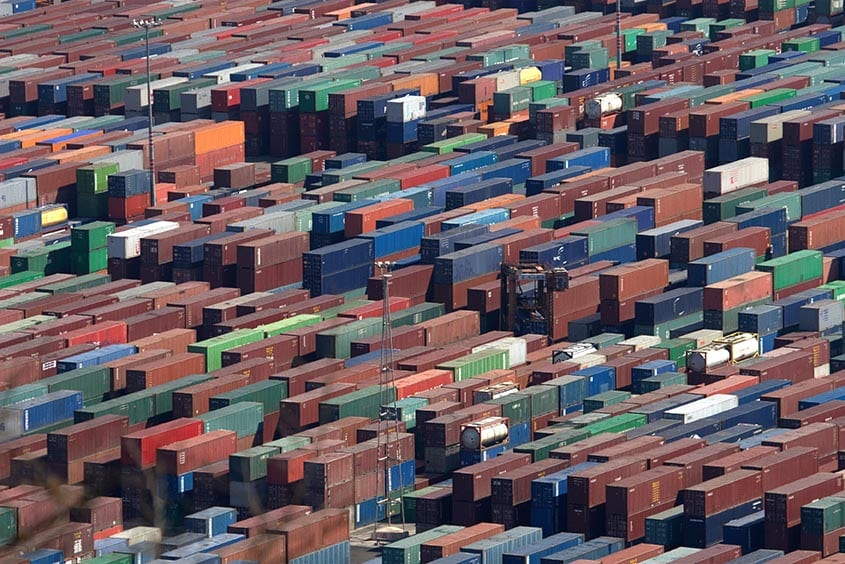
That was around the Vietnamese New Year (mid-February) and that’s when everything started to be delayed in Vietnam because the government was checking the import licenses and companies couldn’t get the customs clearance for their containers, so then containers started to pile up in the ports. And Vietnamese ports, same as all Southeast Asian ports, they are not so big. They are not like in China. So they started to become congested.

There were many Chinese opening factories there. I think Vietnam has been the country where the Chinese companies opened the most factories. The ports started becoming very congested after one month of this.

The Vietnamese government issued import permits after that, or they renewed the current ones, but it was too late. And there were less import licenses than before. So the situation has not gotten any better, even though most of the containers that were stuck at the port in February, they have been cleared already. But there are many others that are still there.

Now, the processing time at the Vietnamese ports is much longer than before. Some terminals in Vietnam have stopped receiving plastic scrap, and we don’t know how the situation is going to be in the future.

Vietnam has been recycling plastic since much earlier than this, so I’m not so sure if they just want to get rid of this, which wouldn’t make much sense since they already have the industry, or they are trying to regulate it. But they still need to find a way.

“These countries, they don’t have the experience that China has. Even the authorities, the customs officers or the environmental department, they don’t really have a long experience, as in China, to tell which material is good, which material is bad, and how to recycle it.”

How have the shipping companies responded to this situation?

When this started happening, a few shipping lines stopped taking any bookings for plastic scrap for Vietnam. From Europe, there are no shipping lines taking any bookings to Vietnam – even if the customer has an import license. Even if everything is OK, they are not taking bookings. Some of our customers, they still have an import license but we cannot ship the containers in.

Right now, we are mostly exporting everything to Malaysia and Thailand, and also to Indonesia.

We’ve been hearing about possible restrictions in those countries as well.

We heard about these rumors a couple of weeks ago. There was a raid by the police in Thailand. They did some inspection of an e-waste processor in Thailand. They said that they found some plastic garbage that cannot be recycled, and then they posted a photo of decent LDPE film in bales, which can be totally recycled.

These countries, they don’t have the experience that China has. Even the authorities, the customs officers or the environmental department, they don’t really have a long experience, as in China, to tell which material is good, which material is bad, and how to recycle it. So I’m not so sure, if they even regulate it, whether it is going to be the right way.

I mean, the Chinese government made a decision. It can be judged in many different ways. But at least they knew the materials, they knew what they were doing and the goals they wanted to reach. But in these Southeast Asian countries, they don’t have as much experience, so I’m not sure how they are going to regulate it, and whether it will be well-informed.

There are many different kinds of plastics that can be recycled, but they don’t know how to tell, so they just label everything as “foreign garbage,” which is a very fashionable term. I hope that at least they get some accurate information before taking any measures.

Photo credit: Lukasz Gonerski

 

Tags: AsiaTrade & Tariffs
TweetShare
Colin Staub

Colin Staub

Colin Staub was a reporter and associate editor at Resource Recycling until August 2025.

Related Posts

Alpek talks PET overcapacity, soft demand

byAntoinette Smith
February 11, 2026

Executives from the Mexico-headquartered polyester giant said the Chinese government has acknowledged issues and convened PET producers, but Alpek is...

Member states select new chair for global plastics treaty

Member states select new chair for global plastics treaty

byAntoinette Smith
February 10, 2026

During a short session, the Intergovernmental Negotiating Committee elected Chilean diplomat Julio Cordano to continue efforts toward an internationally binding...

Malaysia clamps down on illegal e-waste imports amid probes

Malaysia clamps down on illegal e-waste imports amid probes

byDavid Daoud
February 6, 2026

Malaysia’s growing role as a hub for global e‑scrap is colliding with corruption probes, large container seizures and regional backlash. ...

Ace Metal and Metro Metals take the most weight in Washington

US-EU trade rift adds risk now for ITAD and e-scrap trade

byDavid Daoud
February 2, 2026

Trade tensions between the US and EU are reshaping ITAD and e-scrap markets, lifting demand for refurbished hardware while increasing...

Equity firm invests in Indian chemical recycling platform

Equity firm invests in Indian chemical recycling platform

byAntoinette Smith
January 21, 2026

Indian recycling technology firm PolyCycl secured Series A investment from Zerodha’s Rainmatter to scale solvent-based polyolefin recycling technology and expand...

The Re:Source Podcast Episode 1: E-Scrap look-back and 2026 outlook

The Re:Source Podcast Episode 1: E-Scrap look-back and 2026 outlook

byStefanie Valentic
November 21, 2025

Welcome to The Re:Source, a podcast for insights, strategies and stories from the world of materials management, recycling and the...

Load More
Next Post

Brand owner struggles with recyclability goal

More Posts

Oregon’s Recycling Modernization Act faces injunction

Court partially blocks Oregon EPR law, dismisses bulk of lawsuit

February 10, 2026
Chinese processing group details goals for US visit

AMP lays out vision of next-generation, AI-driven MRFs

July 24, 2024
Malaysia clamps down on illegal e-waste imports amid probes

Malaysia clamps down on illegal e-waste imports amid probes

February 6, 2026

REUSE Act heads to US House for consideration

February 9, 2026
Meta-Corning deal signals IT hardware retirement wave

Meta-Corning deal signals IT hardware retirement wave

February 9, 2026

ecoATM recycled 7.5M phones in 2025 as payouts hit $1.5B

February 10, 2026
Texas sues over dumped wind turbine blades

Texas sues over dumped wind turbine blades

February 10, 2026

APR, industry create proactive guidance for PET caps

February 12, 2026

Alpek talks PET overcapacity, soft demand

February 11, 2026
The electronics recycling industry is undergoing a transformation from labor-intensive manual operations to highly automated, AI-driven facilities that use advanced robotics, cleaner chemistry and digital tracking systems to extract critical materials.

The cyber-physical MRF: AI and robotics reshape e-waste recovery

February 12, 2026
Load More

About & Publications

About Us

Staff

Archive

Magazine

Work With Us

Advertise
Jobs
Contact
Terms and Privacy

Newsletter

Get the latest recycling news and analysis delivered to your inbox every week. Stay ahead on industry trends, policy updates, and insights from programs, processors, and innovators.

Subscribe

Welcome Back!

Login to your account below

Forgotten Password?

Retrieve your password

Please enter your username or email address to reset your password.

Log In

Add New Playlist

No Result
View All Result
  • The Latest
  • Analysis
  • Recycling
  • E-Scrap
  • Plastics
  • Policy Now
  • Conferences
    • E-Scrap Conference
    • Plastics Recycling Conference
    • Resource Recycling Conference
    • Textiles Recovery Summit
  • Magazine
  • About Us
  • Advertise
  • Archive
  • Jobs
  • Staff
Subscribe
This website uses cookies. By continuing to use this website you are giving consent to cookies being used. Visit our Privacy and Cookie Policy.