
The Circular Action Alliance (CAA) didn’t have a blueprint. When the producer responsibility organization (PRO) formally incorporated as a 501(c)3 nonprofit in December 2022, no comparable entity existed in the United States.
Paper and packaging EPR was new territory, and the infrastructure to implement it was being built from scratch by people who, in many cases, had to be found in Canada and Europe because the domestic expertise didn’t exist yet.
EPR, short for extended producer responsibility, shifts the cost and logistics of managing waste from local governments and taxpayers onto the companies that produce the packaging. Under these laws, producers pay fees based on the materials they put into the market, and that money funds recycling infrastructure, collection programs and consumer education.
As of 2026, seven states, the first two being Oregon and Maine in 2021 and 2022, respectively, have passed packaging EPR laws, and PROs like CAA exist to help producers navigate and comply with them.
CAA relied on consultants in the beginning, making its first full hire in April 2024. Since then, the organization has ballooned to 170 employees, with active programs in Oregon, Colorado and California and reporting deadlines that rolled through Minnesota, Washington and Maryland on May 31, 2026. More states are on the lineup.
It’s a trajectory that’s easy to summarize numerically: zero employees to 170, zero states to six. However, it’s harder to understand in terms of what actually had to happen behind the scenes.
Building a national compliance infrastructure for an entirely new category of environmental law meant building expertise that didn’t exist and trust with an industry that didn’t fully understand what it was looking at.
As the organization scales, so does the persistent question of what CAA actually is and its role in the ecosystem of extended producer responsibility (EPR) legislation.
Can we build it?
The confusion is understandable. CAA sits at the intersection of being a nonprofit, a compliance vehicle and the only multi-state PRO for paper and packaging EPR in the United States.
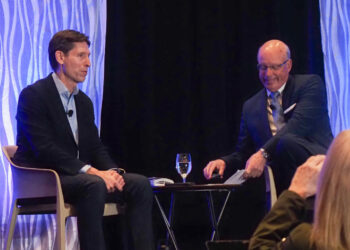
Jeff Fielkow, CAA’s CEO, offered the clearest definition: “We take the law, and we build a plan that will help producers to achieve compliance under that law.”
Role distinction matters. CAA does not set EPR targets. It does not lobby for new legislation. It does not issue penalties. The states enforce while CAA implements. When a producer violates compliance requirements, enforcement falls to state agencies, not CAA.
“People say, ‘Well, are you part of the government, or can you enforce a penalty on me?’” he said. “That’s not our role. We’re building. We support the producers.”
Fielkow describes it as putting on a construction hat, alluding to “Bob the Builder,” the popular children’s series. Legislators write the statute, regulators write the rules and CAA builds the program plan that translates both into operational reality.
Start your engines
What’s easy to lose in CAA’s scale today is just how improvised the early days were. When the organization incorporated in late 2022, it had no employees of its own, operating under incubation from The Recycling Partnership. Its first employee wasn’t hired until April 2024. From there, headcount moved fast: roughly 20 by mid-2024, climbing to 170 within about a year.
In the earliest stages, CAA leaned almost entirely on outside consultants, many sourced from Canada and Europe, because no domestic talent pool existed with direct experience standing up a paper and packaging PRO.
The mandate from the start was to convert that borrowed expertise into in-house capability, and the organization says it’s largely done that. CAA can now hire people with no EPR background and train them internally.
CAA describes itself not as a single startup, but as a startup running six more startups inside it, one for each state program it oversees: Oregon, California, Colorado, Washington, Maryland and Minnesota.
Each comes with its own regulatory timeline and implementation challenges, even as CAA works to standardize the underlying framework. Launching the first state program was, in some ways, more straightforward than launching the third, California, with its scale and complexity, Fielkow said. The organization expects states four, five and six to move faster, now that the institutional muscle memory exists: program plan frameworks, in-house regulatory writers and a defined process for navigating state rulemaking.
The skill sets required to run that machine are deliberately varied. CAA has built a team blending recycling industry veterans, packaging converters and suppliers, and people who’ve worked on the producer side, giving the organization an internal understanding of compliance obligations from multiple vantage points across the value chain.

Authority song
Critics, including environmental groups, have been challenging California’s SB 54 framework and argue that CAA holds too much authority over fee-setting with insufficient public accountability. The organization disputes that characterization.
“We’ve been transparent. We continue to be transparent. We will always be transparent,” Fielkow said. “Everything we’ve ever done, when we build a program plan or an idea, we take it to public consultation. We’ve had thousands of people on our webinars. We post our documents publicly. We take feedback from interested parties all the time, and we make those changes. While we do protect proprietary analytical mechanics and confidential producer data, the methodology, budgets and fee schedules are public. There’s never been anything done in a secretive manner.”
On fee-setting specifically, Fielkow said the biggest driver of cost for producers isn’t CAA’s methodology, it’s noncompliance. Producers who don’t register push up costs for those who do, he said. “If the three of us went out and bought a pizza and one of us didn’t pay the bill, my bill’s high. But if we split the bill equally, it’s reasonable for everybody.”
CAA’s program plans are public documents that require state approval before taking effect. The organization is also required by law to publicly report which producers have registered with CAA. Enforcement authority stops there.
No slowing down
The compliance picture is constantly moving. May 31 reporting deadlines passed for Minnesota, Washington and Maryland, designed to establish baselines for eventual fee calculations. Oregon is operating in its second year of full implementation. Colorado launched recently. California’s 2027 implementation is already driving rapid internal scaling at CAA, and Maine is in the process of selecting a PRO. CAA is already drafting an early version of Maryland’s program plan, even though the state doesn’t go live until July 2028.
“There’s no slowing down here,” Fielkow said. “There’s always something we’re building, and there’s always something we’re implementing and there’s always something we’re operating.”
Producer compliance across multiple states remains one of the steeper learning curves CAA is managing. The organization’s approach is a unified portal that allows producers registered in one state to add coverage in additional states by clicking through a state-specific agreement without starting over.
Producers who need help locating their own data, such as tracing packaging materials through supply chains, are directed to third-party consultants rather than CAA, whose role is limited to making it easy to upload and report data once producers have it.
Moving the needle with consumers
While much of CAA’s work happens behind the scenes in registration portals and state rulemaking dockets, the organization is also stepping into consumer-facing recycling education, a space that’s historically been inconsistent at best.
Oregon, CAA’s longest-running implementation, is an early look at that effort. Just one-year since launch, the program’s outreach isn’t built around explaining what EPR is in technical terms, said Larine Urbina, CAA’s SVP of communications.
“It’s about helping people understand that meaningful changes are happening to their recycling system, what those changes mean for them, and how they can participate successfully. That includes simple, everyday actions—knowing what belongs in the bin, what doesn’t, whether to put a cap back on a bottle, or how to recycle aluminum foil correctly,” she said.
Urbina pointed to a recent Portland Pickles minor league baseball game, where CAA ran an activation focused entirely on a simple habit, balling up aluminum foil instead of leaving it flat, so it can actually be captured and recycled.
For Urbina, that kind of granular outreach represents one of the most underappreciated benefits of EPR. Unlike legacy recycling education, typically funded inconsistently city to city or zip code to zip code, EPR creates dedicated, ongoing funding for public education and the ability to run one consistent statewide message instead of a patchwork of conflicting instructions.
“My bin sticker says one thing, my email says something else. What do you follow?” she said, describing the kind of mixed messaging EPR funding is designed to eliminate.
That consistency, she said, is something the industry hasn’t had access to before and the implications grow as CAA moves into larger, more complex states. California, with its scale and diversity of local jurisdictions, will be the biggest test yet of whether a unified, well-funded education campaign can move the needle on consumer behavior in a way piecemeal local efforts never could.
Finding the good
CAA’s position on future policy is cemented in implementation, not advocacy. The organization does not push for EPR in states that haven’t passed laws, and it won’t advocate for specific legislative approaches.
“We are not a lobbying firm that goes to states that don’t have a law,” Fielkow said. “We’ll provide purely facts if somebody asks what good EPR looks like, but that’s it.”
For now, the organization is focused on deepening implementation in existing states, building toward California’s complex 2027 launch and developing the internal competency to stand up new state programs without starting from zero each time.
“Starting the first state was probably still easier than starting the third state, which is California,” Fielkow said. “But starting states four, five and six will be relatively easy, because we already know how to build program plans.”
Teamwork makes the dream work
Pressed for a final thought on what stands out most after three years of rapid growth, Fielkow didn’t point to deadlines or program plans.
He pointed to the workers who joined a startup building something that didn’t exist before, in service of better waste and recycling systems and a more circular economy. Many came from inside the industry itself, including former trade journalists who now work on CAA’s internal team.
It’s a detail that illuminates something larger about where EPR implementation stands today: an industry that spent years talking about producer responsibility in the abstract is now watching the people who covered that conversation help build it.
Fielkow put it simply when reflecting on the organization’s growth: “I’m the most proud of the 170 people that joined CAA and dedicated their profession here to a startup that is difficult work — to actually help producers and to make a better recycling infrastructure. I think they’re doing great things.”
Asked what’s been most overlooked in conversations about CAA’s role, Fielkow pointed to collaboration, or the organization’s function as a convener across a value chain that doesn’t typically operate in the same room.
Public comment and consultation isn’t just a transparency mechanism, he said. It’s how CAA brings producers, recyclers, haulers and local governments to the same table around a shared goal: the systems-level change EPR laws are designed to produce.
“It’s exciting that we’re able to deliver impact while really being very clear on our lane,” Urbina added.
This story first appeared in the August 2026 issue of Resource Recycling Magazine.