Resource Recycling
  • The Latest
  • Analysis
    • All
    • Certification Scorecard
    • Industry Announcements
    • Opinion
    Apple store

    Apple leads on inputs, faces questions on ITAD

    Unlocking the power of source reduction in US EPR

    Unlocking the power of source reduction in US EPR

    Following petition, Microsoft extends Windows 10 support

    Windows AI Recall is pushing data destruction upstream

    Certification Scorecard — Week of April 27, 2026

    Five trends shaping PCR packaging to 2031

    Intel sign on company building with blue sky and trees.

    Intel boosts margins by selling what it used to scrap

  • Conferences
    • Resource Recycling Conference
    • Plastics Recycling Conference
    • E-Scrap: The Longevity Conference
    • Textiles Recovery Summit
  • Publications
    • E-Scrap News
    • Plastics Recycling Update
    • Policy Now
    • Resource Recycling
    • Other Topics
      • Brand Owners
      • Critical Minerals
      • Glass
      • Grant Watch
      • Markets
      • Organics
      • Packaging
      • Research
      • Technology
      • Textiles
      • All Topics
Subscribe
No Result
View All Result
Resource Recycling
  • The Latest
  • Analysis
    • All
    • Certification Scorecard
    • Industry Announcements
    • Opinion
    Apple store

    Apple leads on inputs, faces questions on ITAD

    Unlocking the power of source reduction in US EPR

    Unlocking the power of source reduction in US EPR

    Following petition, Microsoft extends Windows 10 support

    Windows AI Recall is pushing data destruction upstream

    Certification Scorecard — Week of April 27, 2026

    Five trends shaping PCR packaging to 2031

    Intel sign on company building with blue sky and trees.

    Intel boosts margins by selling what it used to scrap

  • Conferences
    • Resource Recycling Conference
    • Plastics Recycling Conference
    • E-Scrap: The Longevity Conference
    • Textiles Recovery Summit
  • Publications
    • E-Scrap News
    • Plastics Recycling Update
    • Policy Now
    • Resource Recycling
    • Other Topics
      • Brand Owners
      • Critical Minerals
      • Glass
      • Grant Watch
      • Markets
      • Organics
      • Packaging
      • Research
      • Technology
      • Textiles
      • All Topics
Subscribe
No Result
View All Result
Resource Recycling
No Result
View All Result
Home Resource Recycling Magazine

First Person Perspective: Why we shouldn’t backpedal on carton recycling

byJason Pelz
August 5, 2019
in Resource Recycling Magazine
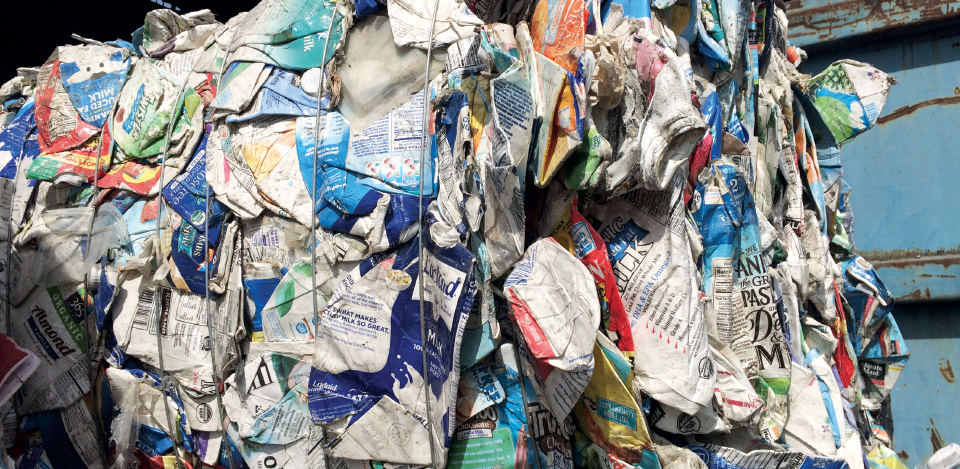
Post-consumer recycled cartons have several end markets throughout North America.

Lately, consumers have been exposed to new – and often confusing – information about recycling, encountering many headlines about the effects of China’s ban on waste imports from the U.S.

Suddenly, avid recyclers may be feeling somewhat uncertain about the practice. In fact, according to a poll commissioned recently by The Recycling Partnership, 73% of consumers are uncertain about what is recyclable.

One piece of good news in all this is that food and beverage carton recycling is still going strong.

When materials recovery facilities (MRFs) sort post-consumer cartons into their own Grade #52 bale, they create a valuable commodity that has several domestic end market options. China has never been a market for Grade #52 carton loads from the U.S., meaning that we can and should continue to recycle our cartons, paying particular attention to sort them into their own grade.

Misconceptions about material makeup

Cartons are made primarily of high-quality fiber that should not end up in landfills. One common misconception about cartons is that they can’t be recycled – or are hard to recycle – because they have multiple layers.

Gable top cartons – the kind that package milk, creamer, egg whites and other refrigerated products – are made mostly of paper with thin layers of polyethylene (plastic) to hold in the liquid. Aseptic, or shelf stable, cartons that package juice drinks, soups, wine and other non-refrigerated products also contain a layer of aluminum to block out light and oxygen.

Collected Grade #52 cartons have several end markets throughout North America, including paper mills, such as Sustana-Fox River Fiber in Wisconsin, Great Lakes Tissue in Michigan and Kimberly-Clark in Mexico. Upon arrival at a paper mill, the fiber is separated from the polyethylene and aluminum in a machine called a hydrapulper, which resembles a giant kitchen blender. The pulp that comes out is used to make new paper products, such as paper towels, tissues and writing paper. The plastic and aluminum are used to generate energy or are sold to manufacturers that use them for materials that resemble lumber board.

Post-consumer recycled cartons also can go direct to manufacturers, such as Continuus Materials Holdings LLC, which is located in Des Moines, Iowa (this operation was previously known as ReWall; Continuus acquired ReWall last year). Continuus leverages the material to craft environmentally friendly building materials. The entire carton is used to make the product through a process that uses no water or chemicals. The polyethylene and aluminum components (including the caps and straws) act as a binding agent, and combined with the fiber, they are recycled into roof cover board, wall board and other building materials. This provides environmentally conscious consumers with a sustainable option for building homes and businesses, but also results in a product that is extraordinarily durable.

There are also steady international markets for post-consumer cartons from the U.S. and Canada, including mills in South Korea, Thailand and India. Each mill has unique arrangements for their supply of feedstock, including cartons, often working through their own broker networks.

With all of this in mind, residents ought to rest easy knowing that their cartons are being recycled and that they are going on to become a variety of new products. This is where recycling coordinators and other stakeholders invested in their communities’ recycling infrastructures have a critical role to play.

A study released by the Carton Council last year found that nearly three-quarters (74%) of people believe that recycling is important and should be a priority. We must continue making recycling information readily available in accordance with best practices to avoid potential confusion and give cartons, along with other recyclable materials, their best shot at making it into the recycling bin, and then beyond the curb to these end markets.

At the center of robotic revolution in sorting

Meanwhile, work is ongoing to ensure cartons are efficiently sorted at facilities. To further encourage separating of cartons into Grade #52, the Carton Council has partnered with AMP Robotics since 2017 to bring the first recycling robots to Alpine Waste and Recycling in Denver and Dem-Con Companies in Minneapolis.

And in mid-June, it was announced that Single Stream Recyclers in Sarasota, Fla. was installing a catron-sorting robot from AMP in its facility. The unit is the first of six planned for the 100,000-square-foot MRF.

These robots have been programmed to recognize common logos, shapes and labels typically associated with food and beverage cartons. Using this repository of information, they each can pick about 80 cartons per minute with remarkable accuracy while also taking up less space than other mechanical sorters. With the help of artificial intelligence, these robots learn as they sort more cartons and go on to share their data and learnings with one another via cloud technology, offering a stunningly accurate means of sorting cartons into Grade #52 bales. They are also being used to sort other materials, helping to reduce contamination and improve the collection of the most valuable materials.

As the demand for this technology in recycling increases and MRFs continue to adopt these practices, post-consumer cartons will continue to have a home in established end markets, with more to come in the near future. This should make everyone feel as though they can recycle their cartons with confidence. It’s also a call to action for those communities that are still working to add cartons to their recycling programs and are being told that cartons are too difficult to recycle or don’t have end markets.

We all care about recycling, and that doesn’t change just because of shifting policy in Asia or anywhere else. We owe it to ourselves and to our planet to continue full steam ahead and not backpedal on the remarkable progress that has already been made over the last several years. Looking ahead, let’s set ourselves up for success by ensuring cartons are included in the conversation and are being properly recycled in our communities.

Jason Pelz is vice president of recycling projects for Carton Council of North America and circular economy director for Tetra Pak. Visit cartonopportunities.org for resources for MRFs and communities, or email [email protected].

This article originally appeared in the July 2019 issue of Resource Recycling. Subscribe today for access to all print content.

TweetShare
Jason Pelz

Jason Pelz

Related Posts

Lithium-ion battery recycler to build New York facility

Why battery EPR doesn’t have a packaging problem

byStefanie Valentic
May 4, 2026

While packaging EPR fights injunctions, battery EPR has achieved a mostly harmonized legal framework across nearly every state that has...

Electronics are the fire risk battery EPR keeps missing

Electronics are the fire risk battery EPR keeps missing

byStefanie Valentic
May 4, 2026

Pretty much everyone has had a fire at one point or another. That's how Kristyn Oldendorf, senior director of public...

New version of California EPR regulations released

CalRecycle approves SB 54 regulations

byStefanie Valentic
May 2, 2026

CalRecycle approved permanent regulations under SB 54, the state's landmark packaging EPR law. The rules took effect immediately upon filing...

Recycling analysis pinpoints gaps in New York data

New York packaging EPR bill gets nearly 150 amendments

byStefanie Valentic
May 1, 2026

State lawmakers backing New York's Packaging Reduction and Recycling Infrastructure Act introduced nearly 150 amendments, aligning the bill's definitions and...

Minnesota launches first boat wrap recycling program

byAntoinette Smith
May 1, 2026

The organization administering the first US EPR law for plastic boat wrap provides an interactive map of collection sites and...

TechCycle program blends e-scrap processing with workforce training

TechCycle program blends e-scrap processing with workforce training

byKeith Loria
May 1, 2026

CompuCycle has partnered with a school district to launch a program that provides students with disabilities hands-on experience dismantling electronics...

Load More
Next Post

Recology to the rescue after resident recycles $23,000

More Posts

What Netflix’s ‘Plastic Detox’ gets wrong – and right

April 23, 2026
EPR fees are a market signal. Here’s what they’re telling you.

Oregon DEQ flags 250 producers for RMA noncompliance

April 21, 2026
Intel sign on company building with blue sky and trees.

Intel boosts margins by selling what it used to scrap

April 29, 2026
Plastic Ingenuity to use PureCycle PP for coffee lids

Plastic Ingenuity to use PureCycle PP for coffee lids

April 30, 2026
Float-sink technology at the Quantum Lifecycle Partners facility in Toronto, Canada enables the processing of e-plastics.

E-plastics recovery line opens in Canada

April 28, 2026

PCA keeping focus on virgin fiber products

April 27, 2026
Our top stories from April 2022

Peters-Michaud named CEO, Houghton chair of Sage Sustainable Electronics

April 28, 2026
Birch Plastics gets FDA green-light for post-industrial PP

LyondellBasell upgrade to PreZero assets on hold

April 23, 2026
Intel sign outside of company building.

What Intel’s blockbuster quarter means for ITAD

April 27, 2026
Unlocking the power of source reduction in US EPR

Unlocking the power of source reduction in US EPR

May 1, 2026
Load More

About & Publications

About Us

Staff

Archive

Magazine

Work With Us

Advertise
Jobs
Contact
Terms and Privacy

Newsletter

Get the latest recycling news and analysis delivered to your inbox every week. Stay ahead on industry trends, policy updates, and insights from programs, processors, and innovators.

Subscribe

Welcome Back!

Login to your account below

Forgotten Password?

Retrieve your password

Please enter your username or email address to reset your password.

Log In

Add New Playlist

No Result
View All Result
  • The Latest
  • Analysis
  • Recycling
  • E-Scrap
  • Plastics
  • Policy Now
  • Conferences
    • E-Scrap Conference
    • Plastics Recycling Conference
    • Resource Recycling Conference
    • Textiles Recovery Summit
  • Magazine
  • About Us
  • Advertise
  • Archive
  • Jobs
  • Staff
Subscribe
This website uses cookies. By continuing to use this website you are giving consent to cookies being used. Visit our Privacy and Cookie Policy.