





Resource Recycling
  • The Latest
  • Analysis
    • All
    • Certification Scorecard
    • Industry Announcements
    • Opinion

    AI and the changing economics of retired hardware

    Certification Scorecard — Week of June 8, 2026

    ITAD is moving past its adolescent phase: beyond end-of-life

    Rainforest

    Inside the Circle: What the rainforest can teach us about EPR

    Closeup of a printed circuitboard

    Hardware demand puts new focus on parts harvesting

    Rare look inside the world’s largest plastics recycler

    Mass balance matters: Why different rules can lead to different outcomes 

  • Conferences
    • Resource Recycling Conference
    • Plastics Recycling Conference
    • E-Scrap: The Longevity Conference
    • Textiles Recovery Summit
  • Publications
    • E-Scrap News
    • Plastics Recycling Update
    • Policy Now
    • Resource Recycling
    • Other Topics
      • All Topics
      • Brand Owners
      • Critical Minerals
      • Glass
      • Grant Watch / RFPs
      • Markets
      • Organics
      • Packaging
      • Research
      • Technology
      • Textiles
Subscribe
No Result
View All Result
Resource Recycling
  • The Latest
  • Analysis
    • All
    • Certification Scorecard
    • Industry Announcements
    • Opinion

    AI and the changing economics of retired hardware

    Certification Scorecard — Week of June 8, 2026

    ITAD is moving past its adolescent phase: beyond end-of-life

    Rainforest

    Inside the Circle: What the rainforest can teach us about EPR

    Closeup of a printed circuitboard

    Hardware demand puts new focus on parts harvesting

    Rare look inside the world’s largest plastics recycler

    Mass balance matters: Why different rules can lead to different outcomes 

  • Conferences
    • Resource Recycling Conference
    • Plastics Recycling Conference
    • E-Scrap: The Longevity Conference
    • Textiles Recovery Summit
  • Publications
    • E-Scrap News
    • Plastics Recycling Update
    • Policy Now
    • Resource Recycling
    • Other Topics
      • All Topics
      • Brand Owners
      • Critical Minerals
      • Glass
      • Grant Watch / RFPs
      • Markets
      • Organics
      • Packaging
      • Research
      • Technology
      • Textiles
Subscribe
No Result
View All Result
Resource Recycling
No Result
View All Result
Home Resource Recycling Magazine

Community Spotlight: Economic incentive brings high diversion for Colorado city

Colin StaubbyColin Staub
June 25, 2018
in Resource Recycling Magazine

A mid-sized Colorado municipality has achieved enviable diversion results as its program has progressed for the past 25 years. One key to its success? Early adoption of a pay-as-you-throw initiative, according to local officials.

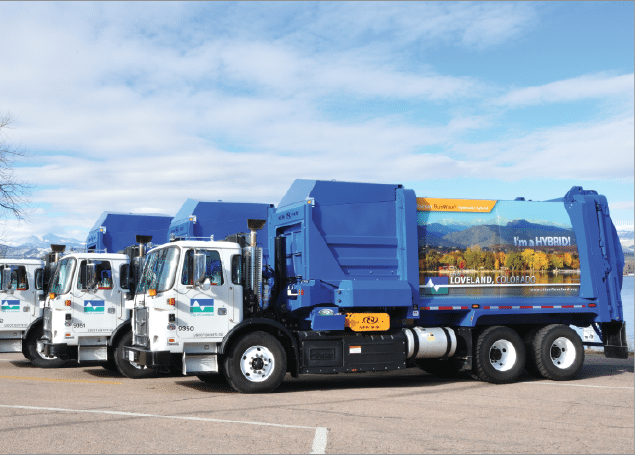
Loveland, Colo. rolled out curbside recycling and compost collection in 1993, at the same time the city began varying charges for garbage collection based on can size.

This system, known as pay-as-you-throw (PAYT), “drives the city’s recycling programs,” said Tyler Bandemer, solid waste superintendent for the city of Loveland.

The evidence is clear: Loveland was the first city in Colorado to adopt the measure, and more than two decades later, the city boasts roughly 61 percent diversion, the highest diversion rate in the state.

“The residential diversion rate has exceeded 50 percent annually since ‘93,” Bandemer said, noting very few other cities have notched a figure like that. He attributes the move to PAYT. “When this program went into place, it had effects right away.’

Self-supporting program

Loveland is a community of about 75,000 people, and it’s growing. Bandemer estimated it has doubled in size in the past decade or so. The city’s solid waste department services roughly 24,300 single-family, duplex and triplex dwellings.

Recycling in Loveland is a mixture of public and private service. Although city crews collect the vast majority of residential recyclables, some residents are served by private haulers. The city provides recycling dumpsters for some multi-family buildings, but private haulers handle the majority of commercial recycling from businesses.

The city’s solid waste department operates as an enterprise fund, meaning it’s a self-supporting component of the city budget, funded entirely by a solid waste fee levied on residents.

Currently, the base fee for solid waste management is $9.75 per month. Every household pays it, no matter whether that customer uses the city department for collection or a private company. That fee pays for every-other-weekly curbside recycling collection.

The fund is also supported by the PAYT fees. Today, the PAYT program offers Loveland residents four garbage cart sizes, from 17 gallons to 96 gallons. Each size up comes with an additional monthly charge to the household, ranging from $3.25 to $19.50.

The city offers subscription-based yard debris collection for an additional collection fee of $8 per month, but dropping material off at a local drop-off center is included in the solid waste management fee.

Visible impact

Bandemer linked a handful of successful recycling results to the city’s PAYT initiative, notably the diversion rate. Diversion has exceeded 60 percent each year since 2009, hitting a high of nearly 64 percent a couple years ago.

With 25 years of PAYT under its belt, the city has gleaned some tips on how best to implement the concept. Bandemer advised programs to avoid using complicated rate structures, which can leave residents confused about how they’re being charged.
“Defining pay-as-you-throw – and the structuring of rates – is critical,” Bandemer said.

As trash can volumes increase by 100 percent, rates should increase by no less than 80 percent, Bandemer said, noting that “anything else is definitely not as effective.”

He also noted that PAYT will produce results, but not necessarily by itself. Dedicated resident education is also vital. Bandemer advised “getting out there, getting into the schools, getting to residents.”

As a component of education and outreach, Loveland compiles some relatively uncommon data about its diversion program. Recycling often faces skepticism or outright criticism over whether it pencils out financially, compared with disposal. Loveland has made a significant effort to provide information that shows the value of diversion in black and white.

“We do kind of a full-cost accounting every year, where we take everything into account: the cost of our labor, our equipment, our facilities, and then the disposal,” Bandemer explained. “Year after year, we generally see our overall disposal costs are about $160 a ton and our diversion is about $83 a ton.”

He added that the city’s economic balance for diversion has historically been positive when markets are favorable, but he noted that with the current market downturn, the costs of diversion are at an all-time high.

The yard debris program is also integral to achieving the city’s diversion figures: In 2016, the city collected 7,884 tons of commodity recyclables, 26,275 tons of yard debris and 21,634 tons of trash.

Glass challenge becomes an opportunity

The city doesn’t compete on the commercial recycling side, which is handled entirely by private haulers.

But one substantial portion of the commercial stream has received special attention from the city.
Loveland crews noticed a lot of glass going into the dumpsters at bars and restaurants, and they saw that as an opportunity.

The recycling program made some calls to private haulers, asking how they’d feel about the city tackling glass among commercial generators. “Basically, we were going to pick up the glass, if they didn’t mind,” Bandemer said. “None of our private haulers had any issues with that.”

For more than three years, the city has sent a collection truck once a week to the central commercial sector of the city, bringing a handful of empty carts, designated for either clear or colored glass, to different businesses. The collection crew swaps the carts out for filled carts.

“We have continued to do this program free to the bars and restaurants,” Bandemer said. “It’s done a really, really amazing job of getting that material out of the landfill, and turning it back into a beer bottle.”

This article originally appeared in the June 2018 issue of Resource Recycling. Subscribe today for access to all print content.

Think your local program should be featured in this space? Send a note to [email protected].

Tags: Local Programs
TweetShare
Colin Staub

Colin Staub

Colin Staub was a reporter and associate editor at Resource Recycling until August 2025.

Related Posts

NYC, Mack Trucks unveil winning artwork

NYC, Mack Trucks unveil winning artwork

byAntoinette Smith
June 4, 2026

The five new hand-painted waste collection trucks feature themes of honor, resilience and care, and will operate in the city's...

Extruder pushes out natural HDPE pellets at KW Plastics in Troy, Alabama.

Rare look inside the world’s largest plastics recycler

byBrian Clark Howard
May 13, 2026

KW Plastics in Troy, Alabama is a leading recycler of PP and HDPE—here’s a glimpse behind the gates.

Bill to update New Jersey e-scrap program heads to governor

New Jersey recyclers talk EPR

byBrian Clark Howard
April 9, 2026

At the Association of New Jersey Recyclers’ spring meeting industry representatives discussed the state and future of the sector.

Wineries help create model for film recycling

Wineries help create model for film recycling

byAntoinette Smith
April 7, 2026

A collaboration between California wineries and the recycling value chain has provided a closed-loop model the partners aim to see...

Waste Connection recycling cart in The Dalles, Oregon

First Oregon community expands curbside recycling with EPR funding

byBrian Clark Howard
April 1, 2026

The City of The Dalles in northern Oregon is now rolling out nearly 5,000 new 90-gallon recycling carts to customers...

Rural effort targets vapes as battery fire risk grows

byScott Snowden
March 24, 2026

A Wisconsin firefighter is building a rural vape collection service as discarded devices with lithium-ion batteries continue to raise fire...

Load More
Next Post

MRF of the Month: City of High Point Material Recovery Facility

More Posts

House resolution aims to make recyclability central to product design

NY EPR bill fails to advance after third try

June 8, 2026
Various PET thermoform containers.

Thermoform recovery soars, PCR content falls

June 10, 2026
CalRecycle withdraws proposed regs for SB 54

Oceana, NRDC, CAW sue CalRecycle over SB 54 regs

June 5, 2026

Three-bill package aims to revamp Michigan’s bottle return system

June 9, 2026
Recycling industry addresses Beyond Plastics report

Recycling industry addresses Beyond Plastics report

May 26, 2026
Rare look inside the world’s largest plastics recycler

Mass balance matters: Why different rules can lead to different outcomes 

June 5, 2026
Circular Materials to supply PlasCred chem recycling plant

Circular Materials to supply PlasCred chem recycling plant

June 4, 2026

Battery fires still a major risk to recyclers: report

June 9, 2026
Rainforest

Inside the Circle: What the rainforest can teach us about EPR

June 8, 2026
How electronics legislation fared this legislative season

NY sends repairability labeling bill to governor

June 8, 2026
Load More

About & Publications

About Us

Staff

Archive

Magazine

Work With Us

Advertise
Jobs
Contact
Terms and Privacy

Newsletter

Get the latest recycling news and analysis delivered to your inbox every week. Stay ahead on industry trends, policy updates, and insights from programs, processors, and innovators.

Subscribe

Welcome Back!

Login to your account below

Forgotten Password?

Retrieve your password

Please enter your username or email address to reset your password.

Log In

Add New Playlist

No Result
View All Result
  • The Latest
  • Analysis
  • Recycling
  • E-Scrap
  • Plastics
  • Policy Now
  • Conferences
    • E-Scrap Conference
    • Plastics Recycling Conference
    • Resource Recycling Conference
    • Textiles Recovery Summit
  • Magazine
  • About Us
  • Advertise
  • Archive
  • Jobs
  • Staff
Subscribe
This website uses cookies. By continuing to use this website you are giving consent to cookies being used. Visit our Privacy and Cookie Policy.