




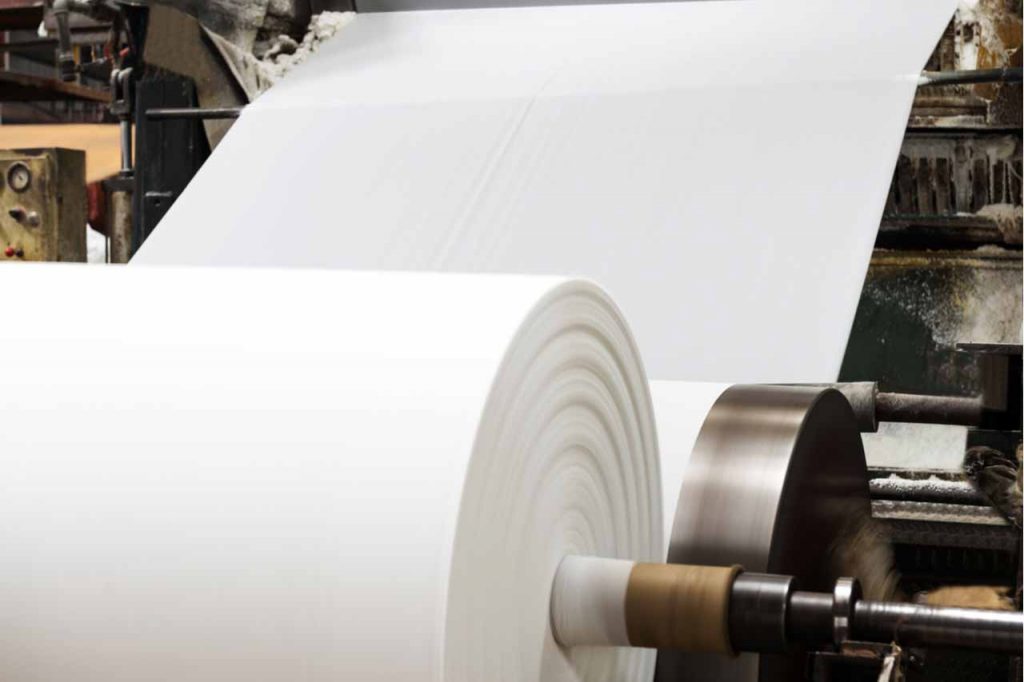
US paper and paperboard production declined 3.7% in 2025, though packaging and tissue products remained relatively stable.
The American Forest & Paper Association (AF&PA) released its 66th Annual Paper Industry Capacity and Fiber Consumption Survey last week, revealing that US paper and paperboard production declined 3.7% in 2025 to 66.3 million tons. Despite the decline, several sectors remained relatively stable, particularly packaging paper and tissue products.
“This year’s survey underscores the scale of the U.S. paper manufacturing industry and the essential role it plays in the economy,” said Heidi Brock, president and CEO of AF&PA, in a statement. “Even as some grades face market pressure, manufacturers are investing and aligning capacity with demand, maintaining solid operating performance and continuing to compete.”
Overall fiber consumption used to make paper and paperboard products decreased 3.5% compared to 2024. According to the survey, wood pulp consumption fell 3.2% while recovered fiber consumption declined 4.0%. This indicates paper mills used less raw material to produce paper products in 2025 than they did the previous year.
The industry’s overall decline continues to be driven largely by shrinking demand for traditional paper products. Bill Moore, president of Moore & Associates, said the steepest losses remain concentrated in newsprint and printing and writing grades. “It’s really the newsprint and printing-and-writing sectors that are going down,” Moore said.
Despite the overall decline, packaging related products continued to be one of the industry’s strongest segments. Packaging paper production increased 1.7% in 2025, and containerboard mills maintained an operating rate of 91.9%. Although containerboard production fell 4.4% to 36.1 million tons, it still accounted for more than half of total U.S. paper and paperboard capacity. This suggests that demand for packaging materials remains important in the industry.
Moore said growth in packaging grades is also helping support demand for recycled fiber, even as total paper production declines. “Even though total paper production is expected to continue declining, we expect recycled fiber content to continue increasing slowly because the grades that use the most recycled fiber are the ones that are growing,” Moore said.
The survey also highlights the continued decline of printing and writing papers. Printing and writing capacity fell 13.9% in 2025 to 7.7 million tons, down from nearly 18 million tons in 2015. However, operating rates for printing-writing mills increased from 76.8% in 2024 to 82.8% in 2025. Tissue production declined 0.8% to 7.8 million tons and continues to represent a growing share of total US paper and paperboard capacity.
“U.S. mills continue to produce the packaging, tissue and other paper products that people and businesses rely on every day,” Brock said. “The data shows an industry that continues to operate at significant scale, adapt to changing market conditions and serve strong demand for fiber based products.”
Moore said one of the most notable findings from this year’s survey was the expansion of boxboard capacity, a segment tied closely to packaging demand. “The one thing that stood out to me is that boxboard capacity has increased for the first time in probably 30 years,” Moore said.
According to AF&PA, the survey represents approximately 87% of US paper and paperboard industry capacity and includes capacity, production and fiber consumption data for all major grades of paper, paperboard and pulp.