











Resource Recycling
  • The Latest
  • Analysis
    • All
    • Certification Scorecard
    • Industry Announcements
    • Opinion
    Auto Draft

    Umicore highlights strength in recycling, catalysis

    Apto, Tusaar partner on rare earths recovery

    Apto, Tusaar partner on rare earths recovery

    Certification scorecard for the week of Feb. 16, 2026

    Sims Lifecycle leverages hyperscale decommissioning

    Sims Lifecycle leverages hyperscale decommissioning

    The electronics recycling industry is undergoing a transformation from labor-intensive manual operations to highly automated, AI-driven facilities that use advanced robotics, cleaner chemistry and digital tracking systems to extract critical materials.

    The cyber-physical MRF: AI and robotics reshape e-waste recovery

    Certification scorecard for the week of Feb. 9, 2026

    Meta-Corning deal signals IT hardware retirement wave

    Meta-Corning deal signals IT hardware retirement wave

    Malaysia clamps down on illegal e-waste imports amid probes

    Malaysia clamps down on illegal e-waste imports amid probes

    URT builds alliance to remake electronics plastics at scale

    ICYMI: Top 5 e-scrap stories from January 2026

  • Conferences
  • Publications

    Other Topics

    Textiles
    Organics
    Packaging
    Glass
    Brand Owners

    Metals
    Technology
    Research
    Markets
    Grant Watch

    All Topics

Subscribe
No Result
View All Result
Resource Recycling
  • The Latest
  • Analysis
    • All
    • Certification Scorecard
    • Industry Announcements
    • Opinion
    Auto Draft

    Umicore highlights strength in recycling, catalysis

    Apto, Tusaar partner on rare earths recovery

    Apto, Tusaar partner on rare earths recovery

    Certification scorecard for the week of Feb. 16, 2026

    Sims Lifecycle leverages hyperscale decommissioning

    Sims Lifecycle leverages hyperscale decommissioning

    The electronics recycling industry is undergoing a transformation from labor-intensive manual operations to highly automated, AI-driven facilities that use advanced robotics, cleaner chemistry and digital tracking systems to extract critical materials.

    The cyber-physical MRF: AI and robotics reshape e-waste recovery

    Certification scorecard for the week of Feb. 9, 2026

    Meta-Corning deal signals IT hardware retirement wave

    Meta-Corning deal signals IT hardware retirement wave

    Malaysia clamps down on illegal e-waste imports amid probes

    Malaysia clamps down on illegal e-waste imports amid probes

    URT builds alliance to remake electronics plastics at scale

    ICYMI: Top 5 e-scrap stories from January 2026

  • Conferences
  • Publications

    Other Topics

    Textiles
    Organics
    Packaging
    Glass
    Brand Owners

    Metals
    Technology
    Research
    Markets
    Grant Watch

    All Topics

Subscribe
No Result
View All Result
Resource Recycling
No Result
View All Result
Home Recycling

MRFs share how they develop accepted material lists

Antoinette SmithbyAntoinette Smith
June 17, 2025
in Recycling
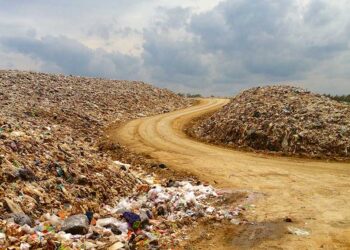
Material acceptance at MRFs varies widely by locality, but several stakeholders explained the factors behind such wide-reaching decisions. | StoyanYotov/Shutterstock

Several MRF operators recently provided insight into how their facilities decide what materials to accept, during a discussion on bridging the disconnect between brand owners and MRFs.

The discussion came during the summer member meeting for the Association of Plastic Recyclers, held June 3-5 in Cleveland. APR owns Resource Recycling Inc., publisher of Plastics Recycling Update. 

“MRFs are rational economic actors,” said Miriam Holsinger, co-president of Eureka Recycling in Minneapolis. For its sorting decisions, Eureka considers numerous factors including whether multiple end markets exist for a commodity, willingness to pay market value and the cost of separating the material. “If you can’t consistently get a good price, it’s hard to make an argument for consistently capturing the material.”

Ganesh Nagarajan, senior director of plastics at WM, said that when deciding how to sort incoming recyclables, the hauler considers several key factors: existence of multiple end markets, the level of design for recyclability and whether it contaminates other streams – for example, travel-size toothpaste tubes are small enough that they may wind up in the glass stream. 

Beth Biggins-Ramer, executive director at Cuyahoga County Solid Waste District, which includes Cleveland, said that as a government agency, the district doesn’t decide what the area’s four MRFs will accept. However, the agency conducts an annual MRF survey, and meets face-to-face with representatives from the MRFs to ask what materials they’re accepting and how they want it prepared for sorting and baling. Using that information, the county formulates its community educational materials to help align consumer behavior with MRF realities. 

As for film and flexible packaging, “it’s not that we don’t want to take them, it’s because of the end markets — is there a predictable, reliable end market for them? Not yet.” However, WM does separate film at some MRFs, mostly incidental, and has conducted pilot programs for curbside recycling of film, Nagarajan said.

Just before the APR meeting, Brent Bell, president of recycling at WM, told Plastics Recycling Update that a pilot program for collecting plastic film in Chicago reached about 3,500 households in 2022-2023. “Since then, we have piloted and rolled out additional residential plastic film recycling in some municipalities with recycling facilities that accept the material and where there are end markets for the material.” WM also piloted residential plastic film recycling in Utah and accepts plastic film “in several communities supported by our new growth investments.” 

He added that WM continues to invest in film recovery recruitment. WM also owns Natura PCR, which is ramping up operations at its new, larger mechanical recycling facility for plastic film in Texas. 

In the end, collection of film and flexibles needs a reliable end market, and that is “what will make us turn the knob, turn on the spigot” for collection, Nagarajan said. He acknowledged that chemical recycling may eventually be that end market, but said it has yet to be consistent enough and big enough. 

Biggins-Ramer said the four Cleveland MRFs are seeing demand from chemical recycling, including PET thermoforms going to Eastman’s methanolysis plant in Kingsport, Tennessee. 

While the nascent sector struggles to find footing, Biggins-Ramer pointed out that for medical applications, plastic will always be the preferred medium, and chemical recycling can be an outlet for plastics that have not come into contact with hazardous materials. One example is major PVC producer Orbia, which is building up its recycling operations for non-hazardous medical waste. 

Even so, growth of chemical recycling is tied to availability of feedstocks. For example, Agilyx recently pivoted to developing a network of post-consumer plastics sorting infrastructure, rather than focusing on its chemical recycling technology.

The technology has “a significantly higher cost that is historically shouldered by taxpayers either by way of taxes or via subscription costs,” Eureka Recycling’s Holsinger said. “The ones who want chemical recycling to work aren’t the ones paying the costs, and there will have to be a real thought about whether the expense is worth having that flashy end product.” 

WM has more than 100 MRFs, Nagarajan said, 50 of which are single stream, and almost all separate PP, which has seen higher demand this year. Demand isn’t strong enough to create separate streams of natural and colored PP, he added. An additional consideration is where is the best place to sort a material — at the MRF, at a reclaimer or at a secondary sorter? 

“We are having those conversations now, and looking at how we do that, incorporating more granular sorting,” he said, adding that PET thermoforms are the subject of similar discussions. “Separating clamshells from bottles adds costs, and puts the cost of additional recovery onto the clear bottles, which sell at a premium.” 

Reframing ‘contamination’

Expanding the slate of accepted plastics helps not only to increase post-consumer supply, but also to boost municipal revenue and reduce contaminants, Biggins-Ramer said. As an example, First Star Recycling in Omaha recently began formally accepting paper beverage cups, in part as a response to existing resident behavior. 

To help stakeholders understand the value of “cleaner” bales, Cuyahoga County provides transparency into market pricing via RecyclingMarkets.net, as well as processing costs. And with higher-value bales, more money is returned to their communities when those commodities are sold, she said. 

At WM, the company has put a lot of focus into recovering plastics, which has helped keep the level of residuals stable, Nagarajan said. The nation’s biggest hauler is interested “not just in increasing the size of the pie but also increasing amounts of recovered plastics, with an emphasis on pulling plastics that could wind up in the residuals.” 

To this end, WM employs smart trucks, which provide real-time data as to what contaminants are entering the stream at the household level, so the company can provide feedback immediately.

Since Eureka transitioned to single stream more than a decade ago, residuals have increased each year, Holsinger said. “People see the ‘chasing arrows’ and think they can recycle anything: potatoes, shoes.” Even so, her MRF maintains about 10% residuals, which she said “is actually pretty low nationally.” She cited Minnesota’s recycling education committee, along with individual cities’ coordinators, for collaborating to create consistent community communication to help residents understand what goes into their recycling bins.

Since 2022, WM has committed to investing $1.4 billion into new markets and upgrades by 2026, Nagarajan said. In addition, Canada is looking “increasingly interesting” as provinces roll out extended producer responsibility programs for packaging. WM Canada is currently building two new MRFs in Ontario, scheduled to be completed by the end of this year. 

In Minnesota, Eureka recently completed a MRF upgrade that was four years in the making, Holsinger said.

A version of this story appeared in Plastics Recycling Update on June 11.
Tags: CollectionMRFs
TweetShare
Antoinette Smith

Antoinette Smith

Antoinette Smith has been at Resource Recycling Inc., since June 2024, after several years of covering commodity plastics and supply chains, with a special focus on economic impacts. She can be contacted at [email protected].

Related Posts

WM opens new $90m MRF in south Florida 

WM opens new $90m MRF in south Florida 

byAntoinette Smith
February 23, 2026

The new facility is expected to process the most volume of recyclables in the hauler's MRF network.

WM: Upgrades temporarily slow tons recovered

WM sees ‘notable growth’ despite low recycling commodity prices

byStefanie Valentic
January 30, 2026

WM has battled headwinds from low recycling commodity prices with strategic automation and facility upgrades, the company told investors in...

Recyclers are facing unprecedented changes

byClosed Loop Center for the Circular Economy & Resource Recycling Systems
January 27, 2026

Using input from MRFs across the US, Closed Loop Partners developed a guide to help provide best practices to improve...

Houston, MRF operator sign chemical recycling MOU

CompuCycle CEO: Transparency drives electronics diversion

byStefanie Valentic
January 16, 2026

As Houston's role as a major port city raises concerns about electronics being exported overseas for processing, CompuCycle CEO Kelly...

Greyparrot positions waste intel as key to effective EPR

Greyparrot positions waste intel as key to effective EPR

byAntoinette Smith
January 9, 2026

Company co-founder Rish Mitra says data collected from a growing number of MRFs globally can help fine-tune emerging EPR policy...

Diversion Dynamics: Recycling partnerships are an art form, but crucial for progress

Diversion Dynamics: Recycling partnerships are an art form, but crucial for progress

byStefanie Valentic
January 8, 2026

Whether you're operating a MRF, managing municipal contracts or navigating supplier relationships, the daily pressures pile up: financial constraints, shifting...

Load More
Next Post

Fiber end users talk price increases, demand outlook

More Posts

Sims Lifecycle leverages hyperscale decommissioning

Sims Lifecycle leverages hyperscale decommissioning

February 18, 2026
Republic Services waiting on fourth Polymer Center

Republic Services waiting on fourth Polymer Center

February 18, 2026
Chinese processing group details goals for US visit

AMP lays out vision of next-generation, AI-driven MRFs

July 24, 2024
NERC: Blended average prices fell 40% in third quarter

HDPE, PP bales rise as paper fiber and cans stabilize

February 12, 2026
Textile clothing bins

Report details how to make CA textile recycling work

February 16, 2026
Bipartisan reps introduce bill on recycling claims

Bipartisan reps introduce bill on recycling claims

February 12, 2026
Sony heads renewable plastic supply chain

Sony heads renewable plastic supply chain

February 19, 2026

Focus on recycling film, flexibles takes shape in two reports

February 13, 2026

Origin Materials to reduce staff in reorg

February 13, 2026
Oregon’s Recycling Modernization Act faces injunction

Court partially blocks Oregon EPR law, dismisses bulk of lawsuit

February 10, 2026
Load More

About & Publications

About Us

Staff

Archive

Magazine

Work With Us

Advertise
Jobs
Contact
Terms and Privacy

Newsletter

Get the latest recycling news and analysis delivered to your inbox every week. Stay ahead on industry trends, policy updates, and insights from programs, processors, and innovators.

Subscribe

Welcome Back!

Login to your account below

Forgotten Password?

Retrieve your password

Please enter your username or email address to reset your password.

Log In

Add New Playlist

No Result
View All Result
  • The Latest
  • Analysis
  • Recycling
  • E-Scrap
  • Plastics
  • Policy Now
  • Conferences
    • E-Scrap Conference
    • Plastics Recycling Conference
    • Resource Recycling Conference
    • Textiles Recovery Summit
  • Magazine
  • About Us
  • Advertise
  • Archive
  • Jobs
  • Staff
Subscribe
This website uses cookies. By continuing to use this website you are giving consent to cookies being used. Visit our Privacy and Cookie Policy.