Resource Recycling
  • The Latest
  • Analysis
    • All
    • Certification Scorecard
    • Industry Announcements
    • Opinion
    The electronics recycling industry is undergoing a transformation from labor-intensive manual operations to highly automated, AI-driven facilities that use advanced robotics, cleaner chemistry and digital tracking systems to extract critical materials.

    The cyber-physical MRF: AI and robotics reshape e-waste recovery

    Certification scorecard for the week of Feb. 9, 2026

    Meta-Corning deal signals IT hardware retirement wave

    Meta-Corning deal signals IT hardware retirement wave

    Malaysia clamps down on illegal e-waste imports amid probes

    Malaysia clamps down on illegal e-waste imports amid probes

    URT builds alliance to remake electronics plastics at scale

    ICYMI: Top 5 e-scrap stories from January 2026

    The electronics recycling industry is undergoing a transformation from labor-intensive manual operations to highly automated, AI-driven facilities that use advanced robotics, cleaner chemistry and digital tracking systems to extract critical materials.

    Certification scorecard for the week of Feb. 2, 2026

    Auditors warn EU may fall short on critical metals

    Auditors warn EU may fall short on critical metals

    Industry announcements for January 2026

    Industry announcements for February 2026

    ICYMI: Top 5 recycling stories from January 2026

  • Conferences
  • Publications

    Other Topics

    Textiles
    Organics
    Packaging
    Glass
    Brand Owners

    Metals
    Technology
    Research
    Markets
    Grant Watch

    All Topics

Subscribe
No Result
View All Result
Resource Recycling
  • The Latest
  • Analysis
    • All
    • Certification Scorecard
    • Industry Announcements
    • Opinion
    The electronics recycling industry is undergoing a transformation from labor-intensive manual operations to highly automated, AI-driven facilities that use advanced robotics, cleaner chemistry and digital tracking systems to extract critical materials.

    The cyber-physical MRF: AI and robotics reshape e-waste recovery

    Certification scorecard for the week of Feb. 9, 2026

    Meta-Corning deal signals IT hardware retirement wave

    Meta-Corning deal signals IT hardware retirement wave

    Malaysia clamps down on illegal e-waste imports amid probes

    Malaysia clamps down on illegal e-waste imports amid probes

    URT builds alliance to remake electronics plastics at scale

    ICYMI: Top 5 e-scrap stories from January 2026

    The electronics recycling industry is undergoing a transformation from labor-intensive manual operations to highly automated, AI-driven facilities that use advanced robotics, cleaner chemistry and digital tracking systems to extract critical materials.

    Certification scorecard for the week of Feb. 2, 2026

    Auditors warn EU may fall short on critical metals

    Auditors warn EU may fall short on critical metals

    Industry announcements for January 2026

    Industry announcements for February 2026

    ICYMI: Top 5 recycling stories from January 2026

  • Conferences
  • Publications

    Other Topics

    Textiles
    Organics
    Packaging
    Glass
    Brand Owners

    Metals
    Technology
    Research
    Markets
    Grant Watch

    All Topics

Subscribe
No Result
View All Result
Resource Recycling
No Result
View All Result
Home Recycling

State, private funds flow to North American projects

byJared Paben
May 15, 2023
in Recycling
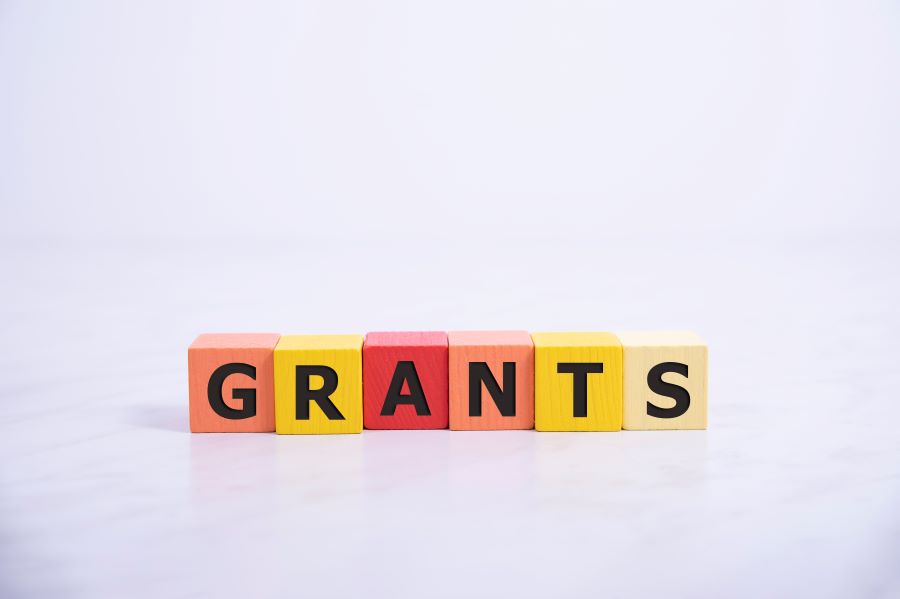
Grant money from a variety of sources is going toward boosting plastics recovery and a variety of other MRF upgrades. | MinskDesign/Shutterstock

Public and private organizations have pumped millions of dollars into curbside sorting infrastructure and downstream processing capacity in recent weeks. 

The following are more details on grants to fund materials recovery across North America. 

North Carolina boosts recycling businesses

The North Carolina Department of Environmental Quality (DEQ) on April 27 announced grants totaling nearly $443,000 to 10 businesses. 

The business development grants, which were awarded by the DEQ’s Recycling Business Assistance Center (RBAC) and must be matched by at least 50% private funds, went to upgrade MRFs, expand capabilities at plastics recycling companies, support solar panel recycling, and more. 

Each of the following companies received a $60,000 grant, which was the largest grant sum awarded: Clear Path Recycling, which recycles PET for use in carpet and other products, to purchase a storage silo; Curbside Management, to install an additional optical sorter and conveyor belt and move an AMP Robot at its MRF; Direct Pack Recycling, to purchase a line to wash MRF PET for recycling into thermoforms; Material Matters, to buy plastics handling equipment; and Powerhouse Recycling, to pay for a semi-truck to collect solar panels for recycling. 

RBAC provided smaller grants to help recycle oyster shells, support paper shredding and recycling, remove glue and labels from PET flake, replace curbside bins with carts and boost nursery pot reuse and recycling. A full list of grants is available online. 

“Recycling businesses play an important role in the state’s circular economy, providing high-quality jobs while simultaneously supporting North Carolina’s environmental efforts,” Elizabeth Biser, DEQ Secretary, stated in the release. “These grants fund sustainable projects that improve the efficiency and effectiveness of diversion efforts, preventing valuable materials from ending up in landfills.”

The Recycling Partnership helps out MRFs

On April 26, The Recycling Partnership announced the award of nearly $1.2 million to MRFs around the country to help them recover PP. The grants, which were awarded through the Polypropylene Recycling Coalition, went to Atlantic Coast Recycling of Ocean County, N.J.; Pioneer Recycling of Clackamas, Ore.; RecycleSource of Pittsburgh; TC Recycling of Mars, Pa.; and Recology Sonoma of Sonoma, Calif. 

The Polypropylene Recycling Coalition launched in mid-2020. Its first round of grants, announced in December 2020, totaled nearly $2 million and went to four MRFs. Announced in March 2021, the second round included nearly $1 million to three MRFs. In August 2021, the Polypropylene Recycling Coalition announced its third funding round, which included $1.8 million to six MRFs. The fourth round, which totaled $1.6 million and went to seven MRFs, was announced in April 2022.

Including the latest round, the total amount distributed through the program is $9 million. 

The Recycling Partnership has since rolled out a similar PET grants program, which has already started awarding funds.

“With the cutting-edge technology that is available, MRFs have the opportunity to maximize capture of recyclable materials,” Brittany LaValley, senior director of materials advancement at The Recycling Partnership, stated in a press release. “For those MRFs that have been unable to support investment, Coalition grants enable them to increase the capture of polypropylene and see a faster return on investment.”

Plastics-focused funding in Canada

The government of British Columbia is putting millions more dollars into various projects to boost plastics recycling and reuse capacity in the province. 

The CleanBC Plastics Action Fund is awarding over 8 million Canadian dollars (nearly $6 million; all dollars below in U.S.) to 14 projects. The dollar amount is nearly twice the program’s first funding round. The CleanBC Plastics Action Fund launched in late 2020. 

The top five largest grants went to the following recipients: $1 million to Wenplastics, which will boost its capacity to recycle large industrial plastic pipes by 150%; $745,000 to Reusables, which will increase cleaning capacity and accessibility for reusable packaging; $673,000 for KC Recycling, which will purchase equipment allowing it to recycle more PP battery cases, car seats and paint buckets; $673,000 to Vitacore, which will upgrade equipment and retrofit a building for the recycling of masks and respirators; and $538,000 for Van WasteCo, which buy new equipment to boost its ability to recycle post-consumer plastic. 

One recipient of a smaller grant, software company Metaspectral, which received $313,000, published a press release describing how the funding would help it further develop its hyperspectral imaging technology for recyclables sorting. Specifically, the grant will help advance the automated sorting of homopolymer HDPE containers from copolymer HDPE. 

Metalspectral also received funding during the first round of CleanBC Plastics Action Fund grants.

Along with the latest funding announcement, the B.C. government committed another 25 million Canadian dollars (nearly $19 million) for a third round of grants. 

“This added funding will strengthen our ability to prevent plastic pollution and reduce our use of virgin resources to make plastic products by turning used plastic into an economic asset instead of an environmental burden,” George Heyman, Minister of Environment and Climate Change Strategy, stated in the press release.

Michigan puts million into infrastructure, market development

The Michigan Department of Environment, Great Lakes, and Energy (EGLE) provided $15.6 million in grants to boost recycling. The 2023 awards sum is more than double what the department provided last year. 

The money flowed through a couple of different grant programs, and one of the awards was actually an appropriation approved by lawmakers. 

EGLE provided $7.6 million in infrastructure grants. Of those, the largest grant of half a million dollars or more went to the city of Flint ($1 million grant) to purchase carts for residents, Ottawa County ($1 million) to build a drop-off facility, the Detroit Zoo ($705,000) to fund various collection and processing equipment for organics, Mount Pleasant ($500,000) to upgrade an anaerobic digester, and Bay Area Recycling for Charities ($500,000) to buy a grinder, shredder and other assorted equipment, and the Marquette County Solid Waste Management Authority ($500,000) to install MRF robotics. 

Kent County received a $4 million state budget appropriation to help develop infrastructure at the counties’ sustainable business park, where businesses will recycle materials. In addition to that money, the Kent County Department of Public Works received two infrastructure grants totaling $906,000 to buy a baler and a loader vehicle, expand a drop-off recycling center, and install sorting robotics at its MRF. 

Finally, EGLE awarded $4 million under the market development and micro grants category. The top award went to Goodwill Industries of West Michigan, which will use a $500,000 grant in a joint venture with plastics recycling company HydroBlox to recycle plastics into a 100% recycled stormwater management system. The next largest award went to WM ($465,000), which will use the money to help fund an optical sorter targeting PP and a glass recovery and cleanup system at a MRF that WM is building in Detroit. The third-largest market development grant went to Glacier Technology ($367,000) to demonstrate its robotic sorting system on residue and container lines at two different MRFs. 

An EGLE spokesperson provided a spreadsheet with details on all the 2023 grants, some of which were discussed during an April 17 news conference. 

To see details on these and a host of other grants, regularly check out Resource Recycling’s online Grant Watch feature. 
TweetShare
Jared Paben

Jared Paben

Related Posts

Iron Mountain sees ITAD surge, raises forecast on record Q2

Iron Mountain posts record Q4, guides strong 2026 growth

byScott Snowden
February 13, 2026

Iron Mountain reports record Q4 and 2025 results as data centers and ALM surged, and forecasts double-digit 2026 growth while...

Origin Materials to reduce staff in reorg

byAntoinette Smith
February 13, 2026

The materials technology company will lay off 32% of its staff and shift more resources toward commercializing PET closures, a...

Focus on recycling film, flexibles takes shape in two reports

byAntoinette Smith
February 13, 2026

The US Plastics Pact and the Alliance to End Plastic Waste released reports outlining necessary steps to improving recycling outcomes...

Bipartisan reps introduce bill on recycling claims

Bipartisan reps introduce bill on recycling claims

byAntoinette Smith
February 12, 2026

Legislators introduced the Recycled Materials Attribution Act in the US House, drawing support from a new industry group and scrutiny...

The electronics recycling industry is undergoing a transformation from labor-intensive manual operations to highly automated, AI-driven facilities that use advanced robotics, cleaner chemistry and digital tracking systems to extract critical materials.

The cyber-physical MRF: AI and robotics reshape e-waste recovery

byDavid Daoud
February 12, 2026

The electronics recycling industry is entering a new phase of technological acceleration. Advances in artificial intelligence, robotics, advanced chemistry, and...

APR, industry create proactive guidance for PET caps

byAntoinette Smith
February 12, 2026

The Association of Plastic Recyclers recognized that developing guidelines before PET caps were completely developed and commercialized was crucial, and...

Load More
Next Post

Bill would shield recyclers from PFAS cleanup costs

More Posts

Oregon’s Recycling Modernization Act faces injunction

Court partially blocks Oregon EPR law, dismisses bulk of lawsuit

February 10, 2026
Chinese processing group details goals for US visit

AMP lays out vision of next-generation, AI-driven MRFs

July 24, 2024
Malaysia clamps down on illegal e-waste imports amid probes

Malaysia clamps down on illegal e-waste imports amid probes

February 6, 2026

REUSE Act heads to US House for consideration

February 9, 2026
Meta-Corning deal signals IT hardware retirement wave

Meta-Corning deal signals IT hardware retirement wave

February 9, 2026

ecoATM recycled 7.5M phones in 2025 as payouts hit $1.5B

February 10, 2026
Texas sues over dumped wind turbine blades

Texas sues over dumped wind turbine blades

February 10, 2026

APR, industry create proactive guidance for PET caps

February 12, 2026

Alpek talks PET overcapacity, soft demand

February 11, 2026
The electronics recycling industry is undergoing a transformation from labor-intensive manual operations to highly automated, AI-driven facilities that use advanced robotics, cleaner chemistry and digital tracking systems to extract critical materials.

The cyber-physical MRF: AI and robotics reshape e-waste recovery

February 12, 2026
Load More

About & Publications

About Us

Staff

Archive

Magazine

Work With Us

Advertise
Jobs
Contact
Terms and Privacy

Newsletter

Get the latest recycling news and analysis delivered to your inbox every week. Stay ahead on industry trends, policy updates, and insights from programs, processors, and innovators.

Subscribe

Welcome Back!

Login to your account below

Forgotten Password?

Retrieve your password

Please enter your username or email address to reset your password.

Log In

Add New Playlist

No Result
View All Result
  • The Latest
  • Analysis
  • Recycling
  • E-Scrap
  • Plastics
  • Policy Now
  • Conferences
    • E-Scrap Conference
    • Plastics Recycling Conference
    • Resource Recycling Conference
    • Textiles Recovery Summit
  • Magazine
  • About Us
  • Advertise
  • Archive
  • Jobs
  • Staff
Subscribe
This website uses cookies. By continuing to use this website you are giving consent to cookies being used. Visit our Privacy and Cookie Policy.