






Resource Recycling
  • The Latest
  • Analysis
    • All
    • Certification Scorecard
    • Industry Announcements
    • Opinion
    Intel sign outside of company building.

    Intel’s CapEx tops $20B on server demand while PC volume shrinks

    Google sign on company building with blue sky and clouds above.

    Inside Alphabet’s Q2 results: More capital spending and cloud backlog

    Alpek closing Pennsylvania RPET plant

    Alpek seizing on war-related opportunity 

    Our top stories from March 2023

    Iron Mountain’s data center report: Strong on power, quiet on hardware

    Dow touts US PE advantage amid Iran war

    Dow bullish on August PE pricing

    Certification Scorecard — Week of July 20, 2026

  • Conferences
    • Resource Recycling Conference
    • Plastics Recycling Conference
    • E-Scrap: The Longevity Conference
    • Textiles Recovery Summit
  • Publications
    • E-Scrap News
    • Plastics Recycling Update
    • Policy Now
    • Resource Recycling
    • Other Topics
      • All Topics
      • Brand Owners
      • Critical Minerals
      • Glass
      • Grant Watch / RFPs
      • Markets
      • Organics
      • Packaging
      • Research
      • Technology
      • Textiles
Subscribe
No Result
View All Result
Resource Recycling
  • The Latest
  • Analysis
    • All
    • Certification Scorecard
    • Industry Announcements
    • Opinion
    Intel sign outside of company building.

    Intel’s CapEx tops $20B on server demand while PC volume shrinks

    Google sign on company building with blue sky and clouds above.

    Inside Alphabet’s Q2 results: More capital spending and cloud backlog

    Alpek closing Pennsylvania RPET plant

    Alpek seizing on war-related opportunity 

    Our top stories from March 2023

    Iron Mountain’s data center report: Strong on power, quiet on hardware

    Dow touts US PE advantage amid Iran war

    Dow bullish on August PE pricing

    Certification Scorecard — Week of July 20, 2026

  • Conferences
    • Resource Recycling Conference
    • Plastics Recycling Conference
    • E-Scrap: The Longevity Conference
    • Textiles Recovery Summit
  • Publications
    • E-Scrap News
    • Plastics Recycling Update
    • Policy Now
    • Resource Recycling
    • Other Topics
      • All Topics
      • Brand Owners
      • Critical Minerals
      • Glass
      • Grant Watch / RFPs
      • Markets
      • Organics
      • Packaging
      • Research
      • Technology
      • Textiles
Subscribe
No Result
View All Result
Resource Recycling
No Result
View All Result
Home Recycling

Study compares chemical, mechanical recycling methods

Marissa HeffernanbyMarissa Heffernan
January 23, 2023
in Recycling
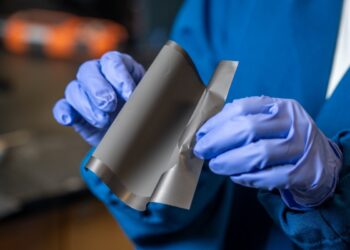
The study looked at mechanical recycling and solvent-based dissolution of PE, PET and PP, as well as enzymatic hydrolysis, glycolysis and vapor methanolysis of PET. | tezzstock/Shutterstock

A study conducted by the National Renewable Energy Laboratory evaluated various PET recycling methods from technical, economic and environmental standpoints to provide a big-picture overview of today’s options.

The research, published by the American Chemical Society, found that mechanical recycling outperformed all other technologies as well as virgin plastic production across economic and environmental considerations, but it ranked lower in technical metrics.

Of several available chemical recycling methods for PET, glycolysis “offered the best economic and environmental performances,” the study found, with areas for future improvement including process yields, consumable reduction or replacement, utility decarbonization and closed-loop recycling for polyolefins.

“Chemical recycling” generally refers to a wide array of processes that use heat, pressure and solvents to break down the molecular chains of polymers into liquids or gasses that can then be processed into fuels, oils, waxes, new plastics or other chemical products.

“This work quantitatively characterized the performances of plastic recycling technologies and established a robust methodology for comparing new recycling processes as they emerge in the future,” the report noted, as well as providing a decision tree to help reclaimers choose the best method for each material.

The study looked at mechanical recycling and solvent-based dissolution of polyethylene (PE), PET and polypropylene (PP), as well as enzymatic hydrolysis, glycolysis and vapor methanolysis of PET, using virgin production as a baseline.

Enzymatic hydrolysis uses hydrolase enzymes to depolymerize PET, glycolysis uses ethylene glycol and methanolysis uses vaporized methanol.

The evaluated metrics were material quality, material retention, circularity, contamination tolerance, minimum selling price, greenhouse gas emissions, energy use, land use, toxicity, waste generation and water use.

Overall, PET mechanical recycling and glycolysis outperformed virgin PET in all metrics, and methanolysis and dissolution scored above virgin levels in the economic and technical sections but scored lower in the environmental and resources sections due to high GHG emissions, toxicity, land use and water use.

Enzymatic PET hydrolysis did not exceed the virgin baseline under any modeled scenario, the study noted.

As for other materials, mechanical recycling of high-density polyethylene (HDPE) outperformed virgin production in the environmental and resources sections but had a low technical and economic score.

Dissolution of HDPE did not reach the virgin threshold for any sections, nor did dissolution of low-density polyethylene (LDPE) or PP, though mechanical recycling of LDPE and PP performed better in economic and technical sections due to lower bale prices, the study reported.

However, lower scores should not mean that technologies are abandoned, the study noted, because “these techniques may not be advantageous across all metrics but could provide benefits in specific priority areas, especially with continued improvements as the technologies mature.”

The study also highlighted improvements for the different methods. Mechanical recycling could benefit from increased bale quality and polymer yield, as well as the addition of advanced sorting technologies such as fluorescent markers or robotic sorting coupled with artificial intelligence, the study noted.

For dissolution, switching to bio-based solvents could improve its environmental score. Enzymatic PET hydrolysis needs increased monomer yields and to use less water to become viable, the study stated.

Glycolysis could also benefit from improved monomer yields as well as new catalysts. PET methanolysis also needs new catalysts, the study stated, and to use less water.

A version of this story appeared in Plastics Recycling Update on Jan. 18.
Tags: PlasticsResearch
TweetShare
Marissa Heffernan

Marissa Heffernan

Marissa Heffernan worked at Resource Recycling from January 2022 through June 2025, first as staff reporter and then as associate editor. Marissa Heffernan started working for Resource Recycling in January 2022 after spending several years as a reporter at a daily newspaper in Southwest Washington. After developing a special focus on recycling policy, they were also the editor of the monthly newsletter Policy Now.

Related Posts

Penn State professor Maryam Shahri speaks at the PROP conference in Lancaster, Pennsylvania July 23, 2026.

How to get more people to recycle

byBrian Clark Howard
July 24, 2026

Harness the power of behavioral marketing, panelists said at the PROP conference in Pennsylvania.

Federal funds boost critical mineral research efforts

Federal funds boost critical mineral research efforts

byPaul Lane
July 16, 2026

A Midwest consortium plans to use the money to build up domestic mineral recovery and processing efforts.

EPR deadlines approach as lawsuits loom

byStefanie Valentic
June 23, 2026

Packaging producers in Washington and Maryland have until July 1 to register with a producer responsibility organization (PRO), demonstrating how...

Recycling council emphasizes importance of supply

Sorted: Why recycling isn’t a ‘scam’

byBrian Clark Howard
June 15, 2026

The sector has taken a beating in the press and in public perception, but recycling has many benefits.

Q1 containerboard exports drop by 19%

What SB 54 looks like from the packaging floor

byStefanie Valentic
June 1, 2026

With compliance deadlines coming on quickly, smaller companies are struggling to absorb changes and stay on the right side of...

Chemical recycling roundup: New plant, partnerships

Polystyrene’s circular future is already taking shape

byJustin Riney, Polystyrene Recycling Alliance
May 29, 2026

Justin Riney of the Polystyrene Recycling Alliance explores a study conducted with the Resource Recycling Systems consultancy.

Load More
Next Post

In My Opinion: Making rapid innovation a reality

2026 Buyers’ Guide

Equipment, services and technology suppliers serving the recycling industry.

Browse the Guide

More Posts

CarbonLite to open $60 million Pennsylvania plant

Federal judge blocks CA ‘Truth in Recycling’ (SB 343) law

July 15, 2026
2024 legislatures focus on batteries, state programs

NAW sues Colorado over EPR packaging law

July 30, 2026
Alpek closing Pennsylvania RPET plant

Alpek seizing on war-related opportunity 

July 27, 2026

MTA loses track of recycling, costing NYC Transit $800,000

July 23, 2026
California releases deposit system update draft rules

Groups move to intervene in SB 343 lawsuit

July 27, 2026
Women in Circularity: Christine Nikander

Women in Circularity: Christine Nikander

July 28, 2026
Ivan Rangel of Happen Ventures speaks at the PROP conference in Lancaster, PA July 24, 2026.

Making reuse as easy as possible

July 27, 2026
Industry announcements for January 2026

Industry announcements for July 2026

July 1, 2026
Waste Connections company truck on an urban street.

Waste Connections sees Q2 lift on recycled commodity values

July 24, 2026
Dow touts US PE advantage amid Iran war

Dow bullish on August PE pricing

July 24, 2026
Load More

About & Publications

About Us

Staff

Archive

Magazine

Work With Us

Advertise
Jobs
Contact
Terms and Privacy

Newsletter

Get the latest recycling news and analysis delivered to your inbox every week. Stay ahead on industry trends, policy updates, and insights from programs, processors, and innovators.

Subscribe

Welcome Back!

Login to your account below

Forgotten Password?

Retrieve your password

Please enter your username or email address to reset your password.

Log In

Add New Playlist

No Result
View All Result
  • The Latest
  • Analysis
  • Recycling
  • E-Scrap
  • Plastics
  • Policy Now
  • Conferences
    • E-Scrap Conference
    • Plastics Recycling Conference
    • Resource Recycling Conference
    • Textiles Recovery Summit
  • Magazine
  • About Us
  • Advertise
  • Archive
  • Jobs
  • Staff
Subscribe
This website uses cookies. By continuing to use this website you are giving consent to cookies being used. Visit our Privacy and Cookie Policy.