
Resource Recycling
  • The Latest
  • Analysis
    • All
    • Certification Scorecard
    • Industry Announcements
    • Opinion
    The electronics recycling industry is undergoing a transformation from labor-intensive manual operations to highly automated, AI-driven facilities that use advanced robotics, cleaner chemistry and digital tracking systems to extract critical materials.

    The cyber-physical MRF: AI and robotics reshape e-waste recovery

    Certification scorecard for the week of Feb. 9, 2026

    Meta-Corning deal signals IT hardware retirement wave

    Meta-Corning deal signals IT hardware retirement wave

    Malaysia clamps down on illegal e-waste imports amid probes

    Malaysia clamps down on illegal e-waste imports amid probes

    URT builds alliance to remake electronics plastics at scale

    ICYMI: Top 5 e-scrap stories from January 2026

    The electronics recycling industry is undergoing a transformation from labor-intensive manual operations to highly automated, AI-driven facilities that use advanced robotics, cleaner chemistry and digital tracking systems to extract critical materials.

    Certification scorecard for the week of Feb. 2, 2026

    Auditors warn EU may fall short on critical metals

    Auditors warn EU may fall short on critical metals

    Industry announcements for January 2026

    Industry announcements for February 2026

    ICYMI: Top 5 recycling stories from January 2026

  • Conferences
  • Publications

    Other Topics

    Textiles
    Organics
    Packaging
    Glass
    Brand Owners

    Metals
    Technology
    Research
    Markets
    Grant Watch

    All Topics

Subscribe
No Result
View All Result
Resource Recycling
  • The Latest
  • Analysis
    • All
    • Certification Scorecard
    • Industry Announcements
    • Opinion
    The electronics recycling industry is undergoing a transformation from labor-intensive manual operations to highly automated, AI-driven facilities that use advanced robotics, cleaner chemistry and digital tracking systems to extract critical materials.

    The cyber-physical MRF: AI and robotics reshape e-waste recovery

    Certification scorecard for the week of Feb. 9, 2026

    Meta-Corning deal signals IT hardware retirement wave

    Meta-Corning deal signals IT hardware retirement wave

    Malaysia clamps down on illegal e-waste imports amid probes

    Malaysia clamps down on illegal e-waste imports amid probes

    URT builds alliance to remake electronics plastics at scale

    ICYMI: Top 5 e-scrap stories from January 2026

    The electronics recycling industry is undergoing a transformation from labor-intensive manual operations to highly automated, AI-driven facilities that use advanced robotics, cleaner chemistry and digital tracking systems to extract critical materials.

    Certification scorecard for the week of Feb. 2, 2026

    Auditors warn EU may fall short on critical metals

    Auditors warn EU may fall short on critical metals

    Industry announcements for January 2026

    Industry announcements for February 2026

    ICYMI: Top 5 recycling stories from January 2026

  • Conferences
  • Publications

    Other Topics

    Textiles
    Organics
    Packaging
    Glass
    Brand Owners

    Metals
    Technology
    Research
    Markets
    Grant Watch

    All Topics

Subscribe
No Result
View All Result
Resource Recycling
No Result
View All Result
Home E-Scrap

UT Austin spinout Supra launches to recover rare earths

byScott Snowden
February 3, 2026
in E-Scrap

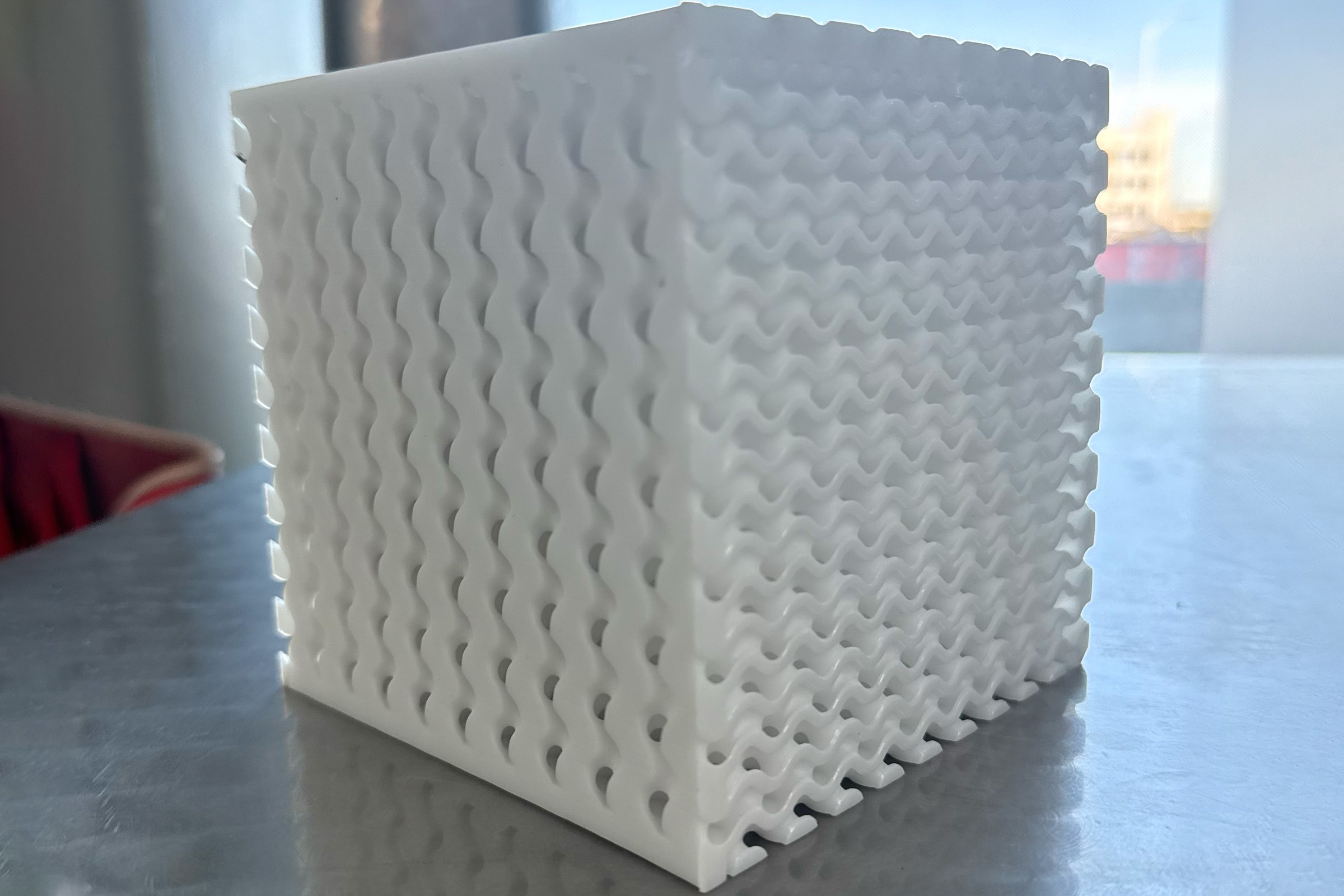
A lab-scale cartridge tested by Supra Elemental Recovery captures minerals from liquid waste streams. | Photo courtesy of Supra

As the US works feverishly to secure its own supply of critical minerals, a project started at the University of Texas has launched a plan and secured funding to advance recovery of high-purity rare earths from domestic waste streams, starting with gallium and scandium. 

Supra Elemental Recovery launched Feb. 3 with a $2 million pre-seed funding round, with an initial focus on supply chain vulnerability in semiconductors and other advanced manufacturing sectors where gallium and scandium play outsized roles, including aerospace, energy, defense and communications. 

Leadership at Supra said in a statement that the US imports 100% of its supply of these two minerals, while China dominates global critical mineral refining through capital-intensive processes that can carry significant environmental burdens. This imbalance leaves the US exposed to disruption even when raw materials exist elsewhere, they said.

Supra said its system employs reusable, cartridge-like modules to capture specific ions from liquid feedstocks and then release them in sequence, producing higher-purity outputs while reducing the need for toxic reagents. 

The company’s founders said their approach is intended to shift the economics of mineral recovery by combining selective chemistry with high-throughput materials and fluid design, allowing extraction even when valuable elements are present at low concentrations in complex mixtures.

“Every year, billions of dollars’ worth of critical minerals are trapped in domestic waste streams, from industrial byproducts and mine tailings to electronic waste,” said Katie Ullmann Durham, co-founder and CEO. “By profitably recovering these elements, we can secure the inputs needed for America’s advanced manufacturing future.”

The platform is built around a 3D-printed polymer structure that can be tuned with different receptors for specific elements, enabling modular separation in a closed-loop setup where liquids cycle through cartridges. The founders said a key goal is to reduce reliance on strong acids, bases and energy-intensive steps that can add regulatory and environmental burdens to conventional refining and separation methods.

“While rare earths aren’t rare, they’re notoriously difficult and expensive to refine at high purity,” said Jordan Sessler, co-founder and COO. “We’re making this easier and more affordable by applying advances in supramolecular chemistry, materials science and fluid dynamics to build a versatile platform technology.”

Supra said its launch builds on federally supported research at UT Austin and that the company holds an exclusive license to the underlying technology. The university’s commercialization arm is also involved as an investor, and university researchers remain engaged as the technology is developed for additional elements.

“Supra exemplifies how world-class university research can be translated into commercially scalable solutions that advance US industrial leadership,” said Mark Arnold, associate vice president for Discovery to Impact and managing director of Longhorn Ventures at UT Austin.

The $2 million round was led by Crucible Capital, with participation from the UT Seed Fund, Climate Capital, Portmanteau Ventures and Pew Protection Trust, and the funding will support continued technology development and preparation for commercial pilots expected this year. 

“The key to restoring America’s rare earth leadership is building refining capacity, the bottleneck standing between domestic raw resources and secure supply,” said Meltem Demirors, founder and general partner at Crucible Capital.

The founders said the next three to six months will focus on improving performance and identifying commercial partners whose waste streams could serve as feedstock, with a shift toward larger-scale, revenue-generating pilots later in 2026.

Tags: MetalsResearch
TweetShare
Scott Snowden

Scott Snowden

Scott has been a reporter for over 25 years, covering a diverse range of subjects from sub-atomic cold fusion physics to scuba diving off the Great Barrier Reef. He's now deeply invested in the world of recycling, green tech and environmental preservation.

Related Posts

Royal Mint, Procurri partner for ITAD metals recovery

byScott Snowden
February 5, 2026

Reformation Metals partnered with Procurri to combine secure IT asset disposal with clean technology recycling that recovers up to 99%...

Ball Corp. looks to World Cup after record 2025

byAntoinette Smith
February 5, 2026

Acquisitions and new capacity are part of the aluminum can manufacturer's strategy to place supply closer to demand, helping to...

Auditors warn EU may fall short on critical metals

Auditors warn EU may fall short on critical metals

byDavid Daoud
February 4, 2026

A recent report showing Europe is unlikely to secure enough critical minerals by 2030 has implications for ITAD firms and...

Leveraging materials testing for procurement efficiency

byDr. Pradyumna Gupta
January 23, 2026

In real-world application, variations in resin properties translate into budget risk, from increased scrap rates and production downtime to premature...

New Comstock site to feed Nevada solar panel recycling

New Comstock site to feed Nevada solar panel recycling

byScott Snowden
January 13, 2026

Comstock Metals has opened a new California facility aimed at improving the collection and transport of retired solar panels to...

Robot pilot targets legacy parts to help supply defense

Robot pilot targets legacy parts to help supply defense

byScott Snowden
December 29, 2025

Although chip availability has improved since the worst shortages earlier in the decade, Tuurny says demand for legacy electronics remains...

Load More
Next Post

German researchers say plastics treaty still within reach

More Posts

Chinese processing group details goals for US visit

AMP lays out vision of next-generation, AI-driven MRFs

July 24, 2024
Oregon’s Recycling Modernization Act faces injunction

Court partially blocks Oregon EPR law, dismisses bulk of lawsuit

February 10, 2026
Malaysia clamps down on illegal e-waste imports amid probes

Malaysia clamps down on illegal e-waste imports amid probes

February 6, 2026
Bipartisan reps introduce bill on recycling claims

Bipartisan reps introduce bill on recycling claims

February 12, 2026

APR, industry create proactive guidance for PET caps

February 12, 2026
NERC: Blended average prices fell 40% in third quarter

HDPE, PP bales rise as paper fiber and cans stabilize

February 12, 2026

REUSE Act heads to US House for consideration

February 9, 2026
Texas sues over dumped wind turbine blades

Texas sues over dumped wind turbine blades

February 10, 2026

Alpek talks PET overcapacity, soft demand

February 11, 2026
The electronics recycling industry is undergoing a transformation from labor-intensive manual operations to highly automated, AI-driven facilities that use advanced robotics, cleaner chemistry and digital tracking systems to extract critical materials.

The cyber-physical MRF: AI and robotics reshape e-waste recovery

February 12, 2026
Load More

About & Publications

About Us

Staff

Archive

Magazine

Work With Us

Advertise
Jobs
Contact
Terms and Privacy

Newsletter

Get the latest recycling news and analysis delivered to your inbox every week. Stay ahead on industry trends, policy updates, and insights from programs, processors, and innovators.

Subscribe

Welcome Back!

Login to your account below

Forgotten Password?

Retrieve your password

Please enter your username or email address to reset your password.

Log In

Add New Playlist

No Result
View All Result
  • The Latest
  • Analysis
  • Recycling
  • E-Scrap
  • Plastics
  • Policy Now
  • Conferences
    • E-Scrap Conference
    • Plastics Recycling Conference
    • Resource Recycling Conference
    • Textiles Recovery Summit
  • Magazine
  • About Us
  • Advertise
  • Archive
  • Jobs
  • Staff
Subscribe
This website uses cookies. By continuing to use this website you are giving consent to cookies being used. Visit our Privacy and Cookie Policy.