




Resource Recycling
  • The Latest
  • Analysis
    • All
    • Certification Scorecard
    • Industry Announcements
    • Opinion
    E-scrap magnet recycling company scales up

    Why only some rare-earth sources are economically viable

    e-Stewards to develop an ITAD-specific standard

    Certification scorecard — week of Sept. 21

    Who should pay for lithium-ion battery fire damage?

    America’s critical-materials buildout has a feedstock problem

    Certification scorecard – week of Sept. 14

    Canada Plastics Pact reports 2024 progress

    Trade tensions shift global mineral partnerships 

  • Conferences
    • Resource Recycling Conference
    • Plastics Recycling Conference
    • E-Scrap: The Longevity Conference
    • Textiles Recovery Summit
  • Publications
    • E-Scrap News
    • Plastics Recycling Update
    • Policy Now
    • Resource Recycling
    • Other Topics
      • All Topics
      • Brand Owners
      • Critical Minerals
      • Glass
      • Grant Watch / RFPs
      • Markets
      • Organics
      • Packaging
      • Research
      • Technology
      • Textiles
Subscribe
No Result
View All Result
Resource Recycling
  • The Latest
  • Analysis
    • All
    • Certification Scorecard
    • Industry Announcements
    • Opinion
    E-scrap magnet recycling company scales up

    Why only some rare-earth sources are economically viable

    e-Stewards to develop an ITAD-specific standard

    Certification scorecard — week of Sept. 21

    Who should pay for lithium-ion battery fire damage?

    America’s critical-materials buildout has a feedstock problem

    Certification scorecard – week of Sept. 14

    Canada Plastics Pact reports 2024 progress

    Trade tensions shift global mineral partnerships 

  • Conferences
    • Resource Recycling Conference
    • Plastics Recycling Conference
    • E-Scrap: The Longevity Conference
    • Textiles Recovery Summit
  • Publications
    • E-Scrap News
    • Plastics Recycling Update
    • Policy Now
    • Resource Recycling
    • Other Topics
      • All Topics
      • Brand Owners
      • Critical Minerals
      • Glass
      • Grant Watch / RFPs
      • Markets
      • Organics
      • Packaging
      • Research
      • Technology
      • Textiles
Subscribe
No Result
View All Result
Resource Recycling
No Result
View All Result
Home Recycling

Longtime WM recycling leader moves into retirement

Dan LeifbyDan Leif
April 5, 2022
in Recycling
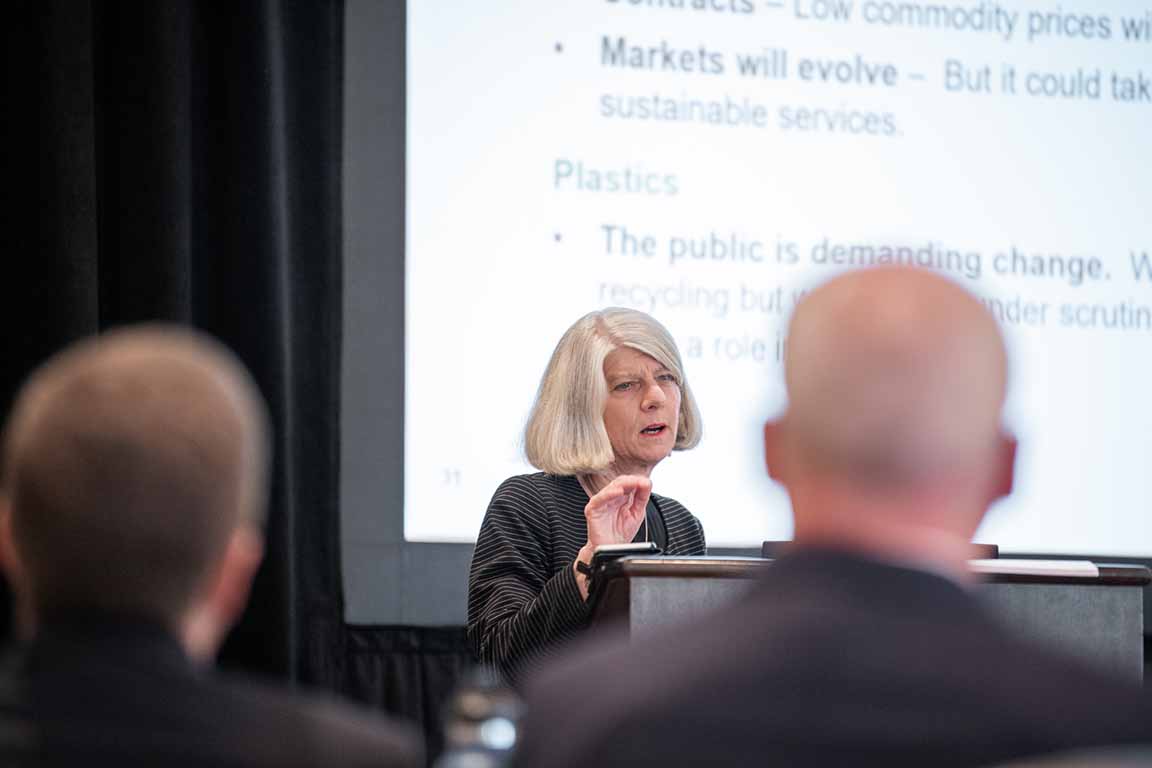
Susan Robinson worked on recycling issues for Waste Management for 23 years. | Courtesy of Waste Management

Susan Robinson, who has been central to shaping Waste Management’s strategy around policy and sustainability for over two decades, had her last day with the company on March 31.

Robinson joined Waste Management in 1999 after working for an environmental nonprofit organization and then the city of Seattle. During her tenure at the nation’s largest hauler and processor, she has been a key link between the company and decision-makers in both the public and private sectors, all during a time of tremendous growth and transformation in recycling.

“I never take for granted that my career has grown as the industry has grown and evolved,” Robinson, who finished her career as Waste Management’s senior director of sustainability and policy, said in an interview with Resource Recycling. “I think I was lucky.”

Seen sector from all sides

Robinson was raised in Olympia, Wash. and remained based in the Pacific Northwest throughout her career.

In 1985, not long after graduating college, she began work for the nonprofit Washington Environmental Council on water quality issues. At that time, the city of Seattle was deciding whether to develop a waste-to-energy facility or to put significant resources into curbside recycling (the curbside approach won out).

WEC was one of a number of advocacy groups engaging on the topic. “That was my first exposure to this industry,” Robinson said.

Around 1988, she took a job with the city of Seattle, initially focusing on multi-family recycling. Not long after that, she became involved in the city’s work to develop a new contract for the long-haul transfer of collected materials.

“I fell in love with the logistics of it,” Robinson said, “from collection, to transfer, to the disposal end of things. It gave me that big picture look and I have always found that to be really interesting.”

By the time Robinson jumped to the private sector in the late-1990s, Seattle was one of a number of West Coast cities that were reshaping the scope of curbside recycling in the United States. Municipalities in California, Oregon and Washington were rolling out local regulations geared toward landfill diversion, often relying on private sector partners to help advance city objectives.

Robinson’s first 12 years at Waste Management were spent working closely with West Coast communities. She said that work prepared her well to take on a bigger corporate role.

“In the early 2000s, so many innovative programs were being implemented,” Robinson said. “So then when the Waste Management national policy position opened up, it was like a match made in heaven. I was able to come in with all the years worth of knowledge of programs and innovative change at a time when it was happening more across the country and the company as well.”

She said she was also aided by the fact she had worked for a municipality, an experience that gave her a deep understanding of the priorities and pressures felt by city officials.

“I think everyone ought to work for both the public and private sector to really get that different perspective,” she noted.

Susan Robinson
Robinson at Mt. Everest base camp. | Courtesy of Waste Management

The rise of packaging and policy

Over the last decade, Robinson’s work has become more closely intertwined with the shifting nature of the municipal recycling stream, as well as the evolving definition of sustainability.

She said that around 2011, it became clear to her just how much newspaper and mixed paper were decreasing in prevalence in curbside loads. Those fiber grades were being replaced by packaging materials of all types.

At the same time, communities and other stakeholders started to place more value on metrics other than the weight of diverted materials.

Regulators, brand owners and others began to embrace more holistic, life cycle-based measurements of environmental impacts. And issues of equity and social engagement also became more central to the waste and recycling conversation.

“I was in such an opportune position to grow into the full suite of what sustainability is now,” Robinson said. “That really is about making sure we are taking care of not only the environment but our employees and our communities and doing it safely.”

Over the last several years, industry evolution has been particularly pronounced around policy.

In the wake of China’s National Sword, lawmakers at all levels of government have put more focus on stabilizing the economics of local recycling programs. This emphasis has led to proposals – and, in some cases, bills signed into law – in such areas as recycled content mandates and extended producer responsibility, or EPR (a policy strategy in which product makers are mandated to fund and/or manage the recycling of items they bring to market).

As the national recycling policy voice for Waste Management, Robinson has been very much in the middle of many legislative conversations.

She said local control is a hallmark of waste and recycling decision-making in the U.S., but she also acknowledged that state regulations are an increasingly important part of the picture. And she noted that Waste Management has been ready to engage on this policy evolution.

“We supported the Oregon EPR bill and we’ve been heavily engaged in the language for EPR in Washington state and New York,” she said. “Well-written language that really contemplates the complexity of the industry and recognizes how much investment has been made and the players that have expertise – as long as we can really capture that in the legislation, we can get to a place where we can really be satisfied with that legislation.”

Where does Robinson go from here?

She said her first order of business upon retirement would be a trip to the Oregon coast with her dog and husband. From there, she expects to enjoy more time with her three grandchildren and “a little bit of consulting as well.”

Robinson has been in the middle of an industry in transition. But she also thinks the evolution is ongoing.

“I’m really optimistic about the investments that are being made and the policy being discussed,” she said. “This industry plays a big role in reducing the impact of climate change. There is a lot happening around us helping us to optimize that impact that we can have.”

Look for a full Q&A with Susan Robinson in the May print edition of Resource Recycling. Not a subscriber? Get signed up today.

 

Tags: EPRLocal Programs
TweetShare
Dan Leif

Dan Leif

Dan Leif is the managing editor at Resource Recycling, Inc., which publishes Resource Recycling, Plastics Recycling Update and E-Scrap News. He has been with the company since 2013 and has edited different trade publications since 2006. He can be contacted at dan@resource-recycling.com.

Related Posts

Bin to Better gets students involved in reuse, recycling

Bin to Better gets students involved in reuse, recycling

byPaul Lane
September 24, 2026

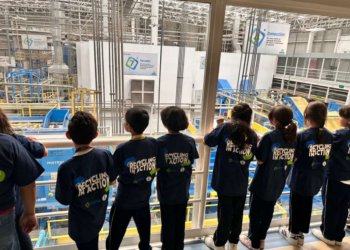
E-scrap among three focus areas for student-run, California-based environmental advocacy group.

APR reports success for 2026 recycling tours 

APR reports success for 2026 recycling tours 

byAntoinette Smith
September 23, 2026

In May, more than 2,500 visitors toured 41 facilities in the US and Mexico, during APR's second annual Recycling in...

Colorado’s EPR programs move from planning to practice

Colorado’s EPR programs move from planning to practice

byStefanie Valentic
September 17, 2026

Colorado's producer responsibility organizations move to implement the state's extended producer responsibility law.

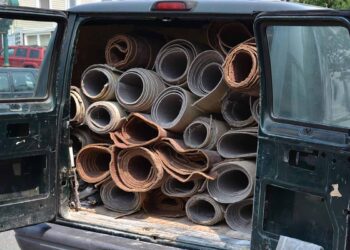
Van filled with rolled carpeting for recycling or disposal.

California carpet recycling rate reaches 37%

byBrian Clark Howard
September 17, 2026

The state’s recycling rate rose for the sixth year in a row, despite challenging market conditions.

SB 54 plan for cartons, film draws warning

byStefanie Valentic
September 15, 2026

The new law's cartons and film targets could add 100,000 tons of plastic contamination to California's paper exports annually, a...

California Governor Gavin Newsom speaking at podium.

What’s on Newsom’s desk after the CA session end

byStefanie Valentic
September 14, 2026

With the California legislature adjourned, packaging, food-waste and EPR advocates are watching a single date, Sept. 30, to see which...

Load More
Next Post

Supply chain jam creates long delays for recycling equipment

2026 Buyers’ Guide

Equipment, services and technology suppliers serving the recycling industry.

Browse the Guide

More Posts

Recyclers reeling from NJ PCR extension

Recyclers reeling from NJ PCR extension

September 23, 2026
Colorado’s EPR programs move from planning to practice

Colorado’s EPR programs move from planning to practice

September 17, 2026

SB 54 plan for cartons, film draws warning

September 15, 2026
US packaging is evolving. The recycling system isn’t ready

US packaging is evolving. The recycling system isn’t ready

September 16, 2026
Alpek closing Pennsylvania RPET plant

Alpek seizing on war-related opportunity 

July 27, 2026

America’s critical-materials buildout has a feedstock problem

September 18, 2026
ALPLA’s holistic approach to packaging design

ALPLA’s holistic approach to packaging design

September 18, 2026
Canada tariffs latest in new normal for RPET

Canada tariffs latest in new normal for RPET

September 11, 2026
Van filled with rolled carpeting for recycling or disposal.

California carpet recycling rate reaches 37%

September 17, 2026

Who should pay for lithium-ion battery fire damage?

September 21, 2026
Load More

About & Publications

About Us

Staff

Archive

Magazines

Work With Us

Advertise
Jobs
Contact
Terms and Privacy

Newsletters

Get the latest recycling news and analysis delivered to your inbox every week. Stay ahead on industry trends, policy updates, and insights from programs, processors, and innovators.

Subscribe

Welcome Back!

Login to your account below

Forgotten Password?

Retrieve your password

Please enter your username or email address to reset your password.

Log In

Add New Playlist

No Result
View All Result
  • The Latest
  • Analysis
  • Recycling
  • E-Scrap
  • Plastics
  • Policy Now
  • Conferences
    • E-Scrap Conference
    • Plastics Recycling Conference
    • Resource Recycling Conference
    • Textiles Recovery Summit
  • Magazines
  • About Us
  • Advertise
  • Archive
  • Jobs
  • Staff
Subscribe
This website uses cookies. By continuing to use this website you are giving consent to cookies being used. Visit our Privacy and Cookie Policy.