Resource Recycling
  • The Latest
  • Analysis
    • All
    • Certification Scorecard
    • Industry Announcements
    • Opinion
    Back-to-school 2026/27: Apple vs. Google

    Back-to-school 2026/27: Apple vs. Google

    Certification Scorecard — Week of May 11, 2026

    May pricing bullish for most bales

    May pricing bullish for most bales

    PP most likely plastic to shift in 2026

    PP most likely plastic to shift in 2026

    CompuCycle brings e-plastic recycling upgrade online

    Quantum expands e-plastics recovery

    Certification Scorecard — Week of May 4, 2026

  • Conferences
    • Resource Recycling Conference
    • Plastics Recycling Conference
    • E-Scrap: The Longevity Conference
    • Textiles Recovery Summit
  • Publications
    • E-Scrap News
    • Plastics Recycling Update
    • Policy Now
    • Resource Recycling
    • Other Topics
      • Brand Owners
      • Critical Minerals
      • Glass
      • Grant Watch
      • Markets
      • Organics
      • Packaging
      • Research
      • Technology
      • Textiles
      • All Topics
Subscribe
No Result
View All Result
Resource Recycling
  • The Latest
  • Analysis
    • All
    • Certification Scorecard
    • Industry Announcements
    • Opinion
    Back-to-school 2026/27: Apple vs. Google

    Back-to-school 2026/27: Apple vs. Google

    Certification Scorecard — Week of May 11, 2026

    May pricing bullish for most bales

    May pricing bullish for most bales

    PP most likely plastic to shift in 2026

    PP most likely plastic to shift in 2026

    CompuCycle brings e-plastic recycling upgrade online

    Quantum expands e-plastics recovery

    Certification Scorecard — Week of May 4, 2026

  • Conferences
    • Resource Recycling Conference
    • Plastics Recycling Conference
    • E-Scrap: The Longevity Conference
    • Textiles Recovery Summit
  • Publications
    • E-Scrap News
    • Plastics Recycling Update
    • Policy Now
    • Resource Recycling
    • Other Topics
      • Brand Owners
      • Critical Minerals
      • Glass
      • Grant Watch
      • Markets
      • Organics
      • Packaging
      • Research
      • Technology
      • Textiles
      • All Topics
Subscribe
No Result
View All Result
Resource Recycling
No Result
View All Result
Home Recycling

Bottle bill update heads to Conn. governor’s desk

byJared Paben
June 8, 2021
in Recycling
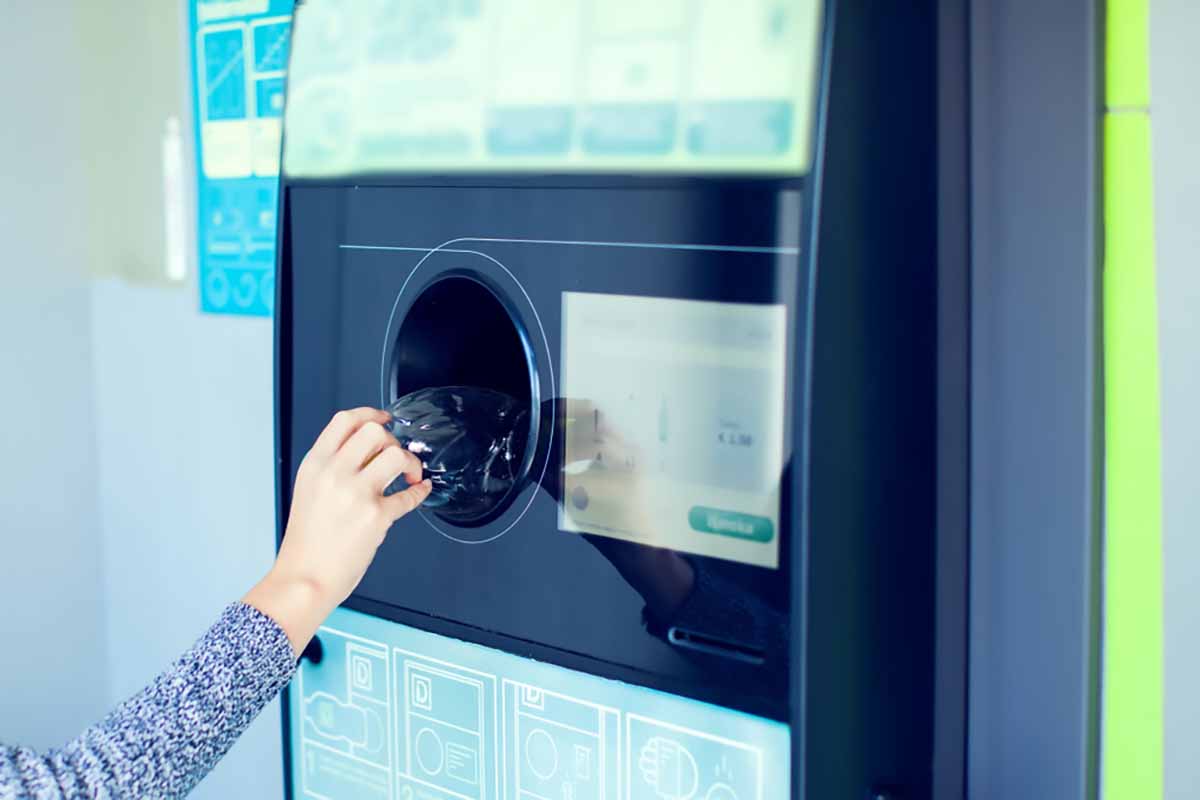
An expanded list of beverages will be covered in Connecticut’s bottle-deposit program under a new piece of legislation on the governor’s desk. | alexs333 / Shutterstock

Connecticut lawmakers passed legislation overhauling the state’s 41-year-old container deposit program, with one supporter calling the move the most significant U.S. bottle bill expansion in a decade.

Passed by the legislature last week, Senate Bill 1037 makes a number of significant changes to the state’s current container deposit program, including the following:

Expanding covered beverages: The deposit program currently covers beer and other malt beverages, mineral or soda water, carbonated soft drinks and waters. Starting on July 1, 2023, the program will be expanded to also cover hard cider, plant water or plant-infused drinks, juices, tea, coffee, kombucha and sports or energy drinks. 

Exempting containers: The program currently exempts noncarbonated beverages of at least 3 liters and HDPE containers. The bill eliminates the HDPE exemption, sets a 2.5-liter exemption threshold for noncarbonated beverages, imposes a 3-plus-liters exemption for carbonated beverages, and exempts all containers of less than 150 milliliters. The legislation also allows smaller-volume bottlers to apply for exemptions. 

Doubling the deposit: The legislation also increases the deposit from 5 cents to at least 10 cents, beginning in 2024.

Handling fee increases: Starting Oct. 1, 2021, the bill increases the handling fees that distributors must pay to retailers and redemption centers. The fee for beer and other malt beverages increases from 1.5 cents per container to 2.5 cents. The fee for noncarbonated beverages, mineral or soda water, and carbonated soft drinks increases from 2 cents to 3.5 cents. The bill also imposes a 2.5-cent fee on hard cider for the first time. 

Who keeps unredeemed deposits: Under current law, unclaimed deposits are paid to the state’s general fund. The bill over the next four years allows beverage companies to keep larger and larger percentages of that money. Starting in the 2026 fiscal year, distributors will be allowed to keep 55% of the money. As a result, the state would experience a decrease of about  $13 million per year in general fund revenues starting in 2026, according to a fiscal note. 

Redemption space requirements: Starting Oct. 1, 2021, the bill requires certain retailers to install reverse-vending machines. It includes definitions specifying which retailers face this requirement. Some of those that aren’t required to install the RVMs must still set aside staffed areas where the public can redeem containers. 

Wine and liquor bottle processing: The state’s deposit program doesn’t cover wine and liquor bottles, but Senate Bill 1037 requires the state to take steps to boost processing capacity for the containers. Specifically, the bill directs the state Department of Energy and Environmental Protection (DEEP) to develop memorandum of agreement (MOA) requirements for an in-state collection and recycling system that, by 2023, will process at least 80% of the wine and liquor bottles sold in the state. The system must produce furnace-ready cullet or post-consumer glass processed for use in cement, glass or fiberglass products. The DEEP commission is required to submit a draft of the MOA to state legislators by Jan. 15, 2022. 

Approved stewardship organizations: The legislation also requires DEEP to approve one or more nonprofit stewardship groups to eventually take over the container redemption and recycling system. Beverage distributors would be required to join a stewardship group, and the groups would be required to submit statewide beverage container stewardship plans to DEEP by July 1, 2022. DEEP would then have three months to submit a recommendation to state legislators on whether to approve the stewardship plans. The change would shift Connecticut to a program management model somewhat like Oregon’s, where a beverage distributor-owned cooperative manages deposit and scrap collection for most containers in the state. 

Nips surcharge: Starting Oct. 1, 2021, the legislation requires that consumers pay a 5-cent surcharge on liquid bottles of 50 milliliters or less, referred to as “nips.” Starting April 1, 2022, the money collected would be sent to municipalities where the bottles were sold. Municipalities would be limited to spending the money on solid waste reduction and anti-litter staffing and projects. According to the fiscal impact analysis, the surcharge would raise an estimated $620,000 a year for municipalities across the state. 

On June 2, SB 1037 passed the Senate 33-1, with 2 senators absent and not voting. The following day, the House of Representatives then voted 105-42, with 4 members absent and not voting, to approve the bill that contained the Senate’s amendments. It now heads to the desk of Gov. Ned Lamont for his consideration. 

The Container Recycling Institute (CRI), which advocates in favor of deposit laws, called the bill “the most significant bottle bill expansion legislation passed in the U.S. in about a decade.” CRI estimates that the provisions expanding the program to additional beverage types will boost the number of containers covered by deposits in Connecticut by about 13%. 

According to BottleBill.org, a website maintained by CRI, Connecticut had a 44% redemption rate in 2020, down from 50% the year before. Connecticut’s rate is among the lowest for bottle bill states. 

CRI hailed the deposit increase to 10 cents, bringing the Constitution State’s base-level deposit in line with those in Oregon and Michigan. Oregon’s redemption rate shot up after the state doubled its deposit from a nickel to a dime. 

“While the COVID-19 pandemic played a part in declining redemption in 2020, the downward redemption trend over the last 10 years is unmistakable proof that 5 cents is no longer the financial incentive it once was for consumers to return containers instead of throwing them away or littering them,” Susan Collins, president of CRI, stated in a press release.
 

Tags: Container DepositsIndustry GroupsLegislation & Enforcement
TweetShare
Jared Paben

Jared Paben

Related Posts

Industry descends on DC to fight for PET

Industry descends on DC to fight for PET

byAntoinette Smith
May 13, 2026

Amid numerous recent hits to the common packaging plastic, a stakeholder coalition is engaging with policy makers to encourage policy...

SWANA hires new executive director

APR, RecyClass wrap up third year of collaboration

byAntoinette Smith
May 12, 2026

The North American and EU organizations are working together to harmonize global recyclability standards.

APR, industry groups testify on overcapacity

APR, industry groups testify on overcapacity

byAntoinette Smith
May 8, 2026

Steve Alexander, CEO of APR, pointed to China as driving global oversupply despite fluctuating PET imports to the US and...

Lawsuits hover days after SB 54 approval

Lawsuits hover days after SB 54 approval

byStefanie Valentic
May 6, 2026

NRDC and Californians Against Waste are suing CalRecycle over finalized EPR regulations they say unlawfully allow chemical recycling and other...

CAA seeks comment on REM recycling standard

byStefanie Valentic
May 6, 2026

Circular Action Alliance is now accepting public comment for its draft Responsible End Markets certification standard.

Lithium-ion battery recycler to build New York facility

Why battery EPR doesn’t have a packaging problem

byStefanie Valentic
May 4, 2026

While packaging EPR fights injunctions, battery EPR has achieved a mostly harmonized legal framework across nearly every state that has...

Load More
Next Post

Northeast MRFs report 120% boost in value of a blended ton

More Posts

Extruder pushes out natural HDPE pellets at KW Plastics in Troy, Alabama.

Rare look inside the world’s largest plastics recycler

May 13, 2026
Lawsuits hover days after SB 54 approval

Lawsuits hover days after SB 54 approval

May 6, 2026
Industry descends on DC to fight for PET

Industry descends on DC to fight for PET

May 13, 2026
Orange County landfill fees to spike 53%

Orange County landfill fees to spike 53%

May 11, 2026

PP bales rise, paper grades edge higher

May 11, 2026
APR, industry groups testify on overcapacity

APR, industry groups testify on overcapacity

May 8, 2026
Canadian city walks back fee on paper coffee cups

Recycling access for paper cups hits 20% of US

May 11, 2026
PP most likely plastic to shift in 2026

PP most likely plastic to shift in 2026

May 8, 2026

American Battery Technology confirms second site

May 13, 2026
New version of California EPR regulations released

CalRecycle approves SB 54 regulations

May 2, 2026
Load More

About & Publications

About Us

Staff

Archive

Magazine

Work With Us

Advertise
Jobs
Contact
Terms and Privacy

Newsletter

Get the latest recycling news and analysis delivered to your inbox every week. Stay ahead on industry trends, policy updates, and insights from programs, processors, and innovators.

Subscribe

Welcome Back!

Login to your account below

Forgotten Password?

Retrieve your password

Please enter your username or email address to reset your password.

Log In

Add New Playlist

No Result
View All Result
  • The Latest
  • Analysis
  • Recycling
  • E-Scrap
  • Plastics
  • Policy Now
  • Conferences
    • E-Scrap Conference
    • Plastics Recycling Conference
    • Resource Recycling Conference
    • Textiles Recovery Summit
  • Magazine
  • About Us
  • Advertise
  • Archive
  • Jobs
  • Staff
Subscribe
This website uses cookies. By continuing to use this website you are giving consent to cookies being used. Visit our Privacy and Cookie Policy.