




Resource Recycling
  • The Latest
  • Analysis
    • All
    • Certification Scorecard
    • Industry Announcements
    • Opinion
    Europe’s recyclers miss most of the critical materials

    Europe’s recyclers miss most of the critical materials

    Chemical recycling roundup: New plant, partnerships

    Polystyrene’s circular future is already taking shape

    IBM logo on building

    What IBM’s quantum foundry means for ITAD

    Certification Scorecard — Week of May 25, 2026

    CommanderAI launches searchable hauler database

    Underwater data centers drive shift in ITAD models

    EU recyclers make case for solvent-based methods

    The electronics recycling industry has a plastics problem

  • Conferences
    • Resource Recycling Conference
    • Plastics Recycling Conference
    • E-Scrap: The Longevity Conference
    • Textiles Recovery Summit
  • Publications
    • E-Scrap News
    • Plastics Recycling Update
    • Policy Now
    • Resource Recycling
    • Other Topics
      • All Topics
      • Brand Owners
      • Critical Minerals
      • Glass
      • Grant Watch / RFPs
      • Markets
      • Organics
      • Packaging
      • Research
      • Technology
      • Textiles
Subscribe
No Result
View All Result
Resource Recycling
  • The Latest
  • Analysis
    • All
    • Certification Scorecard
    • Industry Announcements
    • Opinion
    Europe’s recyclers miss most of the critical materials

    Europe’s recyclers miss most of the critical materials

    Chemical recycling roundup: New plant, partnerships

    Polystyrene’s circular future is already taking shape

    IBM logo on building

    What IBM’s quantum foundry means for ITAD

    Certification Scorecard — Week of May 25, 2026

    CommanderAI launches searchable hauler database

    Underwater data centers drive shift in ITAD models

    EU recyclers make case for solvent-based methods

    The electronics recycling industry has a plastics problem

  • Conferences
    • Resource Recycling Conference
    • Plastics Recycling Conference
    • E-Scrap: The Longevity Conference
    • Textiles Recovery Summit
  • Publications
    • E-Scrap News
    • Plastics Recycling Update
    • Policy Now
    • Resource Recycling
    • Other Topics
      • All Topics
      • Brand Owners
      • Critical Minerals
      • Glass
      • Grant Watch / RFPs
      • Markets
      • Organics
      • Packaging
      • Research
      • Technology
      • Textiles
Subscribe
No Result
View All Result
Resource Recycling
No Result
View All Result
Home Recycling

West Coast study: Recycling zeal doesn’t erase contamination

Dan LeifbyDan Leif
May 5, 2020
in Recycling
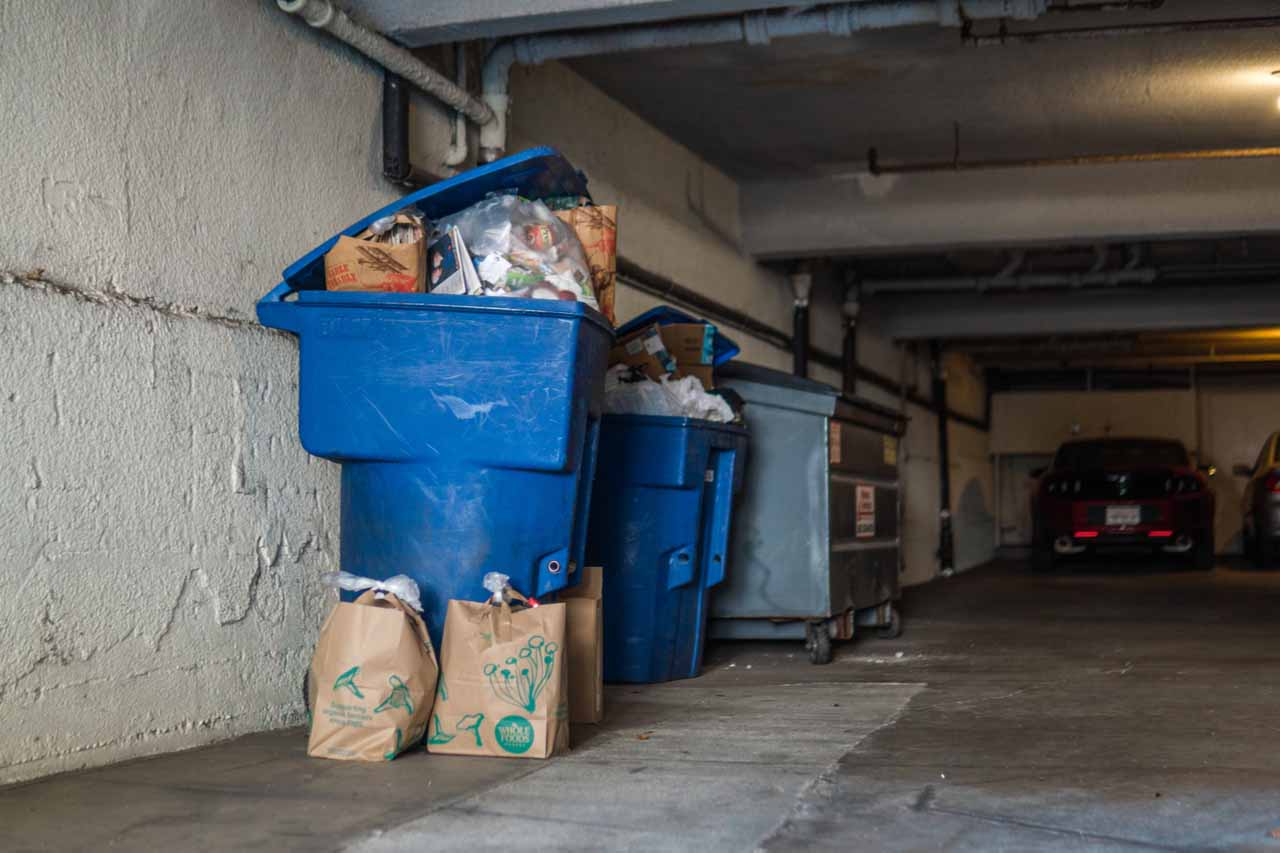
California cities of 50,000 residents or more are seeing inbound contamination rates between 8% and 46%, with an average of 20%. | Oksana Shturo/Shutterstock

According to a study from The Recycling Partnership, large and mid-sized cities in California see an average contamination rate of around 20%, a finding that underscores the complications of aligning enthusiastic residents with local-program realities.

The Recycling Partnership, an organization that is backed by corporate stakeholders and is geared toward improving municipal recycling in the U.S., undertook research in 2019 to better understand material quality in communities of 50,000 people or more in California, Oregon and Washington.

The organization compiled available program data; surveyed local officials, haulers, processors and residents; and conducted interviews and focus groups. The findings, released May 4, deliver some notable numbers.

The research found that 89% of residents in larger West Coast municipalities find it easy to participate in materials diversion and that, by and large, residents “want to recycle, recycle everything they can, and recycle the correct way.” However, that dedication to diversion is not always translating to quality loads heading to the materials recovery facility (MRF).

According to the report, California cities of 50,000 residents or more are seeing inbound contamination rates between 8% and 46%, with an average of 20%. In Oregon and Washington, cities reported contamination rates averaging 11%.

While those data points come from reporting and calculation mechanisms in place in different communities, which The Recycling Partnership notes are often lacking in consistency, the report does provide details on one particularly rigorous material audit in the Portland, Ore. region.

Field sampling of the curbside, single-stream recycling system in and around Portland determined the area had a 22% contamination rate.

That study, which also assessed recyclable material that ended up in the trash stream, showed the average household generated 594 pounds of recyclable material per year. Of that weight, 418 pounds per household went into curbside recycling, 132 pounds went into garbage and 44 pounds were collected through the state container deposit program.

The Recycling Partnership recommended more communities make efforts to dig deeper into their waste numbers.

“Cities and counties that can isolate curbside tonnage from other recycling streams and track contamination over time can see trends in their program’s efficiency,” the organization states in the contamination report. “This data can then be used to focus their education and outreach efforts, allowing the local program to make the education effort actionable and make the most out of the available resources.”

In terms of specific contaminants that are causing problems, one material type identified by the research will be of little surprise to industry veterans. City officials and MRF operators in all three states noted plastic bags are particularly problematic.

In West Coast resident surveys conducted by The Recycling Partnership, 25% to 50% of respondents said they put plastic bags in their curbside carts, with Oregon respondents on the low end of that spectrum and California residents on the high end.

“Based on surveys focused in Southern California, we found that the majority of residents think plastic bags are accepted in their curbside recycling program, regardless of whether plastic bags are actually accepted by their program,” the report states.

The report also provides insight on some of the details of curbside collection service on the West Coast.

In California, there are 175 cities with 50,000 residents or more. Of those, 158 communities offer single-stream collection, 10 offer mixed-waste collection and seven have dual-stream programs.

In Oregon and Washington, 35 cities were big enough to qualify for the study. Among those programs, 19 have traditional single-stream collection, 14 use single-stream collection with glass collected in a separate container and two programs are dual-stream initiatives.
 

Tags: CaliforniaCollectionContaminationLocal ProgramsResearch
TweetShare
Dan Leif

Dan Leif

Dan Leif is the managing editor at Resource Recycling, Inc., which publishes Resource Recycling, Plastics Recycling Update and E-Scrap News. He has been with the company since 2013 and has edited different trade publications since 2006. He can be contacted at [email protected].

Related Posts

Chemical recycling roundup: New plant, partnerships

Polystyrene’s circular future is already taking shape

byJustin Riney
May 29, 2026

A new study from the Polystyrene Recycling Alliance (PSRA), conducted with Resource Recycling Systems (RRS), offers new insights into the...

Revised CA budget includes $200m for recycling

Revised CA budget includes $200m for recycling

byAntoinette Smith
May 20, 2026

Stakeholders applauded the additional allocations proposed, but would like to see distribution re-formulated to more effectively address market realities.

Plastic packaging

Why SB 54 source reduction planning is becoming the industry’s most challenging EPR test

byDave Ford
May 19, 2026

Ahead of critical August deadlines, producers, packaging manufacturers and experts must decode SB 54's toughest requirement.

Bottle bill backers see opportunity for action

PET collapse exposes gaps in US recycling infrastructure

byStefanie Valentic
May 15, 2026

Joaquin Mariel, Circular Services president, broke down why recycling infrastructure is so hard to scale and used PET's rapid market...

Surveys examine gaps in consumer recycling education

Study finds lack of proper battery disposal

byPaul Lane
May 13, 2026

The “Michigan 2025 Battery Gap Analysis” finds state residents are mismanaging discarded batteries.

Extruder pushes out natural HDPE pellets at KW Plastics in Troy, Alabama.

Rare look inside the world’s largest plastics recycler

byBrian Clark Howard
May 13, 2026

KW Plastics in Troy, Alabama is a leading recycler of PP and HDPE—here’s a glimpse behind the gates.

Load More
Next Post

Software brings waste audit results into real time

More Posts

Recycling industry addresses Beyond Plastics report

Recycling industry addresses Beyond Plastics report

May 26, 2026
What a report on Starbucks cups reveals about recycling

What a report on Starbucks cups reveals about recycling

May 26, 2026
EU recyclers make case for solvent-based methods

The electronics recycling industry has a plastics problem

May 26, 2026
New York bill would strengthen device repair rules

New York packaging EPR bill faces June 10 deadline

May 26, 2026
Federal PACK Act aims to preempt ‘patchwork’ of state laws

House advances Recycling Infrastructure and Accessibility Act

May 21, 2026
Illinois expands battery recycling as lithium-ion fire concerns mount

Illinois expands battery recycling as lithium-ion fire concerns mount

May 27, 2026
Bottle bill backers see opportunity for action

PET collapse exposes gaps in US recycling infrastructure

May 15, 2026
Plastic packaging

Why SB 54 source reduction planning is becoming the industry’s most challenging EPR test

May 19, 2026
EPR rules take shape in Oregon, as first test

Oregon OKs end-market verification from CAA

May 20, 2026
CommanderAI launches searchable hauler database

Underwater data centers drive shift in ITAD models

May 26, 2026
Load More

About & Publications

About Us

Staff

Archive

Magazine

Work With Us

Advertise
Jobs
Contact
Terms and Privacy

Newsletter

Get the latest recycling news and analysis delivered to your inbox every week. Stay ahead on industry trends, policy updates, and insights from programs, processors, and innovators.

Subscribe

Welcome Back!

Login to your account below

Forgotten Password?

Retrieve your password

Please enter your username or email address to reset your password.

Log In

Add New Playlist

No Result
View All Result
  • The Latest
  • Analysis
  • Recycling
  • E-Scrap
  • Plastics
  • Policy Now
  • Conferences
    • E-Scrap Conference
    • Plastics Recycling Conference
    • Resource Recycling Conference
    • Textiles Recovery Summit
  • Magazine
  • About Us
  • Advertise
  • Archive
  • Jobs
  • Staff
Subscribe
This website uses cookies. By continuing to use this website you are giving consent to cookies being used. Visit our Privacy and Cookie Policy.