





Resource Recycling
  • The Latest
  • Analysis
    • All
    • Certification Scorecard
    • Industry Announcements
    • Opinion
    The electronics recycling industry is undergoing a transformation from labor-intensive manual operations to highly automated, AI-driven facilities that use advanced robotics, cleaner chemistry and digital tracking systems to extract critical materials.

    The cyber-physical MRF: AI and robotics reshape e-waste recovery

    Certification scorecard for the week of Feb. 9, 2026

    Meta-Corning deal signals IT hardware retirement wave

    Meta-Corning deal signals IT hardware retirement wave

    Malaysia clamps down on illegal e-waste imports amid probes

    Malaysia clamps down on illegal e-waste imports amid probes

    URT builds alliance to remake electronics plastics at scale

    ICYMI: Top 5 e-scrap stories from January 2026

    The electronics recycling industry is undergoing a transformation from labor-intensive manual operations to highly automated, AI-driven facilities that use advanced robotics, cleaner chemistry and digital tracking systems to extract critical materials.

    Certification scorecard for the week of Feb. 2, 2026

    Auditors warn EU may fall short on critical metals

    Auditors warn EU may fall short on critical metals

    Industry announcements for January 2026

    Industry announcements for February 2026

    ICYMI: Top 5 recycling stories from January 2026

  • Conferences
  • Publications

    Other Topics

    Textiles
    Organics
    Packaging
    Glass
    Brand Owners

    Metals
    Technology
    Research
    Markets
    Grant Watch

    All Topics

Subscribe
No Result
View All Result
Resource Recycling
  • The Latest
  • Analysis
    • All
    • Certification Scorecard
    • Industry Announcements
    • Opinion
    The electronics recycling industry is undergoing a transformation from labor-intensive manual operations to highly automated, AI-driven facilities that use advanced robotics, cleaner chemistry and digital tracking systems to extract critical materials.

    The cyber-physical MRF: AI and robotics reshape e-waste recovery

    Certification scorecard for the week of Feb. 9, 2026

    Meta-Corning deal signals IT hardware retirement wave

    Meta-Corning deal signals IT hardware retirement wave

    Malaysia clamps down on illegal e-waste imports amid probes

    Malaysia clamps down on illegal e-waste imports amid probes

    URT builds alliance to remake electronics plastics at scale

    ICYMI: Top 5 e-scrap stories from January 2026

    The electronics recycling industry is undergoing a transformation from labor-intensive manual operations to highly automated, AI-driven facilities that use advanced robotics, cleaner chemistry and digital tracking systems to extract critical materials.

    Certification scorecard for the week of Feb. 2, 2026

    Auditors warn EU may fall short on critical metals

    Auditors warn EU may fall short on critical metals

    Industry announcements for January 2026

    Industry announcements for February 2026

    ICYMI: Top 5 recycling stories from January 2026

  • Conferences
  • Publications

    Other Topics

    Textiles
    Organics
    Packaging
    Glass
    Brand Owners

    Metals
    Technology
    Research
    Markets
    Grant Watch

    All Topics

Subscribe
No Result
View All Result
Resource Recycling
No Result
View All Result
Home Recycling

How to help West Coast cities? Target contamination

Colin StaubbyColin Staub
April 30, 2019
in Recycling

Local recycling programs develop differently, and effectively providing support involves meeting municipalities where they’re at. The Recycling Partnership is employing that mantra to boost the viability of materials recovery in California, Oregon and Washington.

The Recycling Partnership (TRP), an industry group backed by a range of corporate entities, this month announced its West Coast Contamination Initiative, which will be looking to clean up the recycling stream in states bordering the Pacific.

The targeted contamination effort, alongside a similar project in Atlanta, has a slightly different focus than TRP’s ongoing mission to roll out recycling carts to increase residential access and participation.

Programs along the West Coast tend to be relatively mature – some of the most highly regarded programs in the country exist in the region, and California has aggressive targets mandated in state law. However, programs in that part of the country have also in the past been highly reliant on exports to Asia. That’s become an issue as China and others have begun banning imports of certain materials and significantly tightening contamination requirements.

“They have infrastructure in place for collection, but the markets have really affected the West Coast, in some cases more so than other parts of the country,” said Cody Marshall, chief community strategy officer for TRP, in an interview with Resource Recycling.

Driven by market challenge

The problem is not necessarily that West Coast programs see far more contamination than other parts of the country, but that contaminants are particularly damaging because of the regional market struggles.

For example, moderately contaminated paper might be able to find a home in the Southeast, where there are more domestic buyers in the region. But paper with the same amount of contamination in California may be very difficult to move because of the lack of recycled paper mills in the area.

The project received $1 million in dedicated funding from two existing TRP member companies, Amazon and Keurig Dr Pepper. In a statement, Monique Oxender, chief sustainability officer for Keurig Dr Pepper, said the company is “excited to see more quality recyclables travel from the recycling bin back in to new products, creating a thriving economy coast to coast.”

Brand owners understand that quality at the curb is essential for their products to truly get recycled and used in new products, Marshall said. “Our funders for this project really felt the need to support the contamination issues and felt it was a way to support the collection side on the West Coast,” Marshall explained.

Kicking off with research

TRP’s first order of business in launching project will be getting a handle on what the contamination problem looks like in West Coast municipalities.

The project team is interviewing every city of over 50,000 residents to understand their different program dynamics, Marshall said, and it is also surveying MRFs in the region to learn about their biggest contamination concerns.

“We’re trying to find trends on the contamination side,” Marshall said.

That information will shape outreach materials developed through the project. For example, if the project finds that batteries are the biggest concern for MRFs in the area, TRP could gear its resources toward messaging that steers residents away from tossing batteries in the curbside cart. If tanglers are the biggest problem, bags could be targeted.

Educational resources developed through this project will be shared and available for the wider recycling industry to use.

The initiative will also include a grant funding component, allowing programs to apply for financial assistance in their own contamination reduction projects.

Throughout the summer and fall, the TRP team will be connecting with communities, MRFs and haulers up and down the coast. By the end of fall, TRP will hold workshops to bring those stakeholders together and share what the project has learned.

The contamination initiative has no sunset date, and TRP hopes to continue the work with additional fundraising in the coming years.

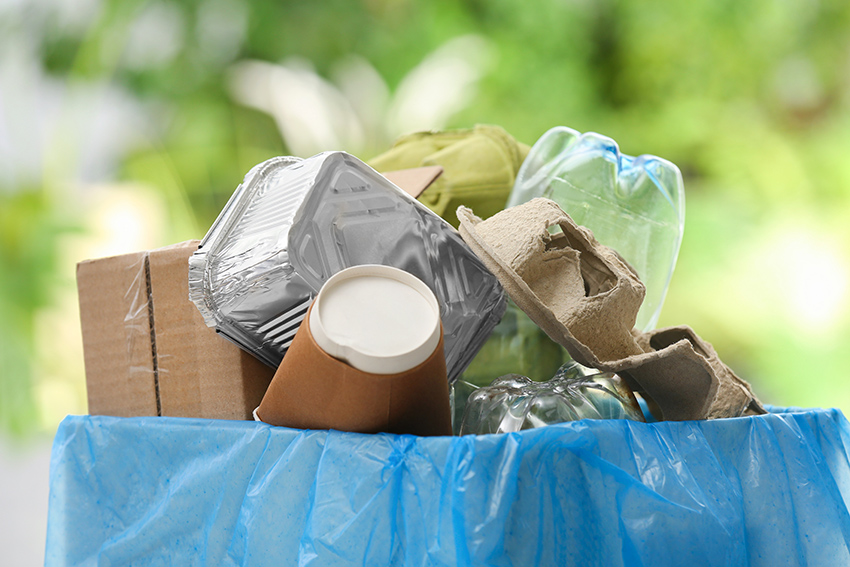
Photo credit: New Africa/Shutterstock

 

2019 Buyers' Guide

Tags: ContaminationIndustry GroupsResearch
TweetShare
Colin Staub

Colin Staub

Colin Staub was a reporter and associate editor at Resource Recycling until August 2025.

Related Posts

APR, industry create proactive guidance for PET caps

byAntoinette Smith
February 12, 2026

The Association of Plastic Recyclers recognized that developing guidelines before PET caps were completely developed and commercialized was crucial, and...

APR expands recycling efforts in Mexico, Latin America

byAntoinette Smith
February 11, 2026

The organization aims to leverage Mexico's leadership in plastics recycling and vital role in North American markets.

Member states select new chair for global plastics treaty

Member states select new chair for global plastics treaty

byAntoinette Smith
February 10, 2026

During a short session, the Intergovernmental Negotiating Committee elected Chilean diplomat Julio Cordano to continue efforts toward an internationally binding...

SWANA hires new executive director

SWANA partners with Product Stewardship Institute

byStefanie Valentic
February 4, 2026

The Solid Waste Association of North America and the Product Stewardship Institute are formalizing their collaboration to address materials management...

German researchers say plastics treaty still within reach

byAntoinette Smith
February 4, 2026

In a new white paper, the group proposes three key changes to revive the treaty talks after a new chair...

UT Austin spinout Supra launches to recover rare earths

byScott Snowden
February 3, 2026

Supra Elemental Recovery launched today, aiming to recover gallium and scandium from US waste streams to help reduce import dependence...

Load More
Next Post

Dow looks to double reach of EnergyBag effort

More Posts

Oregon’s Recycling Modernization Act faces injunction

Court partially blocks Oregon EPR law, dismisses bulk of lawsuit

February 10, 2026
Chinese processing group details goals for US visit

AMP lays out vision of next-generation, AI-driven MRFs

July 24, 2024

Greenchip launches fund for community impact and trust

February 5, 2026

REUSE Act heads to US House for consideration

February 9, 2026

Allied Industrial portfolio companies complete two early-year deals

February 5, 2026

Amcor expects flat sales volumes to continue 

February 6, 2026
Packaging Corp. to buy Greif containerboard segment

Export trends offset containerboard production decline

February 6, 2026
Agilyx leaves US chem recycling, Houston sorting center

Agilyx leaves US chem recycling, Houston sorting center

February 4, 2026
Third ExxonMobil recycling plant operational

Third ExxonMobil recycling plant operational

February 4, 2026

ecoATM recycled 7.5M phones in 2025 as payouts hit $1.5B

February 10, 2026
Load More

About & Publications

About Us

Staff

Archive

Magazine

Work With Us

Advertise
Jobs
Contact
Terms and Privacy

Newsletter

Get the latest recycling news and analysis delivered to your inbox every week. Stay ahead on industry trends, policy updates, and insights from programs, processors, and innovators.

Subscribe

Welcome Back!

Login to your account below

Forgotten Password?

Retrieve your password

Please enter your username or email address to reset your password.

Log In

Add New Playlist

No Result
View All Result
  • The Latest
  • Analysis
  • Recycling
  • E-Scrap
  • Plastics
  • Policy Now
  • Conferences
    • E-Scrap Conference
    • Plastics Recycling Conference
    • Resource Recycling Conference
    • Textiles Recovery Summit
  • Magazine
  • About Us
  • Advertise
  • Archive
  • Jobs
  • Staff
Subscribe
This website uses cookies. By continuing to use this website you are giving consent to cookies being used. Visit our Privacy and Cookie Policy.