











Resource Recycling
  • The Latest
  • Analysis
    • All
    • Certification Scorecard
    • Industry Announcements
    • Opinion
    HP receives ocean plastics certification

    HP Inc. earnings point to memory inflation challenge

    Certification scorecard for the week of Feb. 23, 2026

    Umicore highlights strength in recycling, catalysis

    Apto, Tusaar partner on rare earths recovery

    Apto, Tusaar partner on rare earths recovery

    Certification scorecard for the week of Feb. 16, 2026

    Sims Lifecycle leverages hyperscale decommissioning

    Sims Lifecycle leverages hyperscale decommissioning

    The electronics recycling industry is undergoing a transformation from labor-intensive manual operations to highly automated, AI-driven facilities that use advanced robotics, cleaner chemistry and digital tracking systems to extract critical materials.

    The cyber-physical MRF: AI and robotics reshape e-waste recovery

    Certification scorecard for the week of Feb. 9, 2026

    Meta-Corning deal signals IT hardware retirement wave

    Meta-Corning deal signals IT hardware retirement wave

  • Conferences
  • Publications

    Other Topics

    Textiles
    Organics
    Packaging
    Glass
    Brand Owners

    Metals
    Technology
    Research
    Markets
    Grant Watch

    All Topics

Subscribe
No Result
View All Result
Resource Recycling
  • The Latest
  • Analysis
    • All
    • Certification Scorecard
    • Industry Announcements
    • Opinion
    HP receives ocean plastics certification

    HP Inc. earnings point to memory inflation challenge

    Certification scorecard for the week of Feb. 23, 2026

    Umicore highlights strength in recycling, catalysis

    Apto, Tusaar partner on rare earths recovery

    Apto, Tusaar partner on rare earths recovery

    Certification scorecard for the week of Feb. 16, 2026

    Sims Lifecycle leverages hyperscale decommissioning

    Sims Lifecycle leverages hyperscale decommissioning

    The electronics recycling industry is undergoing a transformation from labor-intensive manual operations to highly automated, AI-driven facilities that use advanced robotics, cleaner chemistry and digital tracking systems to extract critical materials.

    The cyber-physical MRF: AI and robotics reshape e-waste recovery

    Certification scorecard for the week of Feb. 9, 2026

    Meta-Corning deal signals IT hardware retirement wave

    Meta-Corning deal signals IT hardware retirement wave

  • Conferences
  • Publications

    Other Topics

    Textiles
    Organics
    Packaging
    Glass
    Brand Owners

    Metals
    Technology
    Research
    Markets
    Grant Watch

    All Topics

Subscribe
No Result
View All Result
Resource Recycling
No Result
View All Result
Home Recycling

APR: ‘There is no sustainability without recycling’

Colin StaubbyColin Staub
November 27, 2018
in Recycling

The head of the Association of Plastic Recyclers (APR) recently voiced concerns that plastics recovery progress could get dampened by stakeholders’ transition to more holistic approaches to materials management.

During a recent webinar, Steve Alexander of APR and an official from the U.S. Environmental Protection Agency discussed the evolution of  sustainable materials management and what it means for the plastics recycling industry.

Under a sustainable materials management approach, managing a product at end of life becomes just one component of reducing that product’s environmental impact. It’s not necessarily about lessening the importance of recycling, but introducing new factors into the discussion. It’s a concept being embraced by the U.S. EPA as well as states, waste companies and others.

But APR wants to make sure the work being done by the plastics recycling sector is not forgotten as the dialogue develops.

“Recycling is at the base of any sustainability movement,” said Steve Alexander, executive director of APR. “Frankly, there is no sustainability without recycling.”

What is the new approach?

During the Nov. 6 webinar, Ron Vance, chief of the resource conservation branch in the U.S. EPA’s Office of Land and Emergency Management, gave an overview of the sustainable materials management concept. It was developed as part of the EPA’s evolving work on solid waste management and materials use.

“We’re trying to look at materials at large and really trying to understand where they come from, where they go and everything that’s embedded within them,” Vance said.

That means considering the impacts from raw material sourcing through manufacturing, delivery to market, use by the consumer and end of life. This way of thinking moves beyond the original EPA areas of interest, which focused on landfill and disposal regulations. It even moves beyond the concept of “integrated waste management,” which emerged in the 1990s, Vance said.

The EPA’s version of sustainable materials management considers end-of-life management but also includes five earlier areas of focus throughout a product’s life.

“It’s not always about end of life,” Vance said. “It’s really understanding what happens across the life cycle, where those impacts occur and where the opportunities throughout the life cycle are to mitigate some of those impacts.”

And during the end-of-life management phase, Vance said, “reuse, recycling and whatnot come in as key roles in keeping that material in cycle, but it’s not the end-all, be-all of minimizing all of those impacts.”

‘Don’t want to de-emphasize recycling’

The plastics recycling industry has a “fundamental belief” that recycling must be a key component of sustainable materials management, Alexander said.

He pointed to the trend of major brand owners making recycling-related commitments, whether they’re pledges to use more recycled content, to make more recyclable products or other similar goals. Amid this rising interest, “the last thing we want to do is discourage companies from recycling,” Alexander said. “Not that EPA is doing that, but I think it’s important to highlight the role that recycling must continue to play within this sustainable materials management conundrum.”

One of the key concerns is that consumers and companies alike begin to place less focus on recycling, believing that the other pillars of sustainable materials management eclipse recycling in importance. It was a concern Alexander expressed in 2017, as well, after attending a plastic sustainability meeting that drew consumer product brand owners.

“We want people to continue to be more cognizant. We want companies and consumer brands to continue their commitment to utilizing recycling,” Alexander said.

He identified several strengths of recycling within the life cycle discussion, including that recycling facilitates a consumer connection to sustainability efforts.

“If you look at the other components of sustainable materials management, it’s about someone else doing something,” Alexander said. Recycling, on the other hand, engages the consumer.

“One of the most critical actions that people take is the decision that they make with that container in their hand, and do they put that in their trash or do they put that in their recycling bin.”

Another reason recycling is essential is that it will likely always have a role to play, according to APR. Manufacturers can work on source reduction, packaging innovation, life cycle analysis and reducing greenhouse gas emissions, but “at the end of the day, you’re still left with a product that has to be recycled,” Alexander said.

He indicated that the plastics recycling industry is not opposed to the factors a sustainable materials management approach promotes, such as examining greenhouse gas emissions for various materials. This year, APR completed a life cycle inventory analysis for using recycled resin versus virgin resin. The report, which is the first of its kind and will be released in the near future, highlights significant energy savings in transportation, resource consumption, emissions and other fields.

“I think that sometimes people miss how much contribution, from a life cycle and a greenhouse gas emission reduction [perspective], that using recycled resin contributes to sustainable materials management as well as sustainability in total,” Alexander said.

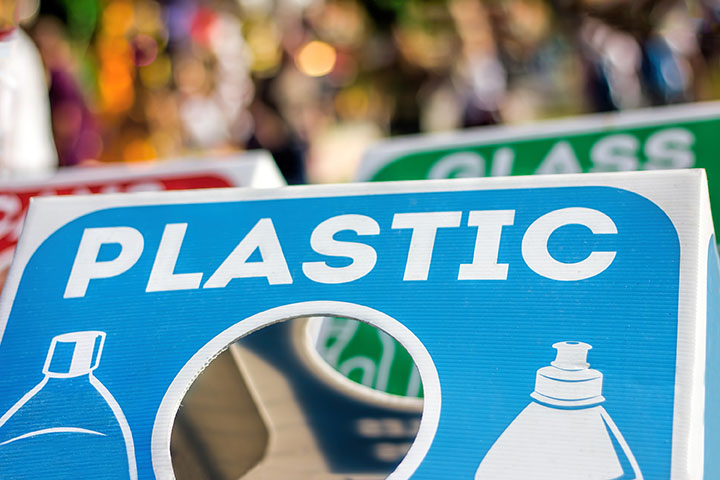
Photo credit: jgolby/Shutterstock

 

Tags: Industry GroupsPlastics
TweetShare
Colin Staub

Colin Staub

Colin Staub was a reporter and associate editor at Resource Recycling until August 2025.

Related Posts

Recycling education needs consistency, simplicity 

byBrian Clark Howard
February 25, 2026

Several members of Circular Action Alliance team shared insights during a workshop at the 2026 Resource Recycling Conference in San...

State policy is redefining plastics recycling in the US

State policy is redefining plastics recycling in the US

byKate Bailey
February 19, 2026

This year marks the midpoint of a decade defined by major shifts in plastics and recycling policy. Here’s what to...

SWANA, Fire Rover partner on reporting tool

byAntoinette Smith
February 19, 2026

Industry stakeholders can use the new site to report fires occurring at their facilities or in vehicles, to help support...

Carton recycling reaches 63% of US households

byScott Snowden
February 17, 2026

Carton recycling access rose to 63% of US households in 2025 after 2.5M homes gained service, with 86% of recycling...

UN trade data, tools aim to shape plastics treaty talks

UN trade data, tools aim to shape plastics treaty talks

byAntoinette Smith
February 17, 2026

UN agencies aim to use the harmonized trade data and a statistical framework to improve outcomes for the global negotiations,...

Focus on recycling film, flexibles takes shape in two reports

byAntoinette Smith
February 13, 2026

The US Plastics Pact and the Alliance to End Plastic Waste released reports outlining necessary steps to improving recycling outcomes...

Load More
Next Post

Taiwan joins countries curbing scrap imports

More Posts

WM opens new $90m MRF in south Florida 

WM opens new $90m MRF in south Florida 

February 23, 2026
PET bales stacked for recycling.

Evergreen closing RPET plants in Ohio, New York

February 24, 2026
Battery fire risk isn’t going away. Insurance is responding

Battery fire risk isn’t going away. Insurance is responding

February 24, 2026
Study links tagging tactics to lower contamination rates

Arizona, Reynolds reach settlement on Hefty bag lawsuit

February 23, 2026
Chinese processing group details goals for US visit

AMP lays out vision of next-generation, AI-driven MRFs

July 24, 2024
How will 2026 unfold for plastics recycling?

How will 2026 unfold for plastics recycling?

February 19, 2026
Recycled plastic lumber firms report diverging results

Trex CEO to retire after 23-year run

February 25, 2026
Minnesota publishes prelim EPR assessment

Minnesota publishes prelim EPR assessment

February 20, 2026
Polyolefins producer provides PCR updates

Economic downturn forces LyondellBasell to trim sustainability goals

February 23, 2026
State policy is redefining plastics recycling in the US

State policy is redefining plastics recycling in the US

February 19, 2026
Load More

About & Publications

About Us

Staff

Archive

Magazine

Work With Us

Advertise
Jobs
Contact
Terms and Privacy

Newsletter

Get the latest recycling news and analysis delivered to your inbox every week. Stay ahead on industry trends, policy updates, and insights from programs, processors, and innovators.

Subscribe

Welcome Back!

Login to your account below

Forgotten Password?

Retrieve your password

Please enter your username or email address to reset your password.

Log In

Add New Playlist

No Result
View All Result
  • The Latest
  • Analysis
  • Recycling
  • E-Scrap
  • Plastics
  • Policy Now
  • Conferences
    • E-Scrap Conference
    • Plastics Recycling Conference
    • Resource Recycling Conference
    • Textiles Recovery Summit
  • Magazine
  • About Us
  • Advertise
  • Archive
  • Jobs
  • Staff
Subscribe
This website uses cookies. By continuing to use this website you are giving consent to cookies being used. Visit our Privacy and Cookie Policy.