





Resource Recycling
  • The Latest
  • Analysis
    • All
    • Certification Scorecard
    • Industry Announcements
    • Opinion
    SK Tes on track to meet 2030 ITAD goal

    SK tes’ sustainability report offers window into ITAD

    Our top stories from February 2023

    ADS flexes new recycling capacity against resin spikes

    SCS launches chem recycling standard

    Certification scorecard — week of Sept. 28

    NJ’s PCR delay risks making its own excuse permanently true

    NJ’s PCR delay risks making its own excuse permanently true

    E-scrap magnet recycling company scales up

    Why only some rare-earth sources are economically viable

    e-Stewards to develop an ITAD-specific standard

    Certification scorecard — week of Sept. 21

  • Conferences
    • Resource Recycling Conference
    • Plastics Recycling Conference
    • E-Scrap: The Longevity Conference
    • Textiles Recovery Summit
  • Publications
    • E-Scrap News
    • Plastics Recycling Update
    • Policy Now
    • Resource Recycling
    • Other Topics
      • All Topics
      • Brand Owners
      • Critical Minerals
      • Glass
      • Grant Watch / RFPs
      • Markets
      • Organics
      • Packaging
      • Research
      • Technology
      • Textiles
Subscribe
No Result
View All Result
Resource Recycling
  • The Latest
  • Analysis
    • All
    • Certification Scorecard
    • Industry Announcements
    • Opinion
    SK Tes on track to meet 2030 ITAD goal

    SK tes’ sustainability report offers window into ITAD

    Our top stories from February 2023

    ADS flexes new recycling capacity against resin spikes

    SCS launches chem recycling standard

    Certification scorecard — week of Sept. 28

    NJ’s PCR delay risks making its own excuse permanently true

    NJ’s PCR delay risks making its own excuse permanently true

    E-scrap magnet recycling company scales up

    Why only some rare-earth sources are economically viable

    e-Stewards to develop an ITAD-specific standard

    Certification scorecard — week of Sept. 21

  • Conferences
    • Resource Recycling Conference
    • Plastics Recycling Conference
    • E-Scrap: The Longevity Conference
    • Textiles Recovery Summit
  • Publications
    • E-Scrap News
    • Plastics Recycling Update
    • Policy Now
    • Resource Recycling
    • Other Topics
      • All Topics
      • Brand Owners
      • Critical Minerals
      • Glass
      • Grant Watch / RFPs
      • Markets
      • Organics
      • Packaging
      • Research
      • Technology
      • Textiles
Subscribe
No Result
View All Result
Resource Recycling
No Result
View All Result
Home Recycling

China: Waste restrictions will spur US job growth

Colin StaubbyColin Staub
June 19, 2018
in Recycling

Chinese officials have responded to concerns from other nations about recent import restrictions. The Chinese comments directly address the “waste versus scrap” debate as well as global economic repercussions of National Sword.   

The country’s World Trade Organization (WTO) Notification and Enquiry Center, an office of the Ministry of Commerce (MOFCOM), responded this month to comments from several WTO members and industry stakeholders. China’s note was shared by the Institute of Scrap Recycling Industries (ISRI).

Some of the concerns raised by U.S. recycling stakeholders over the past year have expressed frustration that Chinese regulators do not understand the impact of the policies they are enacting, and do not understand that imports of scrap material have value. But the new response offers evidence to the contrary.

Some of the key takeaways from the letter include the following:

Spurring domestic investment: China says its restrictions will spur economic development within the U.S. The letter explains that restricting imports into China will lead to increasing volumes kept within the U.S., “thereby spurring a new round of investment in the relevant processing industries.”

“Apart from solving environmental problems faced by both countries, this could also bring more employment opportunities to the U.S. recycling industry and create a win-win situation,” Chinese officials wrote.

Waste versus scrap: Chinese regulators say they are aware of the difference between waste and scrap, a point ISRI and others have questioned many times over the past year. The letter states there is “not any globally recognized standard for scrap materials and recyclable materials,” so the Chinese government went with the internationally recognized HS code (harmonized commodity description) system to define the materials that would be restricted from import.

“China would like to reiterate that solid wastes are different from raw materials in general and inherently pollutive,” the letter states.

‘Disposal to the nearest’: The MOFCOM office noted that ISRI’s comments described the infrastructure for processing recovered materials in the U.S. as a “highly efficient system that incorporates the latest sorting technologies and quality control methods.”

Because of that technical advancement, the Chinese officials believe the U.S. has the ability to manage its recyclables domestically. Doing so, the letter states, would be in line with what China describes as the principles of “waste producers responsibility” and “disposal to the nearest,” meaning countries process their own waste material domestically.

“Over decades, enterprises from other countries including the United States have exported large quantities of solid wastes to China and derived huge financial gains,” Chinese officials wrote. “We earnestly hope that these enterprises could also actively fulfil their international social responsibility and contribute to the alleviation of the environmental and health problems in China.”

Adjusting actions: The letter notes that China modified some of the policy changes due to concerns from affected stakeholders. For example, the letter points to the lower 0.5 percent contamination threshold requirement being deferred until March 1.

“The Chinese government made this decision in consideration of the fact that the relevant industries need transitioning and make adjustments to adapt to the new standards, while the risks of pollution resulting from the accumulation of large quantities of solid waste imports during the transitioning period must also be avoided,” the agency wrote.

0.5 percent is realistic: Also on the contamination standards, the letter notes that plastics have been subject to the 0.5 percent contamination limit since 2005. The letter brings that point up to display that China views the 0.5 percent figure, which this year was applied to paper and most other recyclables, as a realistic limit.

“As our past experience with implementing the standards and inspecting waste imports over more than ten years has shown, imported wastes can meet China’s standards if they are properly categorized or pretreated at their sources,” Chinese officials wrote. “Therefore, this standard is not intended to impose any de facto import restriction.”

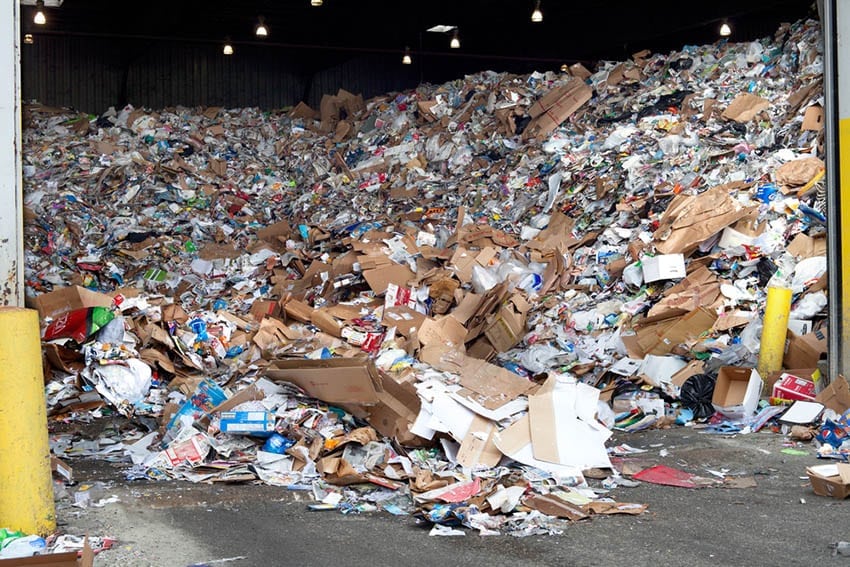
Photo credit: Huguette Roe/Shutterstock

 

CPMSSI Quad

Tags: AsiaIndustry GroupsTrade & Tariffs
TweetShare
Colin Staub

Colin Staub

Colin Staub was a reporter and associate editor at Resource Recycling until August 2025.

Related Posts

Basel Convention could ‘destabilize textile circularity,’ panelists warn

byBrian Clark Howard
September 30, 2026

The international convention may change the way second-hand clothing is regulated, with potentially big impacts.

USFFI signs first film offtake deals

USFFI signs first film offtake deals

byAntoinette Smith
September 29, 2026

The brand-led group has moved more than 3 million pounds of flexible packaging from two California MRFs to reclaimers and...

Analysis: Undersupply of PCR is ‘stifling’ brand goals

US lawmakers urge protection of domestic RPET

byAntoinette Smith
September 25, 2026

In a letter to the US Trade Representative, five representatives asked the USTR to consider trade remedies and support verification...

Oregon state capitol building with state flag and blue sky.

NAW appeals Oregon EPR ruling

byStefanie Valentic
September 25, 2026

NAW is challenging an Oregon judge's ruling in favor of the state's extended producer responsibility law.

APR reports success for 2026 recycling tours 

APR reports success for 2026 recycling tours 

byAntoinette Smith
September 23, 2026

In May, more than 2,500 visitors toured 41 facilities in the US and Mexico, during APR's second annual Recycling in...

Recyclers reeling from NJ PCR extension

Recyclers reeling from NJ PCR extension

byAntoinette Smith
September 23, 2026

The recent three-year extension for exemptions to the state's PCR mandates elicited frustration and confusion among recyclers.

Load More
Next Post

Recycling fallout uncertain as tariff battle continues

2026 Buyers’ Guide

Equipment, services and technology suppliers serving the recycling industry.

Browse the Guide

More Posts

Newsom nixes recycled content claims bill

Newsom nixes recycled content claims bill

September 28, 2026
Analysis: Undersupply of PCR is ‘stifling’ brand goals

US lawmakers urge protection of domestic RPET

September 25, 2026
trash bags

Sorted: Should we use recycled trash bags?

September 28, 2026
Domestic e-plastics recovery picks up pace 

Domestic e-plastics recovery picks up pace 

September 30, 2026
Recyclers reeling from NJ PCR extension

Recyclers reeling from NJ PCR extension

September 23, 2026
Oregon state capitol building with state flag and blue sky.

NAW appeals Oregon EPR ruling

September 25, 2026
Diversion Dynamics: Policy needed to reach full charge for vape recycling

Disposable vapes banned in California

September 28, 2026
USFFI signs first film offtake deals

USFFI signs first film offtake deals

September 29, 2026
Women in Circularity: Sanyukta Saptasagar

Women in Circularity: Sanyukta Saptasagar

September 29, 2026
How to perform chip harvesting

How to perform chip harvesting

October 1, 2026
Load More

About & Publications

About Us

Staff

Archive

Magazines

Work With Us

Advertise
Jobs
Contact
Terms and Privacy

Newsletters

Get the latest recycling news and analysis delivered to your inbox every week. Stay ahead on industry trends, policy updates, and insights from programs, processors, and innovators.

Subscribe

Welcome Back!

Login to your account below

Forgotten Password?

Retrieve your password

Please enter your username or email address to reset your password.

Log In

Add New Playlist

No Result
View All Result
  • The Latest
  • Analysis
  • Recycling
  • E-Scrap
  • Plastics
  • Policy Now
  • Conferences
    • E-Scrap Conference
    • Plastics Recycling Conference
    • Resource Recycling Conference
    • Textiles Recovery Summit
  • Magazines
  • About Us
  • Advertise
  • Archive
  • Jobs
  • Staff
Subscribe
This website uses cookies. By continuing to use this website you are giving consent to cookies being used. Visit our Privacy and Cookie Policy.