





Resource Recycling
  • The Latest
  • Analysis
    • All
    • Certification Scorecard
    • Industry Announcements
    • Opinion

    Certification scorecard for the week of March 2, 2026

    Industry announcements for January 2026

    Industry Announcements for March 2026

    HP receives ocean plastics certification

    HP Inc. earnings point to memory inflation challenge

    Certification scorecard for the week of Feb. 23, 2026

    Umicore highlights strength in recycling, catalysis

    Apto, Tusaar partner on rare earths recovery

    Apto, Tusaar partner on rare earths recovery

    Certification scorecard for the week of Feb. 16, 2026

    Sims Lifecycle leverages hyperscale decommissioning

    Sims Lifecycle leverages hyperscale decommissioning

    The electronics recycling industry is undergoing a transformation from labor-intensive manual operations to highly automated, AI-driven facilities that use advanced robotics, cleaner chemistry and digital tracking systems to extract critical materials.

    The cyber-physical MRF: AI and robotics reshape e-waste recovery

  • Conferences
  • Publications

    Other Topics

    Textiles
    Organics
    Packaging
    Glass
    Brand Owners

    Metals
    Technology
    Research
    Markets
    Grant Watch

    All Topics

Subscribe
No Result
View All Result
Resource Recycling
  • The Latest
  • Analysis
    • All
    • Certification Scorecard
    • Industry Announcements
    • Opinion

    Certification scorecard for the week of March 2, 2026

    Industry announcements for January 2026

    Industry Announcements for March 2026

    HP receives ocean plastics certification

    HP Inc. earnings point to memory inflation challenge

    Certification scorecard for the week of Feb. 23, 2026

    Umicore highlights strength in recycling, catalysis

    Apto, Tusaar partner on rare earths recovery

    Apto, Tusaar partner on rare earths recovery

    Certification scorecard for the week of Feb. 16, 2026

    Sims Lifecycle leverages hyperscale decommissioning

    Sims Lifecycle leverages hyperscale decommissioning

    The electronics recycling industry is undergoing a transformation from labor-intensive manual operations to highly automated, AI-driven facilities that use advanced robotics, cleaner chemistry and digital tracking systems to extract critical materials.

    The cyber-physical MRF: AI and robotics reshape e-waste recovery

  • Conferences
  • Publications

    Other Topics

    Textiles
    Organics
    Packaging
    Glass
    Brand Owners

    Metals
    Technology
    Research
    Markets
    Grant Watch

    All Topics

Subscribe
No Result
View All Result
Resource Recycling
No Result
View All Result
Home Recycling

China ban collides with Calif. diversion requirements

Colin StaubbyColin Staub
May 15, 2018
in Recycling

The leader of California’s recycling agency recently weighed in on China’s import restrictions, addressing concerns he’s heard from local government and industry representatives.

In a May 8 letter, Scott Smithline, director of the California Department of Resources Recycling and Recovery (CalRecycle), touched on how the market downturn has impacted the Golden State’s ambitious diversion requirements. He also offered tips on operating without markets and described the long-term need for domestic end users.

“The exporting of recyclable commodities to China, primarily our traditional curbside materials, has historically been a key component of California’s recycling infrastructure,” Smithline wrote.

But China’s move to scale back imports represents “a signal that California can no longer be primarily reliant on exports to manage our recyclable materials,” he added.

Smithline’s comments came shortly after China took its latest major step in curtailing imports: The country on May 3 suspended pre-shipment inspection company CCIC North America from operating for a month, and it began inspecting every load of scrap material destined for import into China.

Besides facing economic pressure from a lack of end markets, local governments also have regulatory pressure to meet certain recycling targets, including goals set by Assembly Bill 939. The legislation, also known as the California Integrated Waste Management Act, requires that local governments make efforts to reach 50 percent diversion. Smithline assured local governments that CalRecycle considers the impact of markets when determining whether they have made diversion efforts in line with state law.

“I have heard many stakeholders express concerns that CalRecycle will not take market factors – e.g., the precipitous drop in ability to get collected materials to market at an adequate price or even at all – into consideration when we evaluate jurisdiction programs,” Smithline wrote. “Jurisdictions are concerned that this could lead to potential penalties for situations that jurisdictions cannot control. This is not what statute dictates.”

He addressed a reality many recycling programs and companies are currently facing: Without a downstream outlet for prevalent recyclables, companies in California and elsewhere have been forced to stockpile materials in hopes of market changes. Smithline noted operators can apply for temporary waivers to increase the volume and duration of storage.

Smithline also offered a handful of specific storage tips for companies forced to stockpile. The goal, he noted, is to maximize public health and safety. He advised practices aimed at reducing fire hazard, as well as preventing bales from coming into contact with stormwater.

Finally, the letter floated a few opportunities to improve the domestic recycling landscape and reduce dependence on exports. Smithline pointed to business development grants for recycling operations (see related story) and recycled content procurement requirements. He also hinted at policy changes, such as the state’s ongoing mandatory packaging policy process (which was recently postponed due to the Chinese import changes), noting that the state must “reassess product design, materials collection and processing systems.”

CalRecycle will hold a workshop on June 4 to further discuss China and the evolving market.

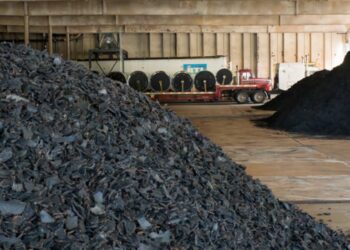
Photo credit: Sheila Fitzgerald/Shutterstock

 

Tags: AsiaCaliforniaTrade & Tariffs
TweetShare
Colin Staub

Colin Staub

Colin Staub was a reporter and associate editor at Resource Recycling until August 2025.

Related Posts

Borealis, Borouge aim to bolster PE, PP recycling in Indonesia

byPaul Lane
February 27, 2026

Plastics recycling in the Southeast Asian nation focuses on PET and on industrial and commercial waste, while post‑consumer polyolefin packaging...

Sony heads renewable plastic supply chain

Sony heads renewable plastic supply chain

byScott Snowden
February 19, 2026

Sony and 13 partners formed a unique global supply chain to make circular plastics for Sony high-performance audiovisual products using...

UN trade data, tools aim to shape plastics treaty talks

UN trade data, tools aim to shape plastics treaty talks

byAntoinette Smith
February 17, 2026

UN agencies aim to use the harmonized trade data and a statistical framework to improve outcomes for the global negotiations,...

Alpek talks PET overcapacity, soft demand

byAntoinette Smith
February 11, 2026

Executives from the Mexico-headquartered polyester giant said the Chinese government has acknowledged issues and convened PET producers, but Alpek is...

Member states select new chair for global plastics treaty

Member states select new chair for global plastics treaty

byAntoinette Smith
February 10, 2026

During a short session, the Intergovernmental Negotiating Committee elected Chilean diplomat Julio Cordano to continue efforts toward an internationally binding...

Malaysia clamps down on illegal e-waste imports amid probes

Malaysia clamps down on illegal e-waste imports amid probes

byDavid Daoud
February 6, 2026

Malaysia’s growing role as a hub for global e‑scrap is colliding with corruption probes, large container seizures and regional backlash. ...

Load More
Next Post

Public-space receptacle makers end lawsuits

More Posts

Rising containerboard demand comes as OCC prices taper

November 5, 2024
PET bales stacked for recycling.

Evergreen closing RPET plants in Ohio, New York

February 24, 2026

Paper giants foresee continuing rise in OCC prices

August 28, 2023

North American paper mills discuss demand, OCC pricing

May 15, 2023
Recycled plastic lumber firms report diverging results

Trex CEO to retire after 23-year run

February 25, 2026
Battery fire risk isn’t going away. Insurance is responding

Battery fire risk isn’t going away. Insurance is responding

February 24, 2026
Chinese processing group details goals for US visit

AMP lays out vision of next-generation, AI-driven MRFs

July 24, 2024

California selects Landbell USA as PRO for textile EPR

March 2, 2026
How will 2026 unfold for plastics recycling?

How will 2026 unfold for plastics recycling?

February 19, 2026

Recycling education needs consistency, simplicity 

February 25, 2026
Load More

About & Publications

About Us

Staff

Archive

Magazine

Work With Us

Advertise
Jobs
Contact
Terms and Privacy

Newsletter

Get the latest recycling news and analysis delivered to your inbox every week. Stay ahead on industry trends, policy updates, and insights from programs, processors, and innovators.

Subscribe

Welcome Back!

Login to your account below

Forgotten Password?

Retrieve your password

Please enter your username or email address to reset your password.

Log In

Add New Playlist

No Result
View All Result
  • The Latest
  • Analysis
  • Recycling
  • E-Scrap
  • Plastics
  • Policy Now
  • Conferences
    • E-Scrap Conference
    • Plastics Recycling Conference
    • Resource Recycling Conference
    • Textiles Recovery Summit
  • Magazine
  • About Us
  • Advertise
  • Archive
  • Jobs
  • Staff
Subscribe
This website uses cookies. By continuing to use this website you are giving consent to cookies being used. Visit our Privacy and Cookie Policy.