


Resource Recycling
  • The Latest
  • Analysis
    • All
    • Certification Scorecard
    • Industry Announcements
    • Opinion

    AI and the changing economics of retired hardware

    Certification Scorecard — Week of June 8, 2026

    ITAD is moving past its adolescent phase: beyond end-of-life

    Rainforest

    Inside the Circle: What the rainforest can teach us about EPR

    Closeup of a printed circuitboard

    Hardware demand puts new focus on parts harvesting

    Rare look inside the world’s largest plastics recycler

    Mass balance matters: Why different rules can lead to different outcomes 

  • Conferences
    • Resource Recycling Conference
    • Plastics Recycling Conference
    • E-Scrap: The Longevity Conference
    • Textiles Recovery Summit
  • Publications
    • E-Scrap News
    • Plastics Recycling Update
    • Policy Now
    • Resource Recycling
    • Other Topics
      • All Topics
      • Brand Owners
      • Critical Minerals
      • Glass
      • Grant Watch / RFPs
      • Markets
      • Organics
      • Packaging
      • Research
      • Technology
      • Textiles
Subscribe
No Result
View All Result
Resource Recycling
  • The Latest
  • Analysis
    • All
    • Certification Scorecard
    • Industry Announcements
    • Opinion

    AI and the changing economics of retired hardware

    Certification Scorecard — Week of June 8, 2026

    ITAD is moving past its adolescent phase: beyond end-of-life

    Rainforest

    Inside the Circle: What the rainforest can teach us about EPR

    Closeup of a printed circuitboard

    Hardware demand puts new focus on parts harvesting

    Rare look inside the world’s largest plastics recycler

    Mass balance matters: Why different rules can lead to different outcomes 

  • Conferences
    • Resource Recycling Conference
    • Plastics Recycling Conference
    • E-Scrap: The Longevity Conference
    • Textiles Recovery Summit
  • Publications
    • E-Scrap News
    • Plastics Recycling Update
    • Policy Now
    • Resource Recycling
    • Other Topics
      • All Topics
      • Brand Owners
      • Critical Minerals
      • Glass
      • Grant Watch / RFPs
      • Markets
      • Organics
      • Packaging
      • Research
      • Technology
      • Textiles
Subscribe
No Result
View All Result
Resource Recycling
No Result
View All Result
Home Recycling

How packaging stewardship is playing out in Canada

byJared Paben
July 19, 2016
in Recycling

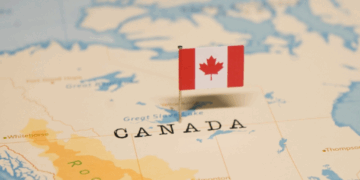
In its first full year of operation, British Columbia’s printed paper and packaging recycling program notched a 77 percent recovery rate, beating the target set by the government.

Meanwhile, in Ontario, the printed paper and packaging (PPP) recovery rate decreased slightly to around 65 percent, but that number still exceeded the target mandated by the province.

Those were a couple of key points from recent reports posted by stewardship programs in the Canadian provinces of Ontario, British Columbia and Manitoba. The following is a roundup of some key data found in the reports.

Detailing first full year of British Columbia effort

British Columbia is the first North American state or province to implement full extended producer responsibility for PPP. The EPR program oversaw collections for 4.28 million people.

Multi-Material BC (MMBC), the stewardship group for PPP in the province, reported on its program for 2015, the first full year of the program. The industry-funded group began managing residential curbside and drop-off PPP collections in May 2014.

MMBC oversaw the collection of 186,509 metric tons of material in 2015, or 76.7 percent of what its 1,036 stewards sold into the marketplace, according to the report. The provincial government-set recycling target for 2015 was 75 percent.

The collections equaled about 43.6 kilograms (96 pounds) per capita over the course of the year. Of the total collected, 178,583 metric tons were sorted and sold into commodities markets. That means 95.8 percent of collected material was marketed.

Plastics and glass were all sold to end markets in British Columbia, according to MMBC. Fibers (including polycoat containers) were mostly sold in China with the remainder going to South Korea and the U.S. or staying in British Columbia. Metals were largely sold to end markets in Ontario, with some also remaining in British Columbia or sent to the U.S.

MMBC spent 396 Canadian dollars (about $304) per metric ton to collect and recycle material, after counting revenues from the sale of commodities. The total cost came out to about CA$43 (about $33) per household.

Lower quantities of paper and glass in Ontario

Stewardship Ontario reported that municipalities in Canada’s most populous province collected 884,504 metric tons for recycling in 2014, the latest year for which data is available. That equaled about 66 kilograms (146 pounds) per capita.

Municipalities collected and recycled about 64.9 percent of what Stewardship Ontario’s 1,000-plus stewards sold into the marketplace. That represented a drop of 1.3 percentage points from the year before, but it was still above the 60 percent target set by the provincial government.

The report stated a slight decline in quantities of recovered printed paper and glass accounted for the rate decline.

In 2014, the net total cost of the Blue Box program, including revenue from commodity sales, increased 2.5 percent to CA$252.9 ($195.4 million). The net cost per metric ton of material increased by 4.3 percent to CA$286. The net cost per capita remained flat at CA$19.

“The primary reason for this slight increase is higher operating costs for collection and processing, as well as an increase in depot/transfer station material handling costs,” according to the report. “These resulted from new contractor rates and a rise in staffing costs.”

Under existing law, Stewardship Ontario contributes to half of the cost of collection and recycling PPP collected through what’s called the Blue Box program. However, the province’s Legislative Assembly in early June passed a bill ushering in full extended producer responsibility for printed paper and packaging (PPP). The legislation will lead to producers assuming the full costs of collection and recycling their products while also giving them greater control over recycling program management.

Started in 2003, the Blue Box program today serves nearly 13.4 million people. Stewardship Ontario estimated 97 percent of households in the province had access to the Blue Box program in 2014.

Manitoba

Multi-Material Stewardship Manitoba (MMSM) released the 2015 report for its program, which provides funding to municipal programs to help defray their PPP recycling costs. The payment rate, which varies depending on the size of the municipality, is meant to account for up to 80 percent of the costs of collection and recycling.

In 2015, municipalities in the province collected 83,200 metric tons of material for recycling, or about 73 kilograms (161 pounds) per person, MMSM reported. The majority of weight came from the Winnipeg area, where about 63 percent of the province’s residents live.

The 2015 data didn’t include a recovery rate. That data is expected to be released this fall. MMSM did report a 2014 recovery rate, however, noting that 64.9 percent of what its stewards sold into the marketplace was recovered in 2014. That was two percentage points higher than the year before.

MMSM’s program began in April 2010 and today covers an area with 1.14 million people.

Tags: CanadaEPRLegislation & EnforcementPackagingPaper Fiber
TweetShare
Jared Paben

Jared Paben

Related Posts

Australia battery recycling sector could reach A$6.9bn by 2050

Colorado and California bills take aim at battery recycling gaps

byStefanie Valentic
June 12, 2026

Colorado's EV battery EPR law and California's SB 501 together represent a push to bring the full battery supply chain...

Aluminum can bale close up.

Aluminum scrap exports face scrutiny under HB 9161

byStefanie Valentic
June 9, 2026

A new House bill would direct the US International Trade Commission to investigate whether US aluminum scrap exports to adversarial...

Three-bill package aims to revamp Michigan’s bottle return system

byStefanie Valentic
June 9, 2026

Michigan lawmakers introduced a bipartisan three-bill package aimed at strengthening consumer access to bottle deposit refunds and clarifying retailer obligations...

GP Recycling offers on-ramp for smaller recyclers

GP Recycling offers on-ramp for smaller recyclers

byAntoinette Smith
June 9, 2026

The company's hubbIT platform is a way for smaller generators to sell plastic, glass and metal bottles to the brokerage,...

How electronics legislation fared this legislative season

NY sends repairability labeling bill to governor

byPaul Lane
June 8, 2026

New York would become the first state in the US with an electronic device repairability labeling requirement law.

House resolution aims to make recyclability central to product design

NY EPR bill fails to advance after third try

byStefanie Valentic
June 8, 2026

This marks the third session in which the bill cleared the Senate only to stall in the Assembly.

Load More
Next Post

College town in Ohio boosts program via partnership

More Posts

House resolution aims to make recyclability central to product design

NY EPR bill fails to advance after third try

June 8, 2026
Various PET thermoform containers.

Thermoform recovery soars, PCR content falls

June 10, 2026
CalRecycle withdraws proposed regs for SB 54

Oceana, NRDC, CAW sue CalRecycle over SB 54 regs

June 5, 2026

Three-bill package aims to revamp Michigan’s bottle return system

June 9, 2026
Recycling industry addresses Beyond Plastics report

Recycling industry addresses Beyond Plastics report

May 26, 2026
Rare look inside the world’s largest plastics recycler

Mass balance matters: Why different rules can lead to different outcomes 

June 5, 2026
Circular Materials to supply PlasCred chem recycling plant

Circular Materials to supply PlasCred chem recycling plant

June 4, 2026

Battery fires still a major risk to recyclers: report

June 9, 2026
Rainforest

Inside the Circle: What the rainforest can teach us about EPR

June 8, 2026
How electronics legislation fared this legislative season

NY sends repairability labeling bill to governor

June 8, 2026
Load More

About & Publications

About Us

Staff

Archive

Magazine

Work With Us

Advertise
Jobs
Contact
Terms and Privacy

Newsletter

Get the latest recycling news and analysis delivered to your inbox every week. Stay ahead on industry trends, policy updates, and insights from programs, processors, and innovators.

Subscribe

Welcome Back!

Login to your account below

Forgotten Password?

Retrieve your password

Please enter your username or email address to reset your password.

Log In

Add New Playlist

No Result
View All Result
  • The Latest
  • Analysis
  • Recycling
  • E-Scrap
  • Plastics
  • Policy Now
  • Conferences
    • E-Scrap Conference
    • Plastics Recycling Conference
    • Resource Recycling Conference
    • Textiles Recovery Summit
  • Magazine
  • About Us
  • Advertise
  • Archive
  • Jobs
  • Staff
Subscribe
This website uses cookies. By continuing to use this website you are giving consent to cookies being used. Visit our Privacy and Cookie Policy.