










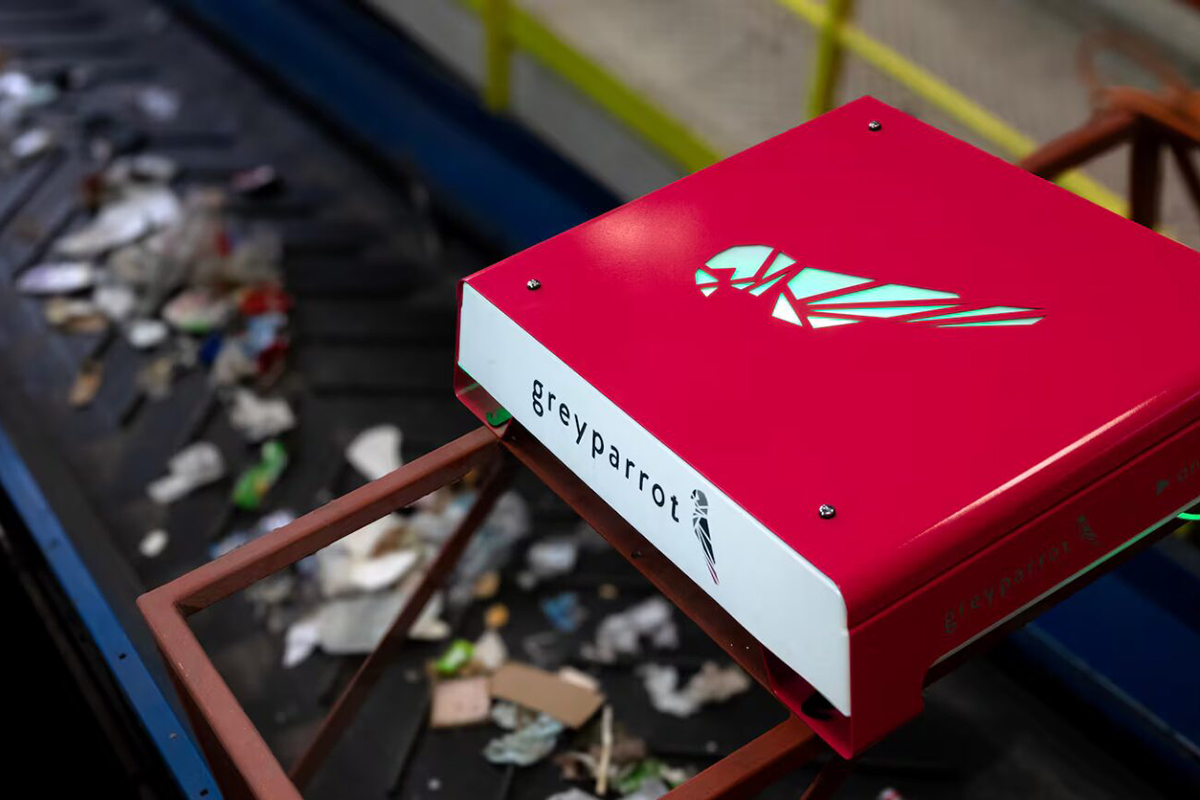
In a recent report, London-based wastestream intelligence firm Greyparrot urged policy makers to leverage data to help connect design, policy, infrastructure and markets, to create a cohesive value chain for materials recovery – including for discarded electronics.
“This is how true circularity is built: not through isolated improvements, but through shared visibility into what is actually happening to material in the real world post-use,” the report said.
Data collected by Greyparrot’s Analyzer platform indicated that the vast majority of post-consumer packaging materials are being sorted correctly, with only 103,000 of 1.24 million metric tons – or 8.3% – lost to residue lines at 65 facilities worldwide in 2025.
However, the share of residue lines still containing recyclate rose from 49.4% to 53% on the year, the report said, representing a missed opportunity for recovery as well as profit as recyclable materials wind up incinerated or landfilled.
The Analyzer platform uses a camera monitoring system and a proprietary AI model with 111 categories to assess throughput on high-speed conveyor belts in a MRF, based on material, color (even black plastics), opacity and other traits, co-founder Ambarish Mitra told Resource Recycling.
Though the belts move as fast as 3-4 meters per second, the software extracts data on the material class, product shape (tub, container, bottle), volume, weight, food-grade brands and carbon footprint information in a time span shorter than the blink of an eye, he said.
His company’s report noted that while automation is helping MRFs adapt to growing collection volumes, significant amounts of secondary materials still wind up incinerated in waste-to-energy plants or landfilled. “Reversing that trend will require action beyond the recovery facility,” the report said.
While no two MRFs are the same, in either input or in specifications, Mitra said, even a visually small miscalibration can add up to significant lost revenue from recycled commodities in a matter of months.
The company also highlighted that designating packaging as “recyclable” doesn’t necessarily mean the design accounts for sorting realities. For example, removing label sleeves can make bottles three times more likely to be recovered, according to data collected from Greyparrot’s Deepnest software for brand packaging.
Small variations, big gaps in recovery
Although MRFs captured significant volumes of PET and HDPE bottles in the year, “small material differences translate to major recovery gaps.” For example, one facility recovered 95% of clear PET containers but only 15% of colored PET.
These fluctuations suggest that effective EPR policy should increase in granularity, and feature fee schedules that reflect sorting realities, “not just the intent behind packaging designs.” For example, Oregon’s plan allows for separate categories for clear and pigmented plastics.
While he is pleased to see policy emerging, Mitra thinks the EPR movement would benefit from technology and data that were unavailable only a few years ago.
One practical application for collected data would be to allocate producer fees based on recovery rates of a particular product, rather than a blanket charge for all packaging producers, Mitra said. Much of current policy is “punishing good choices and bad choices in the same way, because there’s a lack of data,” he said.
As one example, Mitra points to milk packaged in aseptic containers – of which only about 30% are typically recovered – rather than in HDPE jugs, which are recovered at a rate of more than 85% and widely accepted. Although the move may have been made in good faith, the producer using aseptic containers may also be unfairly exempt from EPR fees, he said.
Without data to differentiate the degree of impact for specific packaging, companies that made sustainability-led investments before EPR existed – “the good actors” driven by belief rather than by shareholder values or “green premiums” – will face the same fees as those who were pressured into making changes, he said.
Having granular data to assess brand-specific packaging both validates producers’ choices and assesses fees in a more fair manner, Mitra said. “What is happening is everybody’s paying the same and I think we need to bring data in to improve that.”
Rise of the machines
The share of metals in residue streams rose from 2.5% to 4.3% on the year, which Greyparrot tied to the fast-growing stream of discarded electronics.
Although some aluminum and steel from packaging remains in the residue streams, electronics scrap is responsible for a large portion of the metals MRFs aren’t recovering. E-scrap is rich with valuable critical minerals as well as engineered plastics, and some is exported outside the US, Mitra said.
He alluded to “interesting” announcements from Greyparrot that could occur this year in the e-scrap space, without further elaboration. “The only thing I would say is there’s an opportunity – opportunity to build a strong domestic market for this.”
Combined with the related issue of record numbers of battery fires at MRFs in 2025, the data “presents a serious argument” for investments in collection, recycling and stewardship of discarded electronics, the Greyparrot report said.
Mitra added, “There’s a gap in the market, and there’s an opportunity for us and a few others to address it.”
By the numbers
In 2025, the platform analyzed more than 52 billion waste items, collecting data in more than 20 countries globally.
Across more than 60 MRFs in North America, Europe and Asia, Analyzer detected 8.3 billion PET bottles, 1.7 billion HDPE bottles, 16.7 billion paper and cardboard items and 2 billion aluminum cans.
On residual lines, paper fiber represented the biggest share at 28.9%, followed by plastic at 19.1%. The share of metals in residuals rose to 4.3%, from 2.5% in 2024, reflecting a rise in electronic waste flows and an increased risk of battery-related fires.
As the platform was implemented in more facilities globally, the amount of material analyzed grew substantially. Despite the increase in volumes detected, less recyclable plastic wound up as residuals: 2,500 metric tons in 2025 versus 3,000 in 2024. This indicates that sorting processes are becoming more efficient, Greyparrot said.
Although paper fiber remained the most common recyclable material on global residue lines, the share dropped by 3.5% on the year, possibly a result of growing shares of metals and plastics, the report said.
The data suggest that recyclers are losing potential revenue as paper fiber heads to incineration or landfill, even as demand is softening amid mill closures and tariff-related decreases in overall consumer goods purchases packed in boxes.