





Resource Recycling
  • The Latest
  • Analysis
    • All
    • Certification Scorecard
    • Industry Announcements
    • Opinion
    HP receives ocean plastics certification

    HP Inc. earnings point to memory inflation challenge

    Certification scorecard for the week of Feb. 23, 2026

    Umicore highlights strength in recycling, catalysis

    Apto, Tusaar partner on rare earths recovery

    Apto, Tusaar partner on rare earths recovery

    Certification scorecard for the week of Feb. 16, 2026

    Sims Lifecycle leverages hyperscale decommissioning

    Sims Lifecycle leverages hyperscale decommissioning

    The electronics recycling industry is undergoing a transformation from labor-intensive manual operations to highly automated, AI-driven facilities that use advanced robotics, cleaner chemistry and digital tracking systems to extract critical materials.

    The cyber-physical MRF: AI and robotics reshape e-waste recovery

    Certification scorecard for the week of Feb. 9, 2026

    Meta-Corning deal signals IT hardware retirement wave

    Meta-Corning deal signals IT hardware retirement wave

  • Conferences
  • Publications

    Other Topics

    Textiles
    Organics
    Packaging
    Glass
    Brand Owners

    Metals
    Technology
    Research
    Markets
    Grant Watch

    All Topics

Subscribe
No Result
View All Result
Resource Recycling
  • The Latest
  • Analysis
    • All
    • Certification Scorecard
    • Industry Announcements
    • Opinion
    HP receives ocean plastics certification

    HP Inc. earnings point to memory inflation challenge

    Certification scorecard for the week of Feb. 23, 2026

    Umicore highlights strength in recycling, catalysis

    Apto, Tusaar partner on rare earths recovery

    Apto, Tusaar partner on rare earths recovery

    Certification scorecard for the week of Feb. 16, 2026

    Sims Lifecycle leverages hyperscale decommissioning

    Sims Lifecycle leverages hyperscale decommissioning

    The electronics recycling industry is undergoing a transformation from labor-intensive manual operations to highly automated, AI-driven facilities that use advanced robotics, cleaner chemistry and digital tracking systems to extract critical materials.

    The cyber-physical MRF: AI and robotics reshape e-waste recovery

    Certification scorecard for the week of Feb. 9, 2026

    Meta-Corning deal signals IT hardware retirement wave

    Meta-Corning deal signals IT hardware retirement wave

  • Conferences
  • Publications

    Other Topics

    Textiles
    Organics
    Packaging
    Glass
    Brand Owners

    Metals
    Technology
    Research
    Markets
    Grant Watch

    All Topics

Subscribe
No Result
View All Result
Resource Recycling
No Result
View All Result
Home Plastics

Stakeholders debate Maine recyclable materials list

Marissa HeffernanbyMarissa Heffernan
April 23, 2025
in Plastics
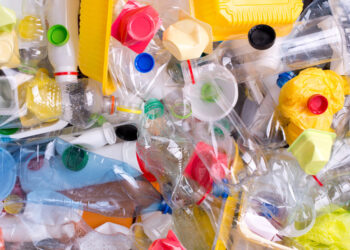
The initial recyclable materials list classifies just under a dozen material types as readily recyclable under Maine’s EPR program, but state representatives emphasized it was a first draft. | KWJPHOTOART/Shutterstock

More than 100 people showed up in-person and virtually to an informal stakeholder meeting on Maine’s draft material types list for the state’s extended producer responsibility program for packaging.  

The attendees brought questions and concerns about how the list classified various materials, particularly molded fiber. They also emphasized the need for list harmonization between states that have passed EPR for packaging.  

Looking forward, the state plans to initiate formal rulemaking on the list and get it approved by summer, then issue a request for proposals to select the stewardship organization in September, with contracting to come in April 2026. 

To start off the meeting, environmental specialists from the Department of Environmental Protection EPR team, Jessica Nadeau and Kayla Michaud, emphasized that the list was very much still a draft and the team was actively seeking technical feedback from stakeholders to adjust it. 

Michaud noted that the intent was to not “get too granular on the first iteration” of the list. The list set a primary designation of readily recyclable or not, then a secondary designation of reusable or compostable. 

To be designated as readily recyclable, material was evaluated on three criteria: marketability, throughput and ratio. If a material did not meet the first criterion, it was not evaluated on the second or third. 

That means each “readily recyclable” material has at least two markets in North America targeting it, it is common enough in MRFs to warrant sortation, and at least 60% of the total weight of the packaging material type is targeted for recycling, Michaud said. 

Compostable means the packaging was designed for direct food contact and certified by a third party as meeting ASTM standards.

Reusable is defined as having an alternative collection program set up accepting the material in every county in which it is sold. Michaud noted that there are currently no materials that meet that definition, because there are no programs set up yet. The state is currently creating the application process for those systems. 

Producers must annually report the tons of covered material that they send into the state, and participating municipalities must collect and recycle all packaging material types designated readily recyclable. 

The list is separated by base material, covering glass, metal, paper, cork, wood and plastic by resin type. It is then further divided into 50 packaging material types. 

The initial list classifies just under a dozen material types as readily recyclable: clear, amber, green and blue glass containers, aluminum, tin or steel cans, containers, closures, and lids, corrugated cardboard, coated corrugated cardboard, coated paper, multi-material paper and high-density polyethylene colored and natural. 

PET thermoforms and polypropylene natural and colored forms met the marketability criterion but not the throughput criterion. No material types are classified as compostable or reusable. 

Stakeholder reaction

Susan Bush, EPR project manager at Circular Action Alliance, pointed out that the categories Maine is proposing don’t line up with other states that have approved packaging EPR, and the result will be over 200 distinct reporting categories across Maine, California, Oregon and Colorado. Minnesota is still in the early implementation phase of its program. 

“We want the descriptions to be consistent and accurate,” she said, while Alicia Cafferty with  BSH Home Appliances Corporation North America added that “unified lists are very important.” 

“We really want to reduce friction in getting into your program, so anywhere we can harmonize is essential,” Cafferty said. 

Krysta West, deputy director at the Maine Forest Products Council, added that it doesn’t make sense for Maine to use different definitions than other states, because “those states have done it first and that is what producers will follow, because our market is so small.” 

At times, attendees spoke over each other as they discussed why molded fiber is not considered readily recyclable and how it’s currently handled in the system. Others questioned how data from store drop-offs would factor into collection rates determinations. 

A version of this story appeared in Resource Recycling on Apr. 22.

Tags: EPRIndustry GroupsPolicy Now
TweetShare
Marissa Heffernan

Marissa Heffernan

Marissa Heffernan worked at Resource Recycling from January 2022 through June 2025, first as staff reporter and then as associate editor. Marissa Heffernan started working for Resource Recycling in January 2022 after spending several years as a reporter at a daily newspaper in Southwest Washington. After developing a special focus on recycling policy, they were also the editor of the monthly newsletter Policy Now.

Related Posts

Recycling education needs consistency, simplicity 

byBrian Clark Howard
February 25, 2026

Several members of Circular Action Alliance team shared insights during a workshop at the 2026 Resource Recycling Conference in San...

Minnesota publishes prelim EPR assessment

Minnesota publishes prelim EPR assessment

byAntoinette Smith
February 20, 2026

The report will inform recommendations featured in the next report to develop the state's EPR program for packaging.

Vermont’s battery stewardship law targets fire risk

byStefanie Valentic
February 20, 2026

The state's new law gives residents more options to safely dispose of everything from single-use alkaline batteries to medium-format e-bike...

State policy is redefining plastics recycling in the US

State policy is redefining plastics recycling in the US

byKate Bailey
February 19, 2026

This year marks the midpoint of a decade defined by major shifts in plastics and recycling policy. Here’s what to...

SWANA, Fire Rover partner on reporting tool

byAntoinette Smith
February 19, 2026

Industry stakeholders can use the new site to report fires occurring at their facilities or in vehicles, to help support...

Carton recycling reaches 63% of US households

byScott Snowden
February 17, 2026

Carton recycling access rose to 63% of US households in 2025 after 2.5M homes gained service, with 86% of recycling...

Load More
Next Post

Washington is seventh state to act on packaging EPR

More Posts

PET bales stacked for recycling.

Evergreen closing RPET plants in Ohio, New York

February 24, 2026
WM opens new $90m MRF in south Florida 

WM opens new $90m MRF in south Florida 

February 23, 2026

Rising containerboard demand comes as OCC prices taper

November 5, 2024

Paper giants foresee continuing rise in OCC prices

August 28, 2023
Battery fire risk isn’t going away. Insurance is responding

Battery fire risk isn’t going away. Insurance is responding

February 24, 2026

North American paper mills discuss demand, OCC pricing

May 15, 2023
Recycled plastic lumber firms report diverging results

Trex CEO to retire after 23-year run

February 25, 2026
Study links tagging tactics to lower contamination rates

Arizona, Reynolds reach settlement on Hefty bag lawsuit

February 23, 2026
How will 2026 unfold for plastics recycling?

How will 2026 unfold for plastics recycling?

February 19, 2026
Chinese processing group details goals for US visit

AMP lays out vision of next-generation, AI-driven MRFs

July 24, 2024
Load More

About & Publications

About Us

Staff

Archive

Magazine

Work With Us

Advertise
Jobs
Contact
Terms and Privacy

Newsletter

Get the latest recycling news and analysis delivered to your inbox every week. Stay ahead on industry trends, policy updates, and insights from programs, processors, and innovators.

Subscribe

Welcome Back!

Login to your account below

Forgotten Password?

Retrieve your password

Please enter your username or email address to reset your password.

Log In

Add New Playlist

No Result
View All Result
  • The Latest
  • Analysis
  • Recycling
  • E-Scrap
  • Plastics
  • Policy Now
  • Conferences
    • E-Scrap Conference
    • Plastics Recycling Conference
    • Resource Recycling Conference
    • Textiles Recovery Summit
  • Magazine
  • About Us
  • Advertise
  • Archive
  • Jobs
  • Staff
Subscribe
This website uses cookies. By continuing to use this website you are giving consent to cookies being used. Visit our Privacy and Cookie Policy.