



Resource Recycling
  • The Latest
  • Analysis
    • All
    • Certification Scorecard
    • Industry Announcements
    • Opinion

    America’s critical-materials buildout has a feedstock problem

    Certification scorecard – week of Sept. 14

    Canada Plastics Pact reports 2024 progress

    Trade tensions shift global mineral partnerships 

    Spin-off lets Linca focus on battery mineral recovery

    Critical mineral policy shift creates opportunity

    CommanderAI launches searchable hauler database

    Inside the Circle: Put AI to work for the people who do the work

    Northeast commodity values for Q2 reach 2-year high

    Will a MRF shortage limit EPR growth?

  • Conferences
    • Resource Recycling Conference
    • Plastics Recycling Conference
    • E-Scrap: The Longevity Conference
    • Textiles Recovery Summit
  • Publications
    • E-Scrap News
    • Plastics Recycling Update
    • Policy Now
    • Resource Recycling
    • Other Topics
      • All Topics
      • Brand Owners
      • Critical Minerals
      • Glass
      • Grant Watch / RFPs
      • Markets
      • Organics
      • Packaging
      • Research
      • Technology
      • Textiles
Subscribe
No Result
View All Result
Resource Recycling
  • The Latest
  • Analysis
    • All
    • Certification Scorecard
    • Industry Announcements
    • Opinion

    America’s critical-materials buildout has a feedstock problem

    Certification scorecard – week of Sept. 14

    Canada Plastics Pact reports 2024 progress

    Trade tensions shift global mineral partnerships 

    Spin-off lets Linca focus on battery mineral recovery

    Critical mineral policy shift creates opportunity

    CommanderAI launches searchable hauler database

    Inside the Circle: Put AI to work for the people who do the work

    Northeast commodity values for Q2 reach 2-year high

    Will a MRF shortage limit EPR growth?

  • Conferences
    • Resource Recycling Conference
    • Plastics Recycling Conference
    • E-Scrap: The Longevity Conference
    • Textiles Recovery Summit
  • Publications
    • E-Scrap News
    • Plastics Recycling Update
    • Policy Now
    • Resource Recycling
    • Other Topics
      • All Topics
      • Brand Owners
      • Critical Minerals
      • Glass
      • Grant Watch / RFPs
      • Markets
      • Organics
      • Packaging
      • Research
      • Technology
      • Textiles
Subscribe
No Result
View All Result
Resource Recycling
No Result
View All Result
Home Plastics

Massive plastics recycling project draws federal backing

Antoinette SmithbyAntoinette Smith
July 24, 2024
in Plastics
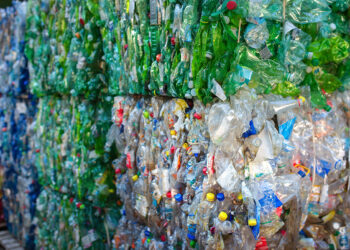
International Recycling Group has secured a guarantee for up to $182.6 million in loans from the DOE, and is looking to proceed with its long-planned project, which incorporates plastic resin production and plastic waste as feedstock for furnaces used in steel manufacture. | TKCREDIT/Shutterstock

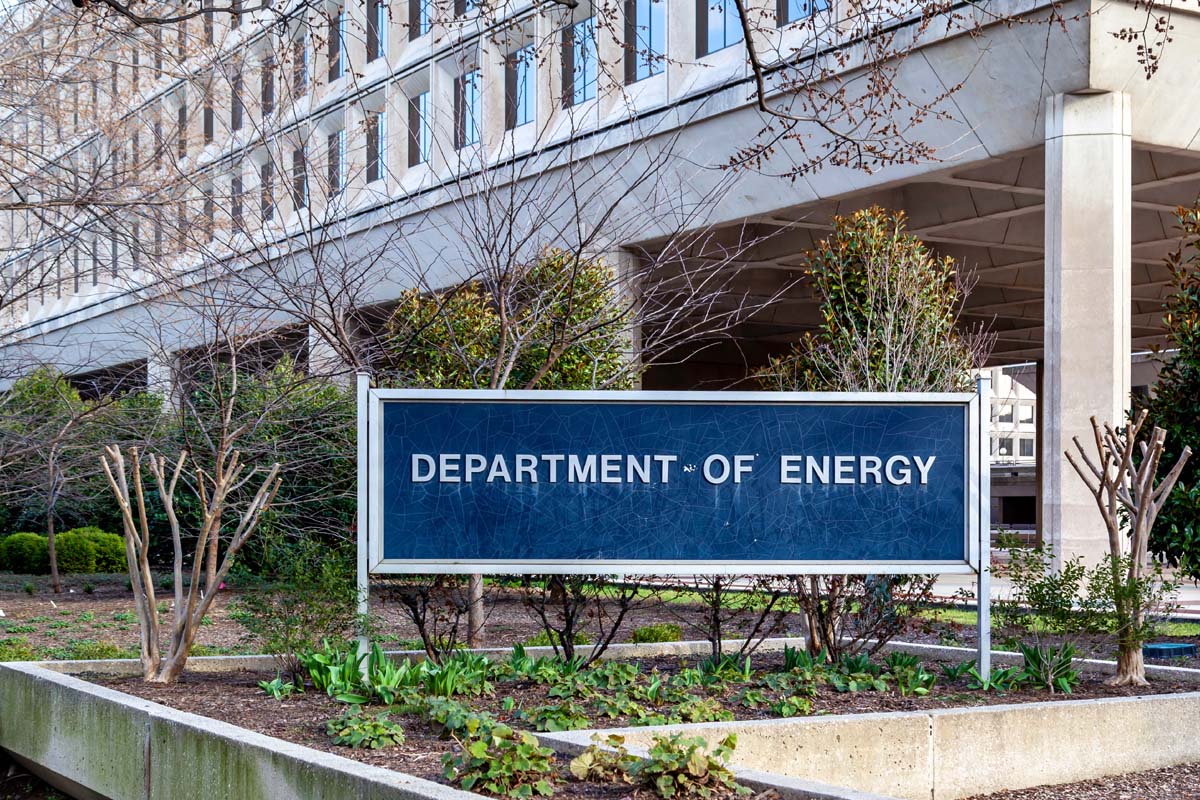
A Pennsylvania project from International Recycling Group has gained momentum, with a commitment for a multimillion-dollar loan from the U.S. Department of Energy.

Following an extensive application process with the DOE, IRG received a guarantee of up to $182.6 million in loans, according to a DOE press release. The loan would provide about 60% of the financing required for the project, which will include a plastic recovery facility, or PRF, to mechanically process plastics in Erie, Pennsylvania and equipment to produce an iron-reducing feedstock for steel-making furnaces at a facility in northwest Indiana. The plastics recycling portion of the project has previously been described as a “SuperPRF,” given its scale.

The project would be the first in the U.S. to incorporate plastic waste as feedstock for furnaces used in steel production, a technique that has been used for several decades in both Europe and Asia, said Mitch Hecht, IRG co-founder and CEO, in an interview with Plastics Recycling Update. 

The IRG project qualified under the Innovative Energy category of the Title 17 Clean Energy Financing Program. The LPO defines this category as “new or significantly improved technology that is technically proven but is not widely commercialized in the United States.”

“That’s the kind of project that might have trouble getting private capital,” said Chris Creed, chief investment officer of the Loans Program Office of the DOE. “We’re not trying to compete with private capital. We’re trying to de-risk projects to attract private capital.”

“Our objective with the Title 1703 finance program is to offer loans to American companies and projects that will help catalyze those technologies to full financial bankability,” he told Plastics Recycling Update in an interview. “In this particular program, we don’t tend to take ‘will it work?’ risks but we do take scale-up risks.”

The DOE is also trying to help bring back more domestic manufacturing with such initiatives, Creed said.

“We’re not trying to compete with private capital. We’re trying to de-risk projects to attract private capital.” —Chris Creed, chief investment officer of the Loans Program Office of the DOE

“A lot of solar and wind projects were funded with the project, and now those are much more easily bankable,” he said. “We’re hoping we can help bridge that road for recycling in 10 to 20 years.”

“It’s definitely a process,” Creed said, adding that the average time between application and decision is about two years. “Going through the Loans Program Office is not an easy task but it does lend credibility, and signals to private investors that the project has a stamp of approval, since the loans are through the Department of the Treasury, at attractive rates.”

“We do a tremendous amount of due diligence on each application, not only on the financial risks, but also other analyses, eligibility requirements, National Environmental Policy Act review, review of their community benefits packages and compliance,” Creed said. “A lot of people have reviewed these applications and this results in pretty high-quality loans.”

Hecht said having low-cost senior financing is vital in a challenging private capital environment. LPO loans have an interest rate of 0-2% over the Treasuries rate, which currently sits around 4.25%. The Treasury rate is the effective annual interest rate the U.S. government pays on one of its debt obligations, expressed as a percentage. 

Being a lender carries inherent risk, and the LPO has a default rate of around 3%, Creed said, adding that the office is processing $280 billion in other applications.  

“It’s great to see the government finally stepping in to give an assist, to move the needle on recycling,” Hecht said. “I truly believe we’re just at the beginning of a major boom of major investment in recycling. We have a lot of work to catch up with Europe, and it’ll take billions of dollars in investment in recycling. 

“We need to move away from a world of landfilling, and make conscious public policy decisions to move in the direction of recycling.”

Years in the making

IRG had initially planned to have financing in place by 2022, according to Hecht.

“We were just going to do ground dirty flakes and stop there,” he said. “But we decided to expand the scope of the plant to go fully downstream and do a complete curbside bale-to-LNO pellet facility, including wash lines and extruders. The return on investment for adding that, and the impact it would have on the finished product, was compelling. We figured if we made the investment, we needed to increase the size and do the whole package. 

“We realized that (expanding the scope of the plant) would be phenomenal for reducing our total cost of conversion to make the pellets.” 

IRG aims to both dramatically reduce the cost of mechanically recycled food-grade resin, to help make PCR more competitive with virgin polymers, and to eliminate as much plastic from landfills as possible, Hecht said. 

“Part of that equation has been to expand the ability to buy lesser-quality feedstock bales, so we have a lower feedstock cost across our spectrum,” he said. “The only way we could do that was by having zero plastic landfill. So we will have zero yield loss on feedstock material – it’s either made into a pellet or turned into an iron-reducing agent. We want to bring all plastics in and have a non-landfill home for every pound of material.”

In addition to the mechanical recycling facility, which will process about 160,000 tons of PET, HDPE and PP from curbside bale to LNO pellet stage each year, the project will produce about 20,000 tons per year of iron reducer for use in steel production. CleanRed is made from residual plastics, and can replace a portion of coking coals used in blast furnaces, or anthracite coal used in electric arc furnaces.  

With the DOE loan commitment adding credibility, through the end of 2024 IRG will work on securing the rest of its financing, Hecht said. In the meantime, IRG is having discussions with potential buyers to establish long-term offtake contracts. 

“We want to bring all plastics in and have a non-landfill home for every pound of material.” —Mitch Hecht, IRG co-founder and CEO

“We’re looking for large-volume partners to sell at least half of our material under long-term contracts, so that would be about 50,000 tons per year of plastic pellets – that’s the minimum we want to sell under LT contracts,” Hecht said, adding that deliveries were expected to start in H2 2026, when IRG intends to start up the plant.

IRG is “relatively agnostic” regarding potential feedstock suppliers and resin buyers, Hecht said. 

“We’ll be in discussion with a number of strategic partners over the next three to six months.”

Tags: PETProcessorsTechnology
TweetShare
Antoinette Smith

Antoinette Smith

Antoinette Smith has covered commodity plastics and supply chains for more than a decade, with a special focus on economic impacts and consumer behavior. She brings a balanced, thoughtful view to recycling stories, and isn't afraid to ask "why?" Contact Antoinette at antoinette@resource-recycling.com.

Related Posts

ALPLA’s holistic approach to packaging design

ALPLA’s holistic approach to packaging design

byAntoinette Smith
September 18, 2026

The packaging and recycling company's North American design lead explains why recyclability goals can't exist in isolation.

Study assesses environmental cost of excess data storage

BAN paper says AI e-scrap estimates are low

byPaul Lane
September 17, 2026

The advocacy group said current estimates on the scrap resulting from data centers don’t account for the full picture of...

Google Pixel 6 phone

Google makes repairability part of design ethos

byBrian Clark Howard
September 16, 2026

The tech titan supports the right-to-repair movement in several key ways.

CommanderAI launches searchable hauler database

Inside the Circle: Put AI to work for the people who do the work

byBill Shireman
September 14, 2026

There is more than one way to use AI, and some ways are more valuable than others.

Canada tariffs latest in new normal for RPET

Canada tariffs latest in new normal for RPET

byAntoinette Smith
September 11, 2026

Tensions with the valuable trading partner have frayed nerves for over a year, but North American markets already have tariff...

iFixit launches 2-week circuit board training course

Printed circuit board (PCB) recycling explained

byJavier Castilloand2 others
September 9, 2026

Recycling PCBs presents significant technical challenges because these waste streams combine metallic, non-metallic and electronic fractions with different characteristics and...

Load More
Next Post
Alaskans innovate to address marine plastic pollution

Alaskans innovate to address marine plastic pollution

2026 Buyers’ Guide

Equipment, services and technology suppliers serving the recycling industry.

Browse the Guide

More Posts

New Jersey pushes back PCR mandate to 2030

New Jersey pushes back PCR mandate to 2030

September 10, 2026
California Governor Gavin Newsom speaking at podium.

What’s on Newsom’s desk after the CA session end

September 14, 2026
Spin-off lets Linca focus on battery mineral recovery

Critical mineral policy shift creates opportunity

September 14, 2026
CommanderAI launches searchable hauler database

Inside the Circle: Put AI to work for the people who do the work

September 14, 2026
Canada tariffs latest in new normal for RPET

Canada tariffs latest in new normal for RPET

September 11, 2026

SB 54 plan for cartons, film draws warning

September 15, 2026
Alpek closing Pennsylvania RPET plant

Alpek seizing on war-related opportunity 

July 27, 2026
Lawsuits hover days after SB 54 approval

Preparing for SB 54 design compliance

September 8, 2026
Bale pricing mostly flat for September

Bale pricing mostly flat for September

September 9, 2026
Study assesses environmental cost of excess data storage

BAN paper says AI e-scrap estimates are low

September 17, 2026
Load More

About & Publications

About Us

Staff

Archive

Magazines

Work With Us

Advertise
Jobs
Contact
Terms and Privacy

Newsletters

Get the latest recycling news and analysis delivered to your inbox every week. Stay ahead on industry trends, policy updates, and insights from programs, processors, and innovators.

Subscribe

Welcome Back!

Login to your account below

Forgotten Password?

Retrieve your password

Please enter your username or email address to reset your password.

Log In

Add New Playlist

No Result
View All Result
  • The Latest
  • Analysis
  • Recycling
  • E-Scrap
  • Plastics
  • Policy Now
  • Conferences
    • E-Scrap Conference
    • Plastics Recycling Conference
    • Resource Recycling Conference
    • Textiles Recovery Summit
  • Magazines
  • About Us
  • Advertise
  • Archive
  • Jobs
  • Staff
Subscribe
This website uses cookies. By continuing to use this website you are giving consent to cookies being used. Visit our Privacy and Cookie Policy.