




Resource Recycling
  • The Latest
  • Analysis
    • All
    • Certification Scorecard
    • Industry Announcements
    • Opinion
    Data quantifies progress on plastic recycling

    Inside the Circle: Don’t break the sustainable accounting system

    Assurant releases Q2 trade-in and upgrade data

    iPhone changes could flip script on secondhand market

    From claims to custody: PCR procurement grows up

    From claims to custody: PCR procurement grows up

    What the NAND flash crunch means for remarketing, refurbishment and residual values

    Telamon acquires ITAD consultancy Retire-IT

    Certification Scorecard — Week of July 6, 2026

    Tech giant pens detailed ‘plastic-free packaging’ guide

    What Google’s latest report means for ITAD

  • Conferences
    • Resource Recycling Conference
    • Plastics Recycling Conference
    • E-Scrap: The Longevity Conference
    • Textiles Recovery Summit
  • Publications
    • E-Scrap News
    • Plastics Recycling Update
    • Policy Now
    • Resource Recycling
    • Other Topics
      • All Topics
      • Brand Owners
      • Critical Minerals
      • Glass
      • Grant Watch / RFPs
      • Markets
      • Organics
      • Packaging
      • Research
      • Technology
      • Textiles
Subscribe
No Result
View All Result
Resource Recycling
  • The Latest
  • Analysis
    • All
    • Certification Scorecard
    • Industry Announcements
    • Opinion
    Data quantifies progress on plastic recycling

    Inside the Circle: Don’t break the sustainable accounting system

    Assurant releases Q2 trade-in and upgrade data

    iPhone changes could flip script on secondhand market

    From claims to custody: PCR procurement grows up

    From claims to custody: PCR procurement grows up

    What the NAND flash crunch means for remarketing, refurbishment and residual values

    Telamon acquires ITAD consultancy Retire-IT

    Certification Scorecard — Week of July 6, 2026

    Tech giant pens detailed ‘plastic-free packaging’ guide

    What Google’s latest report means for ITAD

  • Conferences
    • Resource Recycling Conference
    • Plastics Recycling Conference
    • E-Scrap: The Longevity Conference
    • Textiles Recovery Summit
  • Publications
    • E-Scrap News
    • Plastics Recycling Update
    • Policy Now
    • Resource Recycling
    • Other Topics
      • All Topics
      • Brand Owners
      • Critical Minerals
      • Glass
      • Grant Watch / RFPs
      • Markets
      • Organics
      • Packaging
      • Research
      • Technology
      • Textiles
Subscribe
No Result
View All Result
Resource Recycling
No Result
View All Result
Home Plastics

Analysis says regulations hurt California bottle redemption centers

Colin StaubbyColin Staub
May 2, 2017
in Plastics

The Golden State’s container redemption program differs from bottle bills in other states, and according to a new study, that fact might be hindering the system’s effectiveness.

The California Legislative Analyst’s Office (LAO) recently stated a convoluted system that is used to determine subsidies to redemption centers has contributed to the closing of more than 300 of those sites in the past 16 months. The centers are critical to recovering drink containers covered by the California Redemption Value (CRV) program.

The subsidy issue was one point noted in an analysis from LAO that was released last month. It discussed the unintended consequences of the way the state program is set up. The review pointed to a few aspects peculiar to California’s program and contrasted them with programs in nine other deposit states. LAO is a nonpartisan office that advises the legislature.

The CRV program adds a 5- or 10-cent surcharge on drink containers, with the amount depending on container size. The charge is refunded when the container is returned for recycling. Most returns are done through collection centers, also known as redemption or recycling centers.

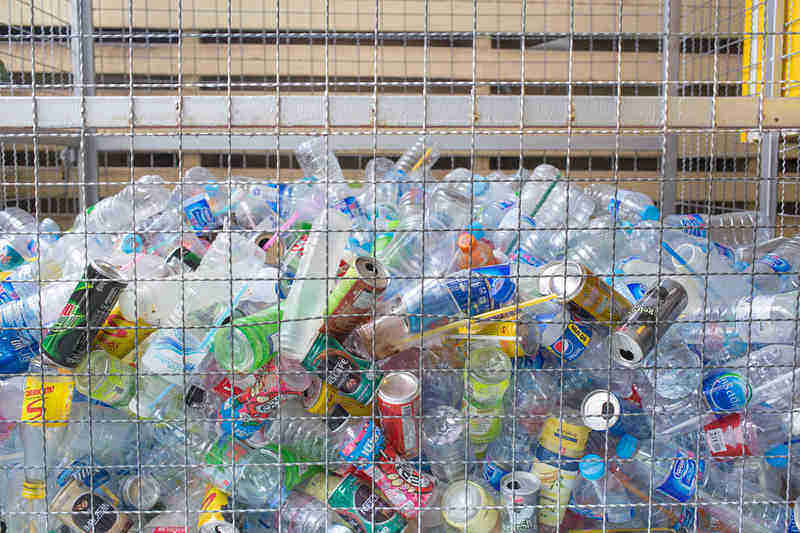
The CRV program collects an immense number of containers. From July 2015 through June 2016 – the most recent 12-month period for which figures are available – the state redeemed nearly 8.6 billion PET containers and 177 million HDPE containers, out of more than 18.7 billion beverage containers altogether.

Collection center closures

As of early April there were 1,692 collection centers operating, down from 1,832 one year earlier. The CRV program establishes “convenience zones” that cover a half-mile around supermarkets with annual sales of more than $2 million. If there is no collection center in these areas, the supermarket is responsible for redeeming covered containers or paying a daily fee to opt out.

The percentage of convenience zones unserved by a collection center statewide jumped from 14 percent to 25 percent from March 2016 to March 2017. That impacts businesses, which become legally obligated to redeem or pay the fee, and consumers, who have fewer options for redemption.

California collection centers are responsible for selling containers to processors, as opposed to other states in which beverage distributors fund that process. That means collection centers have to absorb the cost when scrap values fall. The LAO noted that often hits collection centers harder than it does distributors, which tend to be larger companies.

That’s why collection centers located within convenience zones receive payments from the California Department of Resources Recycling and Recovery (CalRecycle) to offset the difference between scrap values and collection costs. This is similar to the handler fee paid to redemption centers in many other states, except for how the fee is set. Rather than an amount set by lawmakers, California’s payments are based on the average cost to collection centers.

But the LAO pointed out the handler fee amount is only updated quarterly, which often fails to keep up with quickly fluctuating commodity prices. Other unexpected economic changes can take even longer to factor into the handler fee. For instance, the report cited a recent raise in the minimum wage and explained that “these increases will not fully be reflected in the handling fee amount for several years until data can be collected and incorporated in the next cost survey completed following those increases – likely in 2020.”

Lacking flexibility

Finally, the LAO report took note of the operational flexibility redemption outlets enjoy in other states, compared with the relative rigidity of California’s redemption center requirements. Along with simple requirements such as mandated hours of operation, California prohibits certain departures from standard bottle collection systems that have been implemented in other states. As examples, mobile collection programs, such as those in Hawaii and New York, are not allowed. Bulk collection, in which customers can drop off bags full of containers for redemption, is also limited.

“Removing requirements that are costly or not effective could make additional closures less likely,” the report concluded. “If there is concern that eliminating some requirements might reduce consumer convenience, the Legislature could consider using pilot projects to collect data and monitor the effects of the change before implementing them statewide.”


 

Fimic

Tags: CaliforniaCollectionContainer DepositsLegislation & Enforcement
TweetShare
Colin Staub

Colin Staub

Colin Staub was a reporter and associate editor at Resource Recycling until August 2025.

Related Posts

Data quantifies progress on plastic recycling

Inside the Circle: Don’t break the sustainable accounting system

byBill Shireman
July 13, 2026

Why California should not restrict the use of “mass balance accounting.”

From claims to custody: PCR procurement grows up

From claims to custody: PCR procurement grows up

byPuneet Thadani
July 10, 2026

In this guest column, the founder of Ecolar Global says the growing use of recycled content without standardized documentation presents...

SB 54 draft rules generate debate on rates, review

California increases PET market payments

byAntoinette Smith
July 7, 2026

While the state extended the incentive program, the status of a separate bill with similar goals is uncertain.

Two recycled-content bills gain approval in California

California agriculture seeks SB 54 repeal

byStefanie Valentic
July 7, 2026

A coalition of state agriculture stakeholders says the packaging law could add nearly $1,400 a year to household grocery costs...

In Our Opinion: Coalitions: The EPR Differentiator

Inside NAW’s constitutional case against packaging EPR

byStefanie Valentic
July 6, 2026

The National Association of Wholesaler-Distributors is fighting EPR in Oregon, and now in California too.

EPR fees are a market signal. Here’s what they’re telling you.

Building the infrastructure behind EPR

byStefanie Valentic
July 6, 2026

CAA's Jeff Fielkow breaks down the organization's role in US packaging EPR and why being the only multi-state PRO in...

Load More
Next Post

Assessing the ROI of EPR

More Posts

Two recycled-content bills gain approval in California

California agriculture seeks SB 54 repeal

July 7, 2026
Unpacking the Starbucks cup data

Unpacking the Starbucks cup data

July 8, 2026
Oregon’s Recycling Modernization Act faces injunction

Oregon’s EPR program posts first-year results

July 6, 2026
Tech giant pens detailed ‘plastic-free packaging’ guide

What Google’s latest report means for ITAD

July 8, 2026
In Our Opinion: Coalitions: The EPR Differentiator

Inside NAW’s constitutional case against packaging EPR

July 6, 2026
SB 54 draft rules generate debate on rates, review

California increases PET market payments

July 7, 2026
EPR fees are a market signal. Here’s what they’re telling you.

Building the infrastructure behind EPR

July 6, 2026
MP Materials breaks ground on rare earth magnet campus in North Texas

ERI confirms ITAD shift toward minerals

July 3, 2026
Auto Draft

Digital product passports offer gateway into secondary market

July 7, 2026
Canada EV battery reuse pilot to start

Canada EV battery reuse pilot to start

July 8, 2026
Load More

About & Publications

About Us

Staff

Archive

Magazine

Work With Us

Advertise
Jobs
Contact
Terms and Privacy

Newsletter

Get the latest recycling news and analysis delivered to your inbox every week. Stay ahead on industry trends, policy updates, and insights from programs, processors, and innovators.

Subscribe

Welcome Back!

Login to your account below

Forgotten Password?

Retrieve your password

Please enter your username or email address to reset your password.

Log In

Add New Playlist

No Result
View All Result
  • The Latest
  • Analysis
  • Recycling
  • E-Scrap
  • Plastics
  • Policy Now
  • Conferences
    • E-Scrap Conference
    • Plastics Recycling Conference
    • Resource Recycling Conference
    • Textiles Recovery Summit
  • Magazine
  • About Us
  • Advertise
  • Archive
  • Jobs
  • Staff
Subscribe
This website uses cookies. By continuing to use this website you are giving consent to cookies being used. Visit our Privacy and Cookie Policy.