





Resource Recycling
  • The Latest
  • Analysis
    • All
    • Certification Scorecard
    • Industry Announcements
    • Opinion
    Europe’s recyclers miss most of the critical materials

    Europe’s recyclers miss most of the critical materials

    Chemical recycling roundup: New plant, partnerships

    Polystyrene’s circular future is already taking shape

    IBM logo on building

    What IBM’s quantum foundry means for ITAD

    Certification Scorecard — Week of May 25, 2026

    CommanderAI launches searchable hauler database

    Underwater data centers drive shift in ITAD models

    EU recyclers make case for solvent-based methods

    The electronics recycling industry has a plastics problem

  • Conferences
    • Resource Recycling Conference
    • Plastics Recycling Conference
    • E-Scrap: The Longevity Conference
    • Textiles Recovery Summit
  • Publications
    • E-Scrap News
    • Plastics Recycling Update
    • Policy Now
    • Resource Recycling
    • Other Topics
      • All Topics
      • Brand Owners
      • Critical Minerals
      • Glass
      • Grant Watch / RFPs
      • Markets
      • Organics
      • Packaging
      • Research
      • Technology
      • Textiles
Subscribe
No Result
View All Result
Resource Recycling
  • The Latest
  • Analysis
    • All
    • Certification Scorecard
    • Industry Announcements
    • Opinion
    Europe’s recyclers miss most of the critical materials

    Europe’s recyclers miss most of the critical materials

    Chemical recycling roundup: New plant, partnerships

    Polystyrene’s circular future is already taking shape

    IBM logo on building

    What IBM’s quantum foundry means for ITAD

    Certification Scorecard — Week of May 25, 2026

    CommanderAI launches searchable hauler database

    Underwater data centers drive shift in ITAD models

    EU recyclers make case for solvent-based methods

    The electronics recycling industry has a plastics problem

  • Conferences
    • Resource Recycling Conference
    • Plastics Recycling Conference
    • E-Scrap: The Longevity Conference
    • Textiles Recovery Summit
  • Publications
    • E-Scrap News
    • Plastics Recycling Update
    • Policy Now
    • Resource Recycling
    • Other Topics
      • All Topics
      • Brand Owners
      • Critical Minerals
      • Glass
      • Grant Watch / RFPs
      • Markets
      • Organics
      • Packaging
      • Research
      • Technology
      • Textiles
Subscribe
No Result
View All Result
Resource Recycling
No Result
View All Result
Home Plastics

Are traditional recycling metrics failing to measure up?

byJared Paben
August 24, 2016
in Plastics
Are traditional recycling metrics failing to measure up?

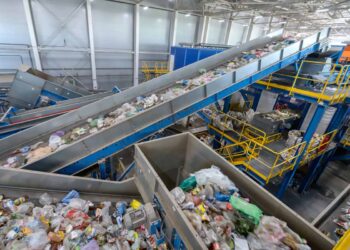
For decades, the recycling world has relied on weight-based recycling goals to drive materials recovery and, with it, reduce environmental harm.

“Goals drive programs and actions, which makes it really important that we set the right goals,” said Susan Robinson, federal affairs manager for Waste Management (WM).

But she doesn’t think weight-based goals are always the best tools for benchmarking progress today.

“As our world and technology evolves, do we need to measure success differently?” she asked during a webcast on Aug. 16. “Is our goal to recycle more or is it to reduce environmental impacts, and I guess I would argue that it’s the latter, and that recycling is simply one tool in our toolbox.”

Robinson and Anne Johnson, vice president of Resource Recycling Systems (RRS), spoke during a webcast entitled “Setting Goals: Have We Reached the Limits of Recycling?” Presented by greenbiz.com, the webcast was sponsored by Waste Management. It was the second part of a two-part series exploring sustainable materials management (SMM) and the environmental impacts of recycling.

In the latest presentation, the speakers touched on contamination, the evolving ton, diversion-based goals, SMM and life-cycle analysis approaches, the role of extended producer responsibility and successful recycling policy drivers.

Current challenges

Johnson presented on the current municipal recycling environment, in which about 70 percent of all collected materials can be recycled or composted, 10 percent aren’t currently recoverable but could conceivably be in the future and 20 percent are bound for the landfill.

The national recycling rate sits at 34.3 percent.

“There’s a lot of room to improve on that theoretical maximum both within recycling and within organics recovery,” she said. “And, certainly, as we move into that category of ‘not yet recovered material,’ there’s room to grow.”

Robinson noted that some jurisdictions today have zero waste goals, even while the industry is facing various challenges. For example, in one West Coast city, the weight of recycling collected increased by 9 percent from 2000 to 2010 while the volume of that material increased by 37 percent, driven by increases in plastics volumes. And contamination has gotten worse.

“Contamination coming into our facilities has doubled over the last decade,” Robinson said.

WM estimates 16 percent of the recycling stream it collects is contamination, costing the publicly traded company roughly $60 million per year, according to Robinson’s presentation.

SMM versus weight-based goals

“SMM is an evolution in the way we think about solid waste management and recovery systems,” Johnson said.

SMM takes into account environmental impacts of a product’s manufacturing, use and disposal. Compared to diversion-based approaches, it has different strengths and weaknesses, Johnson said.

For example, she noted a diversion-based approach is easier to understand and communicate to the public than SMM, but it doesn’t account for the cumulative environmental impacts SMM does.

Robinson argued for the use of SMM’s life-cycle analysis approach to inform which materials should be targeted for recycling. Targeting those with the greatest environmental benefit also allows for the simplification of messaging to the public, resulting in cleaner streams, she said.

She noted the state of Oregon’s work developing recycling goals based on greenhouse gas reduction potential and other environmental benefits.

A webcast viewer asked whether extended producer responsibility (EPR) programs have a role in supporting the SMM and life-cycle approach. In EPR systems, product manufacturers and brand owners are mandated to fund and/or manage end-of-life concerns for the items they put on the market.

Robinson said EPR has proven to be a funding source for recycling but it hasn’t sparked shifts in consumer behavior or product design (supporters of EPR programs often cite the policy’s potential to effect change in those areas).

Robinson urged focusing on policy drivers that have been successful in the U.S.’s high-performing cities, including recycling goals, pay-as-you-throw billing and service structures, convenient recycling access and public education.

“We know the policies that drive effective recycling, and we have them in place in many parts of the country,” she said. “It has nothing to do with EPR. It has everything to do with a community creating the policies to make it important in their community to drive that behavior.”


VanDyk Recycling Solutions

Tags: Data
TweetShare
Jared Paben

Jared Paben

Related Posts

CommanderAI launches searchable hauler database

Underwater data centers drive shift in ITAD models

byDavid Daoud
May 26, 2026

The new technology is grabbing headlines for saving energy, but are people looking at the complete lifecycle?

A map of Europe with various pinned locations.

EU growth slows for circular plastics

byAntoinette Smith
May 19, 2026

Just when Europe should be accelerating its transition to a circular economy, the sector is slowing dramatically, said the president...

Five trends shaping PCR packaging to 2031

bySmithers editorial
April 29, 2026

Growing steadily but falling short of legislative demands, the global market for PCR plastic packaging is at a crossroads.

Q1 containerboard exports drop by 19%

Q1 containerboard exports drop by 19%

byAntoinette Smith
April 24, 2026

A quarterly report from the American Forest & Paper Association attributed the drop to "evolving trade dynamics," while production increased...

Industrial sources drive rise in PVC recycling

byAntoinette Smith
April 13, 2026

Volumes of post-industrial PVC recycled in 2024 rose by 10% from 2019 levels, while post-consumer sources fell and missed a...

Report pegs fire losses at $2.5b in US and Canada recycling industry

byScott Snowden
March 27, 2026

A new fire report estimates $2.5b in damage across US and Canadian recycling facilities in 2025, with lithium-ion batteries still...

Load More
Next Post
EPS recycling group delivers $29,000 grant

EPS recycling group delivers $29,000 grant

More Posts

Recycling industry addresses Beyond Plastics report

Recycling industry addresses Beyond Plastics report

May 26, 2026
What a report on Starbucks cups reveals about recycling

What a report on Starbucks cups reveals about recycling

May 26, 2026
EU recyclers make case for solvent-based methods

The electronics recycling industry has a plastics problem

May 26, 2026
New York bill would strengthen device repair rules

New York packaging EPR bill faces June 10 deadline

May 26, 2026
Federal PACK Act aims to preempt ‘patchwork’ of state laws

House advances Recycling Infrastructure and Accessibility Act

May 21, 2026
Illinois expands battery recycling as lithium-ion fire concerns mount

Illinois expands battery recycling as lithium-ion fire concerns mount

May 27, 2026
Bottle bill backers see opportunity for action

PET collapse exposes gaps in US recycling infrastructure

May 15, 2026
Plastic packaging

Why SB 54 source reduction planning is becoming the industry’s most challenging EPR test

May 19, 2026
EPR rules take shape in Oregon, as first test

Oregon OKs end-market verification from CAA

May 20, 2026
CommanderAI launches searchable hauler database

Underwater data centers drive shift in ITAD models

May 26, 2026
Load More

About & Publications

About Us

Staff

Archive

Magazine

Work With Us

Advertise
Jobs
Contact
Terms and Privacy

Newsletter

Get the latest recycling news and analysis delivered to your inbox every week. Stay ahead on industry trends, policy updates, and insights from programs, processors, and innovators.

Subscribe

Welcome Back!

Login to your account below

Forgotten Password?

Retrieve your password

Please enter your username or email address to reset your password.

Log In

Add New Playlist

No Result
View All Result
  • The Latest
  • Analysis
  • Recycling
  • E-Scrap
  • Plastics
  • Policy Now
  • Conferences
    • E-Scrap Conference
    • Plastics Recycling Conference
    • Resource Recycling Conference
    • Textiles Recovery Summit
  • Magazine
  • About Us
  • Advertise
  • Archive
  • Jobs
  • Staff
Subscribe
This website uses cookies. By continuing to use this website you are giving consent to cookies being used. Visit our Privacy and Cookie Policy.