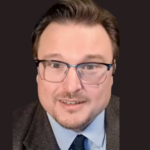
When a global PC maker takes devices back, what share actually gets a second life, and who decides? Stefan Larsen, Lenovo’s global sustainability services leader, is the manufacturer voice on this episode of the Resource Recycling Podcast. He runs customer-facing environmental services from Copenhagen: take-back, a certified second life, and advice before the purchase order is signed.
Circularity at Lenovo has moved from a report line to a services business. Larsen says the company ships a unit almost every seven seconds, and customers now show up with their own sustainability targets. Asset recovery started 15 to 16 years ago as a residual-value play. Six or seven years ago the driver was data security. In the last four or five years, sustainability joined finance and security as the reason buyers hand equipment back.
The process he describes is designed to look the same worldwide: scope the take-back, design the program, and let the customer track orders with checkpoints they can report. Lenovo Certified Refurbished is the newer brick. One path certifies and upgrades machines already on the floor so they last one to three more years.
The other sells certified refurbished units, with a Lenovo warranty, into an existing fleet. The question he puts to business managers is whether every persona needs a box-fresh PC. Rising hardware prices make the math easier. What customers now ask for, he says, is the footprint of a certified refurbished model, so the saving is financial and measurable.
Data centers and AI are the other half of the conversation. Air-cooled halls, in his telling, cost power, money, and space. Lenovo’s Neptune liquid-cooled servers use about 40 percent less power than air-cooled, which he ties to 40 percent less electricity cost and 40 percent less CO2, without expanding the building. He calls that part of the answer to communities arguing that data centers are too big and use too much, not the whole answer.
He frames a working sustainability offer as four Olympic rings: legislation, cost, tangible savings, and implementation. Miss one and the deal fails. His ask of the recycling audience is simple: start the manufacturer-recycler dialogue early, before the solution is locked.
Larsen is the opening keynote at E-Scrap: The Longevity Conference, Oct. 26–28, 2026, at the Hyatt Regency New Orleans. It is his first time at the conference and his first time in the city. Tickets and the agenda are at e-scrapconference.com.
If this conversation is useful on the floor, like the video, comment with the reuse-versus-recycle call you are making this quarter, subscribe to the Resource Recycling Podcast, and turn on notifications.
Transcript of episode 3: The Resource Recycling Podcast
Host: Uriah Kiser | Guest: Stefan Larsen, Lenovo
Uriah Kiser: When a global PC maker takes devices back, what share actually gets a second life? And who decides? On this episode of the Resource Recycling Podcast, we’re talking with Stefan Larsen. He’s Lenovo’s global sustainability services leader. He works out of Copenhagen and runs the company’s customer-facing environmental services: taking equipment back, certifying a second life, and advising buyers before they purchase.
On this show, he is the manufacturer voice. How a global PC and infrastructure company decides to reuse versus recycle, and why circularity only counts when it’s measurable, documentable, and built with the customer in mind. Stefan, thank you so much for coming on the Resource Recycling Podcast.
Stefan Larsen: Thank you so much for having me today. I’m very much looking forward to this.
Uriah: You and I have talked, and I’ve been really excited about putting this conversation together. Despite the time zones, despite the Atlantic Ocean, you and I are able to be here today, and I’m so excited about that.
The first thing I want to talk about is why circularity has moved from a sustainability-report line to a services business inside Lenovo, and what changed in the customer conversation.
Stefan: Let’s be very transparent. Sustainability has always been a focus area for us at Lenovo. When you’re the biggest PC manufacturer in the world and you ship a unit almost every seven seconds, it does matter. That’s why we’ve been doing a lot for a long time on a corporate level.
One of the things we’ve seen for quite a while now is our customers’ interest in sustainability, in sustainability solutions, and in how we as a vendor can help them on that journey. Most of the customers we face today have some kind of sustainability goals they need to achieve, and IT is one of the areas where we can support and assist them.
Uriah: Walk us through asset recovery services versus Lenovo certified refurbished. What happens when equipment comes back, and what actually determines reuse versus recycle?
Stefan: Let me start 15 or 16 years ago, because that’s where our asset recovery service and support for our customers started. Take-back of old product has evolved over time.
Fifteen years ago, or even more, the main reason was financial. Customers could see residual value in their old equipment, and this service was perfect for that.
Then six or seven years ago, we started to see safety and security issues. A lot of customers asked how they could make sure security on every device was kept when they disposed of it. That’s why they chose the asset recovery service: to be sure that whatever they handed back would be handled in the right way on security.
In the last four or five years, let’s be very transparent. It’s still financial. It’s still data security. But now the sustainability part has made it very appealing for the customer.
The important thing at Lenovo is that we want to make the process very easy. From the second the customer decides to get rid of old units, to the point those units get a second life or are dismantled and reused in other forms.
The customer approaches Lenovo. We sit down with them, understand the scope of the take-back project, and design a take-back program with them. Then the customer can follow all their orders on an ongoing basis, no matter where in the world it is. We handle the units the same way. It’s the same process, and it’s the same go-to person for our customers.
We want it to be an easy, safe, and secure process, with checkpoints along the way that we can report to the customer.
Certified refurbished is one of the newer areas our customers are looking into. Lenovo certified refurbished is a way for us to provide a new solution, and it is two-fold.
One side is that we can certify already installed Lenovo units, upgrade them, renew them, so they can last with the customer for one, two, or three more years. The other side is that we can offer Lenovo certified refurbished products. We can tell a customer: you already have an installed base of this model. We can add more units that are two, three, or four years old, with a complete warranty from Lenovo.
Uriah: That has to be changing the conversation many business managers have about whether every employee should get a brand-new PC out of the box.
Stefan: Exactly. It opens up a couple of new things. Whoever is sitting at the customer level now gets one extra Lego brick to play with. They can purchase new, or enhance the installed base, or upgrade the installed base, or buy certified refurbished.
What is interesting is the internal dialogue we are having with these customers right now. Should all employees always get a brand-new machine, or are there personas that are perfectly fine expanding their existing unit for one, two, or three more years, or getting a certified refurbished unit instead of a brand-new one?
For a lot of our customers, this is starting to be very relevant, for several reasons. Hardware prices are rising, so there is a financial upside. Customers have also asked: this is fantastic, but where is the sustainability in this? That is something Lenovo can now offer. We can provide the footprint of a Lenovo certified refurbished model, so they can see both a financial saving and a sustainability improvement.
It opens up a new game with our customers. Another brick to play with. Not only old. Not only new. Certified refurbished units as well.
Uriah: I love the Lego reference. It puts it in perspective. Someone in their mid-40s, like me, and my six-year-old daughter, who loves Legos, can both understand that.
The other thing I’m excited about is that you’re going to be a speaker at our upcoming E-Scrap Conference, October 26, 27, and 28. Three jam-packed days on circularity and our industry. I’m going to put you on the spot a little later to talk about what you’re most looking forward to in New Orleans, and how everyone listening can get more information, because you won’t want to miss it.
Data centers and AI are accelerating refresh. What does circularity look like when the installed base is air-cooled and the new demand is liquid-cooled Neptune?
Stefan: That is one of the questions we are facing more and more every day, and have been for at least the last couple of years. From a neutral point of view, there is no doubt AI use is rising dramatically and fast. With that use, it puts a lot of pressure on data centers. We know that for a fact. Some of our customers are challenged by it right now.
Some customers still use air-ventilated data centers. The challenge is threefold. First, they use an extreme amount of power. Power means, right now, a high financial cost. Air cooling also requires a lot of space.
One of the things we are seeing rising demand for at Lenovo is our Neptune servers, or liquid-cool servers. Why is this interesting? First, because it uses 40 percent less power than air-cooled. Forty percent less power means 40 percent less cost on the electrical bill. It also means 40 percent less CO2. Again, they can see a saving on power and a saving on the sustainability footprint.
In addition, and we see this with some of our very big customers now, with liquid cooling they don’t need to expand the physical space of the data center, because Neptune servers can fit in and support the need they have right now. We are starting to see that movement. The rising demand for AI is going to push it even further.
Uriah: The space point is one we’re hearing across the United States, and in larger parts of the globe: how much space data centers take up, and where they get built in communities. It sounds like this could be an answer for people who say they’re too big, too tall, they use too much.
Stefan: At least it’s part of the answer. There are many more answers to look into, but this is definitely part of that answer. It fits into the same split: a financial saving, a sustainability saving, and here also a space saving, or an optimizing of that space. Definitely part of the solution.
Uriah: You describe an Olympics of sustainability: legislation, cost, tangibility, and implementation. Where is the sweet spot, and what fails when one of those rings is missing?
Stefan: That is one of the things we at Lenovo have been looking very hard at. When you’re designing a sustainability solution, whatever it is, there are factors that affect it. It consists of these Olympic rings that reach over each other.
The first is legislation around sustainability. We see it, some parts of the world more than others, but we see it across the board. You can design a sustainability solution, but if it doesn’t fall under legislation, forget it.
The next is cost. If the cost for the customer is extremely high, it’s going to be very difficult to implement.
The next is the sustainability saving in that solution. When you design a sustainability solution, it needs to be tangible and measurable, and it needs to show a considerable sustainability improvement, whether that’s power reduction, CO2, water consumption, or something else. It needs to be tangible, and it needs to be of significant value.
The last ring is implementation. From a customer point of view, that is extremely important. You might design a perfect solution that is cost-efficient, shows a significant sustainability improvement, and fulfills the legislation. But if it’s impossible to implement for a given customer, or it takes an extremely long time, forget it. Somebody will find another way.
Where all of these circles overlap is what I normally call the sweet spot of sustainability solutions. The customer can see an interesting cost, a significant sustainability improvement, something easy to implement, and still under the ring of legislation. If you reach that point, that is where you find the right sustainability solution. That’s what I mean by the Olympics of sustainability.
Uriah: A lot of moving parts. And as we all know, the Olympics are big games, so there’s a lot to keep track of.
As we wrap up, if the Resource Recycling audience could change one assumption about how manufacturers and recyclers should work together, what should that change be?
Stefan: Normally what I say is: take the discussion and the dialogue as early as possible. Same with the customers we speak with, and the partners we speak with.
The honest truth is, the earlier you take that dialogue, the more likely it is that sustainability is part of the solution once you get there. Implement it, but take it at a very early stage, because that’s where you have the opportunity to implement the right solution at the right time.
Uriah: All right. Now for the fun part. We’re going to talk about New Orleans, and I know everyone’s excited, and you should be too. The E-Scrap Conference is coming up October 26, 27, and 28, and there’s a lot on the agenda. Go to e-scrapconference.com to find out more and get your tickets. You don’t want to miss this.
I’m going for the first time this year. I’m a newbie. I’m excited. For those like me who have never been, do you have a favorite memory of the conference? Something you did when you were there before that I should do when I go to New Orleans for the first time?
Stefan: I need to be very transparent. It’s the first time I’m going as well, and I’m extremely excited to be the keynote speaker. I’m very much looking forward to it. I’m also looking for a lot of interesting feedback on the previous conferences.
You and I will have to have a beignet together, because everyone I talk to says, when you go, you have to do this. I’ve never been to New Orleans myself, so it’s my first time. I don’t know if you’ve been before. You may have. But I’m very excited to meet you and everyone else at the conference.
Uriah: When you look at the agenda, you’re the keynote speaker. Who are you excited about meeting and connecting with?
Stefan: Honestly, I’m excited when I look at the whole program. I think it’s a very interesting, very professional program. As always, I’m looking to meet all kinds of new people with all kinds of new ideas and solutions. At the end of the day, sustainability, no matter how you put it, is a mutual game. We are all in this together. The more we can work together, the better solutions we can get, and the better for everyone.
I’m very much looking forward to hearing a lot of great news, a lot of fantastic solutions, and meeting a lot of interesting people. I haven’t put down one specific session, because I’m ready to take in the whole agenda. I’m very much looking forward to this.
Uriah: We are looking forward to seeing you, Stefan, and everyone listening and watching the Resource Recycling Podcast. Again, go to e-scrapconference.com for all the information about the conference. We will see you in New Orleans in October. Stefan Larsen is the global sustainability services leader at Lenovo. This has been a lot of fun. Thanks for coming on.
Stefan: Thank you so much for having me. Looking forward to seeing you in New Orleans, and seeing all of you in New Orleans.
Uriah: And if you want more conversations like this one, please like this video, share it, hit the notification bell, and subscribe. We’ll see you on the next episode of the Resource Recycling Podcast.