





When would-be tech moguls formulate their post-collegiate career paths, companies like ERI and Iron Mountain probably aren’t first to mind.
But, according to panelists speaking during the ITAD Summit on Wednesday in Las Vegas, the same “cool factor” that working at front-end tech companies like Google and Apple has can carry over to the back end of products’ lifecycles. And focusing on that while educating young people on the impact the industry has can help draw the next generation of great minds into the business.
The numbers back up the notion that the ITAD industry isn’t slowing down. A global market sized at roughly $32 billion this year is expected to more than double by 2033 to almost $66 billion, according to Grand View Research.
“A lot of people are going to want to go to good industries,” said Eric Levine, a solutions sales executive for asset life management with Iron Mountain, which provides a variety of ITAD and data services. “The tech industry is going like a weed. It’s a great time to get on board.”
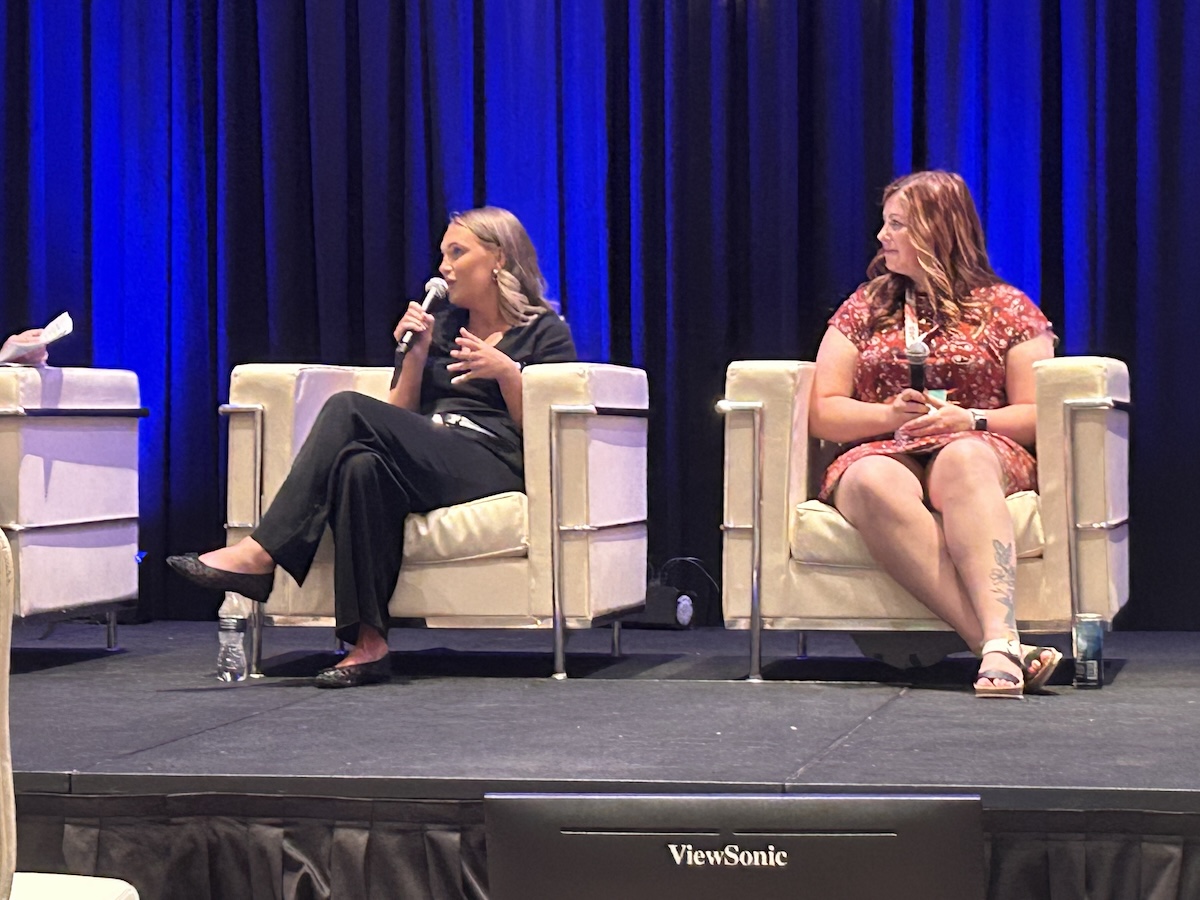
But getting the point across on what ITAD involves remains a challenge, according to Kaela Kucera, director of outbound sales for ITAD provider Dynamic Lifecycle Innovations. She recalled trying to describe the industry to an associate but missing the mark, reinforcing the need for more education on what ITAD is and what it does.
“After I was done, they tried to sum it up by asking, ‘You’re a Goodwill for electronics?’ ” she said. “Young people care about recycling, but after they put that bottle into the container they don’t care what happens after that.”
Getting young people to care is, in part, a matter of convincing them of ITAD’s importance in the overall tech ecosystem, panelists said. From the moment a smartphone alarm wakes them up in the morning until they check their daily steps before bedtime on their smartwatch, young people have integrated technology into nearly every aspect of their lives. So showing them the importance of providing these devices a more useful end of life can spark interest in what Levine called a “contagious industry.”
“Our lives are evolving with tech,” Kucera said. “It’s so easily accessible and quickly manufactured. Even though devices are smaller, there are more of them, so the demand for ITAD will be there.”
“When I tell people what we do, they get jealous,” said Alexandra McKinlay, a marketing executive with European ITAD company Vyta. “They say they want in.”
Companies looking to recruit young talent should reach out on college campuses to begin preaching the benefits of an ITAD career, which panelists said include relationship building, the ability to improve sustainability practices and the rapid growth that’s bringing about constant change.
Not to mention the money, which Levine said is substantial and shouldn’t slow down given the influx of devices that continues to come in. But cashing in should only come after learning the business; in Levine’s case, that meant spending time on processing floors driving forklifts, loading pallets and seeing the intricacies of the operation.
“There’s so much to learn,” said Levine, who noted the business’ pace often makes information obsolete within a few years. “It’s like drinking water that’s flowing through a water hose. It’s hard to soak it all in.”
The best way to soak everything in, and help others do likewise, is to build on the connections the industry lends itself to, panelists said. Social media can help get your foot in the door, they said, but there remains no replacement for a handshake and heart-felt one-on-one with a potential customer or partner to share what you do and what they need.
As cool as tech can be, McKinlay said, it’s much more difficult to connect with a machine than it is a person.
“How do you wrap your head around this?” she said. “Show the people behind the company rather than just the process.”
Even for students already in college, that process may look a lot different than it will once they enter the workforce. Advancements with AI will drive the need for related minerals and create an influx of devices once the current generation of products enters the ITAD stream.
So curiosity combined with drive will be key for new ITAD workers to create space for themselves within the industry, panelists said. Appealing to that curiosity, conversely, should drive those looking to bring the next generation of ITAD talent into the fold, panelists said.
“This industry is coupled with the overall tech world,” Levine said. “Anybody who has even an ounce of interest in that, this space is so connected to that and gives you an opportunity to take part in it.”