




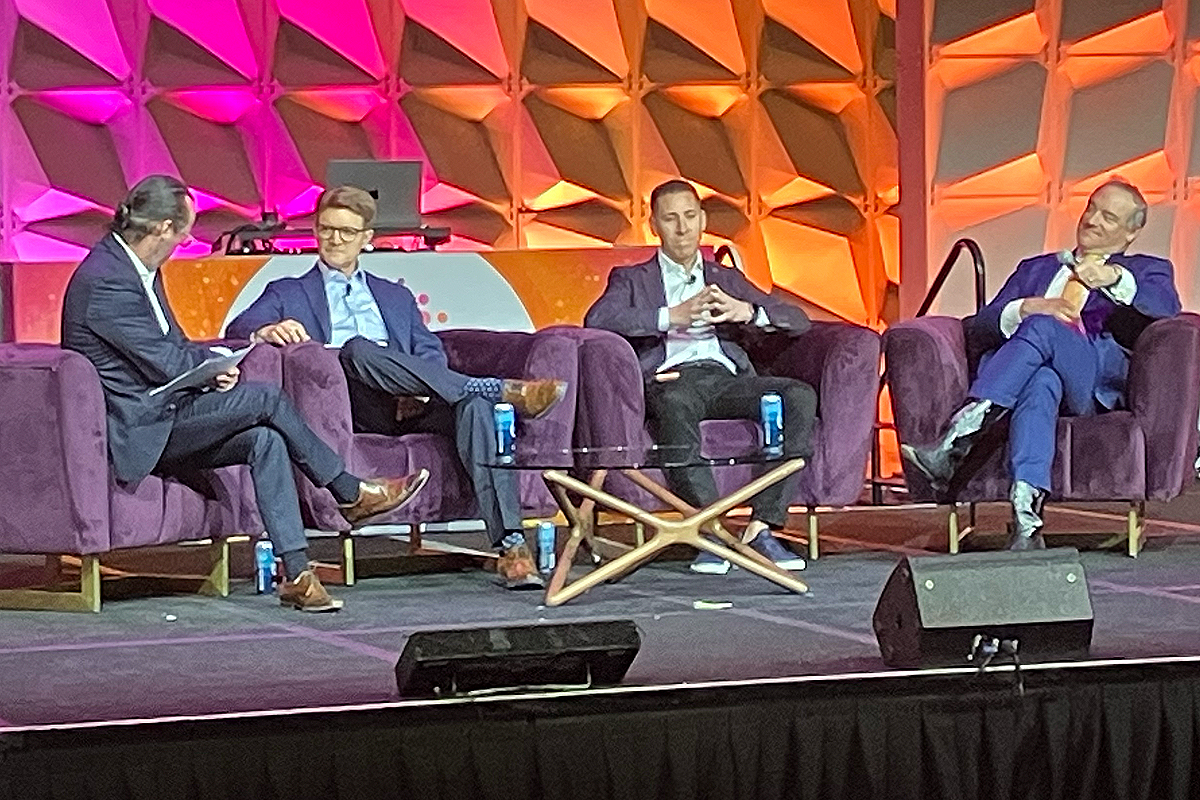
A shifting mix of tariffs, geopolitical tension and domestic industrial investment is reshaping the metals sector, creating opportunities for US companies while forcing them to navigate a more volatile operating environment, speakers said during a panel discussion Tuesday at the ReMA conference in Las Vegas.
The session, titled “Spotlight: Metal Markets,” brought together Jason Schenker, president of Prestige Economics, Brian Halloran, senior vice president of North American Steel Group at CMC and Jay Sandler, CEO of Imperial Group. The panel was moderated by Peter Sheahan, founder of the Karrikins Group.
Panelists said the industry is moving away from the long era of assumptions built around globalization, free trade and steadily expanding Chinese demand and toward a more fragmented system shaped by trade barriers, national security concerns and renewed focus on domestic manufacturing.
Halloran described the shift as “post globalization,” saying companies are now operating in a market that is increasingly focused on “not just free trade, but fair and balanced trade,” as well as national security and support of domestic industry.
He said those pressures are already changing material flows and investment patterns, pointing to lower imports and exports alongside a wave of announced industrial development in the US.
“We’re also, for the first time in my career, seeing reinvestment in our domestic industry,” Halloran said.
Schenker framed the same trend in geopolitical terms, arguing metals companies are now working through a period of elevated global risk that reaches beyond commodity pricing. He said the current environment is being shaped by worsening tensions among major powers, fractured alliances and the growing likelihood of economic conflict.
“Economic warfare is going to be the norm going forward,” Schenker said. “That presents all kinds of risks for people active in the economy.”
Even so, panelists said companies positioned to serve US manufacturing, construction and industrial expansion could benefit from a long runway of demand, especially if reshoring and onshoring continue.
“This industry has a tremendous future,” Halloran said. “The opportunities to be successful in this industry are changing.”
Sandler said that shift is already visible at ground level, with smaller manufacturers showing a greater willingness to invest in equipment and capacity. He said the metals business is no longer just about moving volume, but about focusing on the right customers, the right relationships and the discipline needed to handle swings in pricing and demand.
“We’re operating in a structurally more volatile metals market,” Sandler said.
That volatility is forcing companies to rethink basic operating habits. Inventory management, cash flow, credit discipline and hedging all drew repeated attention, with speakers warning firms that treat current conditions as a return to past norms could be exposed.
The discussion also turned to artificial intelligence, which speakers described as both a source of efficiency and a likely disruptor of some existing roles. Sandler said his company is using data systems and digital tools to improve forecasting and customer visibility, while Halloran said AI is already being applied in recycling operations, steelmaking and non-ferrous processing.
Schenker added businesses that ignore the technology are taking a growing risk. “The fall is just so high,” he said.