













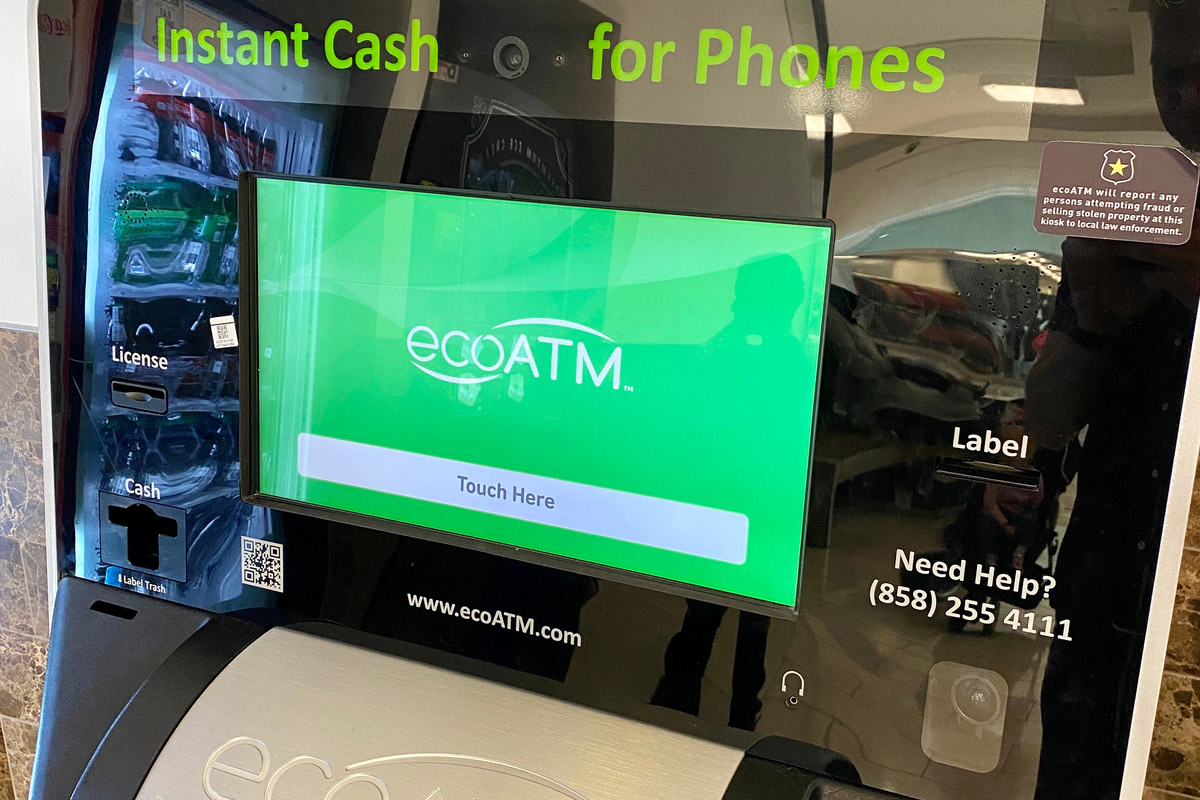
Used-cellphone recycling kiosk network ecoATM collected around 7.5 million consumer devices in 2025, pushing its lifetime collected volumes past 50 million phones and other handheld electronics.
Melissa Ziegler, ecoATM’s vice president of marketing, said the company’s cumulative payouts to consumers have reached about $1.5 billion since it began operating about 15 years ago. “We did about 7.4 to 7.5 million devices in 2025,” Ziegler told E-Scrap News. “We hit 50 million devices recycled through the course of the company’s history, and our payout to consumers hit about $1.5 billion.”
The company said it now operates about 7,000 automated kiosks across the US, with phones collected in every state. Roughly 3,000 kiosks are located in Walmart stores, according to Ziegler, with others placed at grocery and discount chains including Kroger and Albertsons as well as Food 4 Less, Vons and Dollar General, to name just a few..
The kiosks evaluate devices on site, using imaging and diagnostics to assess model and condition before providing a price quote. If the customer accepts the offer, the kiosk pays immediately, either in cash or through digital options. The company’s website says it accepts cellphones, MP3 players and tablets and that it can provide quotes for devices that have cracked screens or other damage.
About 20,000 devices are collected per day through the network, said ecoATM. Devices are transported to a processing facility in Kentucky, where they are checked in and sorted. The devices then enter a 30 day holding period, a step designed to support recovery efforts if a device is later found to be missing or stolen.
“We hold the device for 30 days, just in case,” Ziegler said, adding that the company works to discourage theft through identity verification at the kiosk. The company’s website says sellers must present a valid ID, which is scanned and reviewed by live agents who compare the ID with photos taken at the machine.
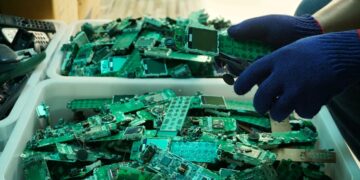
After the holding period, ecoATM routes devices into reuse and recycling channels. Ziegler said many phones are sold into secondary markets for refurbishment and resale, including through a company-owned business called Gazelle, which refurbishes and sells certified pre-owned devices. Devices that cannot be repaired are sold to certified recyclers for material recovery.
Prices are based on secondary market values and device condition. “We use market based pricing, and it is driven by what devices are selling for in the secondary market, along with manufacturer release cycles and consumer demand,” Ziegler said.
ecoATM began in San Diego and launched its first kiosk there with early versions staffed by attendants before the company shifted to self-service machines. The company said it works with retail partners by placing company-owned kiosks in store entry areas and sharing revenue. It does not franchise or sell the machines.
In September 2025, ecoATM launched in Canada with a pilot installation of 13 kiosks in the Greater Toronto Area. Ziegler said that the company plans to add more kiosks in the region in 2026, describing the Toronto rollout as an initial test to gauge market conditions before expanding further.