Resource Recycling
  • The Latest
  • Analysis
    • All
    • Certification Scorecard
    • Industry Announcements
    • Opinion

    Certification scorecard for week of Jan. 19, 2026

    From CES to the shredder: What 2026 PCs mean for ITAD

    Certification scorecard for week of Jan. 12, 2026

    Industry announcements for January 2026

    Certification scorecard for Dec. 18-30, 2025

    Certification scorecard for Dec. 18, 2025

    Industry announcements for the week of Dec. 15

    Certification scorecard for December 10, 2025

    Industry Announcements for Week of December 8

  • Conferences
  • Publications

    Other Topics

    Textiles
    Organics
    Packaging
    Glass
    Brand Owners

    Metals
    Technology
    Research
    Markets
    Grant Watch

    All Topics

Subscribe
No Result
View All Result
Resource Recycling
  • The Latest
  • Analysis
    • All
    • Certification Scorecard
    • Industry Announcements
    • Opinion

    Certification scorecard for week of Jan. 19, 2026

    From CES to the shredder: What 2026 PCs mean for ITAD

    Certification scorecard for week of Jan. 12, 2026

    Industry announcements for January 2026

    Certification scorecard for Dec. 18-30, 2025

    Certification scorecard for Dec. 18, 2025

    Industry announcements for the week of Dec. 15

    Certification scorecard for December 10, 2025

    Industry Announcements for Week of December 8

  • Conferences
  • Publications

    Other Topics

    Textiles
    Organics
    Packaging
    Glass
    Brand Owners

    Metals
    Technology
    Research
    Markets
    Grant Watch

    All Topics

Subscribe
No Result
View All Result
Resource Recycling
No Result
View All Result
Home E-Scrap

Analysis: Lenovo enters circular IT, ITAD territory

byDavid Daoud
December 3, 2025
in E-Scrap
Analysis: Lenovo enters circular IT, ITAD territory

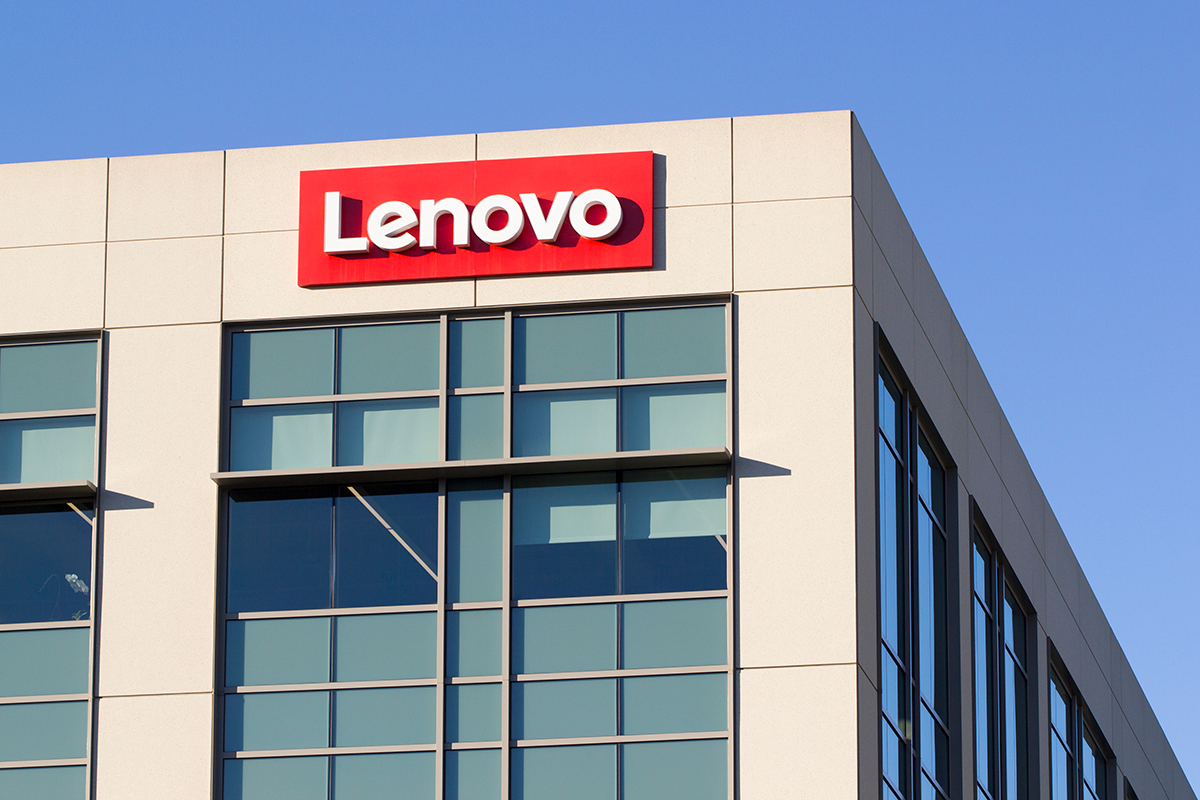
Lenovo's latest announcement is a sign that large manufacturers are trying to take back refurbishment market share. | Tada Images / Shutterstock

Lenovo has launched a new Certified Refurbishment Services program across 14 EMEA countries, giving corporate customers an OEM-branded route to extend the life of aging PCs and other Lenovo hardware instead of pushing everything straight into refresh and recycling. 

The service adds a structured refurbishment layer to Lenovo’s existing Asset Recovery Services (ARS), promising graded refurbishment, NIST 800‑88 data sanitization, functional testing, cosmetic restoration and renewed warranty, all managed through the Lenovo Service Connect portal. 

The announcement is another signal that large manufacturers intend to own more of the value chain around take-back, refurbishment and environmental, social and governance (ESG) reporting. 

Inside Lenovo’s circular IT play

On paper, Certified Refurbishment Services is straightforward: Customers in markets including Germany, France, the UK, Italy and the Nordics can send Lenovo devices into an OEM-controlled process that offers three tiers of work – from light refresh to full refurbishment – and receive refurbished units back for redeployment with OEM warranty. 

Lenovo positions this as a circularity and emissions lever, citing research that nearly all EMEA IT decision-makers now factor environmental impact into AI and IT planning. It also points to external analyses suggesting that extending electronics lifetimes by around 30% can cut annual emissions by up to 20%. 

The company also says that roughly 70-71% of devices it collects through its broader asset recovery programs are already reused or refurbished for parts, tying the new offer to a story of “OEM-grade” lifecycle extension at scale. 

Analysis: OEM vs. ITAD

The service is most likely about controlling the refresh narrative, not necessarily just about refurbishing devices. 

ARS and the refurbishment program sit inside Lenovo’s sustainability-solutions portfolio, giving large customers a single Lenovo-branded channel for pickup, data destruction, circularity reporting and redeployment decisions. That positioning aligns closely with EU and EMEA policy momentum on circular electronics, where lifetime extension, product-carbon accounting and documented reuse are becoming harder to ignore in procurement and ESG disclosures. 

Behind the marketing, Lenovo’s model looks like a familiar OEM-front, ITAD-back hybrid. Lenovo highlights internal refurbishment capacity and AI-enabled inspection lines that boost throughput for certain device families and only Lenovo or “accredited partners” can apply the Certified Refurbished label. 

At the same time, ARS datasheets and solution pages state plainly that Lenovo “collaborates with a large network of ITAD partners” and “works with the world’s leading ITAD partners to recycle and refurbish your end‑of‑life IT assets,” using R2, e‑Stewards and ISO‑certified processors as accredited downstream suppliers. 

In practice, Lenovo owns the customer contract, defines grading rules and refurbishment levels and controls certification and warranty, while a federated network of ITAD and e‑scrap firms performs much of the logistics, processing and final recycling across 40‑plus markets. That model echoes IBM’s asset recovery and Dell’s asset resale programs: the OEM steps between the enterprise and the secondary market, then leans on specialist partners for execution while keeping the ESG story, device data and brand halo in-house. 

Where friction emerges with independent ITADs

For ITAD providers and e‑scrap processors, OEM moves like Lenovo’s present both opportunity and tension. On the opportunity side, Lenovo’s need for certified capacity translates into steady work as subcontracted partners for collection, data destruction, refurbishment and recycling, particularly in countries where Lenovo does not operate its own plants. 

OEM-backed take-back can also increase overall reuse volumes by making refurbishment more palatable to risk-averse corporate buyers, which in theory should keep more hardware out of shredders for longer. 

The friction comes from who controls access and economics. In the world of OEM asset recovery and buyback programs, manufacturers can disintermediate independent ITADs by positioning themselves as the default end-of-life partner in enterprise contracts, especially where fleets are heavily weighted to a single brand. 

That can lock ITADs out of high-quality, homogenous Lenovo refreshes they previously bid on directly, relegating many to white‑label roles behind OEM portals. ITAD practitioners also argue that OEM trade‑in tables and fixed buyback grids often undervalue used equipment compared with what specialist remarketers can extract through global resale channels, especially for data center and higher-end enterprise hardware. 

There is also a battle over narrative and metrics. Lenovo and peers bundle data security guarantees, carbon-accounting claims and circularity KPIs into their ARS offers, allowing them to claim ESG credit for volumes that are, in reality, processed by third‑party ITADs and recyclers. 

Independent providers worry that as OEM-led programs expand, they may lose both direct client relationships and visibility, even while their plants and expertise remain essential to making those OEM promises real. 

That leaves many ITADs repositioning toward mixed-brand fleets, complex data-center decommissions, non-OEM gear and services that fall outside manufacturer programs, rather than counting on single-OEM refreshes for growth.

Lenovo’s expansion into certified refurbishment adds to the evidence that OEMs plan to compete more directly with independent ITADs for control of enterprise refresh and take‑back programs. In practice, specialist ITAD and recycling partners will continue to do most of the operational work, while an increasing share of the margin, the lifecycle data and the recognition for “keeping products in use” accrues to OEMs upstream.

Tags: ITAD
TweetShare
David Daoud

David Daoud

David Daoud is a contributor to Resource Recycling and E-Scrap News, covering IT asset disposition, electronics recycling, and circular IT governance. He is the founder of and current Principal Analyst at Compliance Standards LLC, where he conducts independent research and advisory work on ITAD markets, sustainability and ESG compliance, data security, and lifecycle risk management. Daoud has analyzed enterprise IT trends since the late 1990s and was among the first analysts to examine ITAD as a distinct market segment during his time at IDC. He advises operators, OEMs, and investment teams on regulatory, technology, and market developments affecting the electronics lifecycle.

Related Posts

Paladin acquires R&L Recycling, enters European ITAD market

Paladin acquires R&L Recycling, enters European ITAD market

byScott Snowden
January 20, 2026

Paladin EnviroTech acquired Netherlands-based R&L Recycling BV, its first European deal, to build an in-region ITAD and electronics recycling platform...

From CES to the shredder: What 2026 PCs mean for ITAD

byDavid Daoud
January 15, 2026

Some of the most operationally relevant CES 2026 announcements for the e-scrap sector focused less on peak performance and more...

Panel tracks shifts in e-scrap as policy, AI reshape

Panel tracks shifts in e-scrap as policy, AI reshape

byScott Snowden
December 22, 2025

Executives across the electronics recycling and ITAD sector said shifting device design, battery risk, regulatory pressure and rapid data center...

How mergers and acquisitions are rewiring the ITAD industry

How mergers and acquisitions are rewiring the ITAD industry

byDavid Daoud
October 16, 2025

The plenary session of E-Scrap Conference will address "How Mergers and Acquisitions are Reshaping the ITAD Sector," a timely discussion...

How to thrive in ITAD

How to thrive in ITAD

byMike Buckles
June 17, 2019

This article originally appeared in the Spring 2019 issue of E-Scrap News. Subscribe today for access to all print content.   I...

IT merger

Processor that posted $13 million in 2016 revenues acquired

byColin Staub
March 30, 2017

E-scrap and hazardous material processor AERC has drawn investment dollars from a commercial recycling company and its parent holding company....

Load More
Next Post
Tariffs jolt electronics trade, policy moves forward

Tariffs jolt electronics trade, policy moves forward

More Posts

Haulers continue to see recycling revenue drops

GFL Environmental relocates HQ to Miami Beach

January 21, 2026
CalRecycle withdraws proposed regs for SB 54

CalRecycle withdraws proposed regs for SB 54

January 12, 2026

Alpla decries ‘painful impact’ of recycling market pressures

January 19, 2026
Chinese processing group details goals for US visit

AMP lays out vision of next-generation, AI-driven MRFs

July 24, 2024
New brand-led recycling group looks to work with Congress

New brand-led recycling group looks to work with Congress

January 20, 2026
California posts initial recycling rates

California posts initial recycling rates

January 9, 2026

Aduro reports losses, will pick site for demo plant by end Jan

January 16, 2026

New Jersey passes bill on single-use service items

January 14, 2026

EU contributes €6 million toward textile DRS pilot

January 16, 2026

CARE launches carpet fiber ID device to aid recyclers

January 14, 2026
Load More

About & Publications

About Us

Staff

Archive

Magazine

Work With Us

Advertise
Jobs
Contact
Terms and Privacy

Newsletter

Get the latest recycling news and analysis delivered to your inbox every week. Stay ahead on industry trends, policy updates, and insights from programs, processors, and innovators.

Subscribe

Welcome Back!

Login to your account below

Forgotten Password?

Retrieve your password

Please enter your username or email address to reset your password.

Log In

Add New Playlist

No Result
View All Result
  • The Latest
  • Analysis
  • Recycling
  • E-Scrap
  • Plastics
  • Policy Now
  • Conferences
    • E-Scrap Conference
    • Plastics Recycling Conference
    • Resource Recycling Conference
    • Textiles Recovery Summit
  • Magazine
  • About Us
  • Advertise
  • Archive
  • Jobs
  • Staff
Subscribe
This website uses cookies. By continuing to use this website you are giving consent to cookies being used. Visit our Privacy and Cookie Policy.