





Resource Recycling
  • The Latest
  • Analysis
    • All
    • Certification Scorecard
    • Industry Announcements
    • Opinion
    Apple Watch on product box.

    Wearables are coming and ITAD isn’t ready

    Certification Scorecard — Week of April 13, 2026

    EV Battery Pack - Sergii Chernov-Shutterstock

    Redwood, Rivian deal fuels US infrastructure plans

    Bloom ESG and e-Stewards roll out critical metals metric

    Colorado regulators suggest mid-range EPR scenario

    Why collaboration on plastic waste still matters

    Battery recycler Ascend Elements files for bankruptcy

    Battery recycler Ascend Elements files for bankruptcy

    EPR fees are a market signal. Here’s what they’re telling you.

    EPR fees are a market signal. Here’s what they’re telling you.

    Wolframite ore, the primary ore of tungsten from Altai, Russia

    Tungsten scrap export controls draw industry attention

    Certification Scorecard — Week of April 6, 2026

  • Conferences
  • Publications

    Other Topics

    Textiles
    Organics
    Packaging
    Glass
    Brand Owners

    Metals
    Technology
    Research
    Markets
    Grant Watch

    All Topics

Subscribe
No Result
View All Result
Resource Recycling
  • The Latest
  • Analysis
    • All
    • Certification Scorecard
    • Industry Announcements
    • Opinion
    Apple Watch on product box.

    Wearables are coming and ITAD isn’t ready

    Certification Scorecard — Week of April 13, 2026

    EV Battery Pack - Sergii Chernov-Shutterstock

    Redwood, Rivian deal fuels US infrastructure plans

    Bloom ESG and e-Stewards roll out critical metals metric

    Colorado regulators suggest mid-range EPR scenario

    Why collaboration on plastic waste still matters

    Battery recycler Ascend Elements files for bankruptcy

    Battery recycler Ascend Elements files for bankruptcy

    EPR fees are a market signal. Here’s what they’re telling you.

    EPR fees are a market signal. Here’s what they’re telling you.

    Wolframite ore, the primary ore of tungsten from Altai, Russia

    Tungsten scrap export controls draw industry attention

    Certification Scorecard — Week of April 6, 2026

  • Conferences
  • Publications

    Other Topics

    Textiles
    Organics
    Packaging
    Glass
    Brand Owners

    Metals
    Technology
    Research
    Markets
    Grant Watch

    All Topics

Subscribe
No Result
View All Result
Resource Recycling
No Result
View All Result
Home E-Scrap

From scrap to strategy: Global battery recycling’s next phase

byDavid Daoud
September 18, 2025
in E-Scrap
From scrap to strategy: Global battery recycling’s next phase

Electric vehicle concept with lightbulb

Ever since I interviewed Lauren Roman of Transparent Planet about the electric vehicle (EV) battery sector and its recycling aspects, I started spending more time tracking what was happening there.

Just over the past two months, the global battery recycling landscape appears to be going through an inflection point. It’s evident that activity is ramping up quickly in various markets, from North America to Europe, with a flurry of new facilities, partnerships and research breakthroughs suggesting the sector is shedding its pilot-project roots and committing to full-scale operations.

Investments in infrastructure

Interestingly, these developments are taking place at a time when end-of-life EV batteries have not yet flooded the market. The scale of investment signals that the industry is preparing for what’s coming.

Princeton NuEnergy opened its flagship recycling facility in Chester, South Carolina, this past August. The team is focused on manufacturing scrap, leftover materials and rejected components generated during the battery production process and producing battery-grade cathode materials, reportedly boasting recovery rates above 97% for lithium, nickel, cobalt and manganese, with initial capacity targeted at 5,000 tons per year.

In Nevada, I tracked Aqua Metals’ progress as they guided stakeholders through their proprietary AquaRefining process during industry tours and workshops in August of this year. Aqua Metals is laying the groundwork for a strengthened supply chain in domestic battery recycling through joining a $4.99 million Department of Energy consortium with Penn State in 2024.

American Battery Technology Company is also pushing ahead in Nevada, buoyed by a $144 million DOE grant awarded late last year for expansion into a second recycling facility.

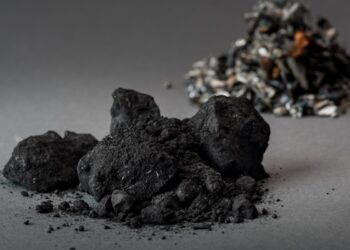
Over in Europe, Clarios acquired three additional plants in Germany and Austria, while Glencore wrapped up a takeover of Li-Cycle’s US assets. It’s hard to miss how these moves are consolidating black-mass processing under major global players.

Policy plays catch up

Policy is evolving too. When Alberta, Canada launched upgraded battery collection services with smart containers on September 4, I noticed how consumer-facing initiatives are catching up, if slowly, to industrial trends.

For the first time, battery producers, not local governments, are now held accountable for the end-of-life management of batteries under Alberta’s Extended Producer Responsibility regulations. This means producers fund and operate recycling programs, bringing more drop-off locations, better safety and more efficient pickups to residents. It’s a move toward making battery recycling more accessible and sustainable, setting an example that other regions may follow.

Collaborate and innovate

Partnerships between automakers and battery recyclers are gaining momentum. On the supply side, Ace Green Recycling and Gold Star Metals recently announced a multi-year partnership in Texas to supply Ace’s new facility with tens of thousands of tons of used lead-acid batteries each year, primarily sourced from automotive and industrial applications across the region. This agreement is a major step toward ensuring a stable feedstock for large-scale battery recycling, strengthening resource recovery efforts and supporting the region’s environmental goals.

In 2024, BMW of North America teamed up with Redwood Materials, a Nevada-based company, founded by former Tesla CTO JB Straubel, and focused on recycling lithium-ion batteries from electric vehicles and consumer electronics. Redwood recovers up to 98% of valuable battery metals like lithium, nickel and cobalt and returns them to the supply chain. The company’s work with BMW may be a model of how car makers can manage battery end-of-life and help push the industry toward more advanced, circular recycling practices.

Universities and research labs are increasingly tackling battery design to make recycling easier. MIT researchers announced a new “self-assembling electrolyte,” a material inside the battery that serves as the pathway for ions. What’s unique about their approach is that this material is specially engineered to break apart in a simple liquid at the end of the battery’s life. So, instead of shredding a battery and dealing with a mix of metal and plastic, the battery can be cleanly separated into its components, making it far easier to recover valuable materials and prepare them for reuse. This kind of innovation could ultimately make EV batteries much more recyclable and sustainable.

So why this momentum now? The vast majority of feedstock is still limited because it essentially comes from manufacturing scrap, warranty returns and consumer electronics. The real focus of these movements will be in the 2030s, when retired EV batteries will finally arrive in volume. Investment decisions made this summer, from facility builds to supply contracts, are about the shift to large-scale, strategic positioning aimed at securing raw materials and market leadership down the road.

Growth on the horizon

Despite all this momentum, I recognize that the battery recycling industry is still in its infancy. Most incoming material isn’t post-consumer EV batteries. It’s primarily manufacturing scrap, warranty returns and batteries collected from electronic devices like phones, laptops and power tools. So today’s boom is more about preparation than short-term payoff. The true tsunami of battery retirement is years away, with most EVs sold since 2020 destined to stay on the road well into the next decade.

Looking at the data, forecasts are optimistic. GlobeNewswire valued the sector at $22.75 billion in 2024, potentially jumping to $41.66 billion by 2030. Knowledge Sourcing Intelligence projects $23.39 billion by 2030, up from $11.48 billion. In this case, the underlying driver is that electric vehicles are proliferating. According to the IEA’s Global EV Outlook 2025, more than 17 million electric cars sold worldwide in 2024, putting total stock near 58 million, with 2025 new sales expected to top 20 million.

What I see in leading recyclers and technology developers is a keen acknowledgment that long-term competitiveness hinges on building partnerships, securing feedstocks and investing in regulatory credibility now, before the volume surge begins, assuming that the market will grow exponentially.

Over the next couple of years, I expect to see more investments across North America, Europe and beyond in the battery recycling industry, in particular among private equity.

Tags: BatteriesMarkets
TweetShare
David Daoud

David Daoud

David Daoud is a contributor to Resource Recycling and E-Scrap News, covering IT asset disposition, electronics recycling, and circular IT governance. He is the founder of and current Principal Analyst at Compliance Standards LLC, where he conducts independent research and advisory work on ITAD markets, sustainability and ESG compliance, data security, and lifecycle risk management. Daoud has analyzed enterprise IT trends since the late 1990s and was among the first analysts to examine ITAD as a distinct market segment during his time at IDC. He advises operators, OEMs, and investment teams on regulatory, technology, and market developments affecting the electronics lifecycle.

Related Posts

EV Battery Pack - Sergii Chernov-Shutterstock

Redwood, Rivian deal fuels US infrastructure plans

byStefanie Valentic
April 15, 2026

Batteries that are no longer ideal for powering a vehicle still have substantial capacity left. Automobile manufacturer Rivian and battery...

Volatility reshapes outlook for US metals businesses

byScott Snowden
April 15, 2026

Panelists at the ReMA conference in Las Vegas said tariffs, reshoring and geopolitical tension are remaking trade flows, lifting US...

NERC launches hub to promote PCR demand 

byAntoinette Smith
April 15, 2026

The Northeast Recycling Council's PCR Material Demand Hub offers resources for government procurement, material- and product-specific resources, and certification and...

Industry group: Help us find the plastic bale volumes we need

PET bales sink further as other grades firm 

byRecyclingMarkets.net Staff
April 15, 2026

Pricing for HDPE and PP bales rose again, while PET bales remained low, film grades have steadied, and paper and...

Lead battery recycling market set for steady growth

byScott Snowden
April 14, 2026

The global lead battery recycling market is projected to grow steadily through 2034, supported by regulation, automotive replacement cycles and...

GFL acquires SECURE Waste for $6.4bn

byStefanie Valentic
April 13, 2026

GFL Environmental has agreed to acquire SECURE Waste Infrastructure Corp. in a $6.4 billion deal that expands the waste hauler's...

Load More
Next Post
#ESC2025 Speaker Spotlight: Emily Farrant

#ESC2025 Speaker Spotlight: Emily Farrant

Leading the Charge in Safe Battery Recycling
Sponsored

Leading the Charge in Safe Battery Recycling

byThe Battery Network
April 13, 2026

We’re connecting people, brands, and communities through one nationwide network built to make battery recycling safer, simpler, and more accessible...

Read moreDetails

More Posts

Recycling Partnership CEO stepping down

April 15, 2026
EPR fees are a market signal. Here’s what they’re telling you.

EPR fees are a market signal. Here’s what they’re telling you.

April 10, 2026
Battery recycler Ascend Elements files for bankruptcy

Battery recycler Ascend Elements files for bankruptcy

April 13, 2026
Industry group: Help us find the plastic bale volumes we need

PET bales sink further as other grades firm 

April 15, 2026
Colorado regulators suggest mid-range EPR scenario

Why collaboration on plastic waste still matters

April 13, 2026

GFL acquires SECURE Waste for $6.4bn

April 13, 2026

WM opens new $60m MRF in Indy

April 10, 2026

Bloom ESG and e-Stewards roll out critical metals metric

April 15, 2026

Amazon, DOE partner on critical materials recovery

April 13, 2026
Solarcycle starts up Georgia recycling plant

S3399 signals a shift in how states are tackling solar panel waste

April 6, 2026
Load More

About & Publications

About Us

Staff

Archive

Magazine

Work With Us

Advertise
Jobs
Contact
Terms and Privacy

Newsletter

Get the latest recycling news and analysis delivered to your inbox every week. Stay ahead on industry trends, policy updates, and insights from programs, processors, and innovators.

Subscribe

Welcome Back!

Login to your account below

Forgotten Password?

Retrieve your password

Please enter your username or email address to reset your password.

Log In

Add New Playlist

No Result
View All Result
  • The Latest
  • Analysis
  • Recycling
  • E-Scrap
  • Plastics
  • Policy Now
  • Conferences
    • E-Scrap Conference
    • Plastics Recycling Conference
    • Resource Recycling Conference
    • Textiles Recovery Summit
  • Magazine
  • About Us
  • Advertise
  • Archive
  • Jobs
  • Staff
Subscribe
This website uses cookies. By continuing to use this website you are giving consent to cookies being used. Visit our Privacy and Cookie Policy.