





Resource Recycling
  • The Latest
  • Analysis
    • All
    • Certification Scorecard
    • Industry Announcements
    • Opinion
    From claims to custody: PCR procurement grows up

    From claims to custody: PCR procurement grows up

    What the NAND flash crunch means for remarketing, refurbishment and residual values

    Telamon acquires ITAD consultancy Retire-IT

    Certification Scorecard — Week of July 6, 2026

    Tech giant pens detailed ‘plastic-free packaging’ guide

    What Google’s latest report means for ITAD

    Unpacking the Starbucks cup data

    Unpacking the Starbucks cup data

    Amazon cutting out more flexible packaging

    Amazon’s AWS hardware reuse is measured

  • Conferences
    • Resource Recycling Conference
    • Plastics Recycling Conference
    • E-Scrap: The Longevity Conference
    • Textiles Recovery Summit
  • Publications
    • E-Scrap News
    • Plastics Recycling Update
    • Policy Now
    • Resource Recycling
    • Other Topics
      • All Topics
      • Brand Owners
      • Critical Minerals
      • Glass
      • Grant Watch / RFPs
      • Markets
      • Organics
      • Packaging
      • Research
      • Technology
      • Textiles
Subscribe
No Result
View All Result
Resource Recycling
  • The Latest
  • Analysis
    • All
    • Certification Scorecard
    • Industry Announcements
    • Opinion
    From claims to custody: PCR procurement grows up

    From claims to custody: PCR procurement grows up

    What the NAND flash crunch means for remarketing, refurbishment and residual values

    Telamon acquires ITAD consultancy Retire-IT

    Certification Scorecard — Week of July 6, 2026

    Tech giant pens detailed ‘plastic-free packaging’ guide

    What Google’s latest report means for ITAD

    Unpacking the Starbucks cup data

    Unpacking the Starbucks cup data

    Amazon cutting out more flexible packaging

    Amazon’s AWS hardware reuse is measured

  • Conferences
    • Resource Recycling Conference
    • Plastics Recycling Conference
    • E-Scrap: The Longevity Conference
    • Textiles Recovery Summit
  • Publications
    • E-Scrap News
    • Plastics Recycling Update
    • Policy Now
    • Resource Recycling
    • Other Topics
      • All Topics
      • Brand Owners
      • Critical Minerals
      • Glass
      • Grant Watch / RFPs
      • Markets
      • Organics
      • Packaging
      • Research
      • Technology
      • Textiles
Subscribe
No Result
View All Result
Resource Recycling
No Result
View All Result
Home Analysis Opinion

In My Opinion: Why laptops present unique challenges

byCaroline Allman, Apto Solutions
July 22, 2021
in Opinion
Caroline Allman

If you’ve been to a cafe in any major city pre-pandemic, with tables occupied by a sea of laptops, then you know that these devices were already essential. Now imagine laptop usage has only increased since 2020, with the pandemic-induced work-from-home lifestyle sending buyers into overdrive, creating laptop shortages that some claim will last into 2022.

Caroline Allman
Caroline Allman

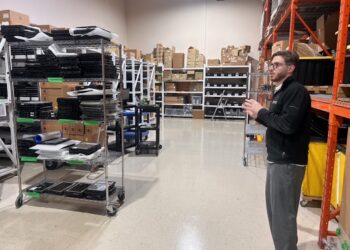
Though laptops may be the heroes of the remote working world, what worries me as an ITAD professional is a future where those same laptops could become a recycling challenge. While we tend to take them for granted, laptops are a huge achievement in design and technological efficiency. However, in some cases, they can also combine all of the recycling pain points of monitors and desktop computers. With usage ramping up – either via individual purchases or supplied en masse by employers – it’s important to acknowledge the downsides and improve recycling processes to make sure that these much-needed tools don’t have diminishing returns.

A mixed blessing

Out of all of the devices essential to remote working, laptops pose the biggest e-waste challenge. Their pieces are smaller and the blend of the plastics within them changes often. Newer models have difficult-to-remove layers of components – plastic, LED light strips in the screen and thin batteries that are hard to remove safely because they can create a “thermal event” if damaged. It’s hard but necessary work – the internal components are higher end (with more precious metals), so recycling laptops is too rewarding to pass up.

And then there’s the data safety issues. Some units have solid-state drives (mSATAs) that are soldered onto the laptop motherboard. If the recycler doesn’t know this and fails to wipe the unit as a whole (instead of removing the drive from the unit to wipe it apart from the system) there’s a significant risk of data breach. Employer-supplied laptops can also have remote system controls or management software that, if not removed, can retain data and render an asset useless. Gone are the days when recyclers could just pull a hard drive out of the side of the unit, wipe it and be done.

Making a difference

With remote work likely sticking around post-pandemic, laptops aren’t going anywhere. So, the key is to look for ways to improve, tracking the devices and materials in tremendous detail to make sure recycled laptops and their data are accounted for. Doing this requires greater transparency and communication between original equipment manufacturers (OEMs), employers, employees, and ITAD partners to optimize recycling. All sides are already working hard, creating systems that can recycle more effectively, but there’s always areas to improve.

For example, maintaining a constant dialog about the impact of changing laptop materials would help curb negative impact. Using homogenous plastics in laptops makes recycling much easier. The same is true for use of magnesium, which is used in laptop cases, is lightweight and so far seems to be recyclable through normal streams.

At the same time, there should be discussions about design considerations – like modularity, where parts can be popped out more easily and replaced instead of requiring a whole unit to be torn down to access a battery or SSD. Not to mention the increasing use of magnets in laptops. Some have small, strong magnets to help them close (or with tablet-style laptops to help the keyboards attach). While recyclable in some cases, those magnets can be a problem for metal processors to handle if they are not disclosed because they jam systems and shredders. As insights and approaches like these are communicated through the chain and addressed, they can greatly affect how laptops are built and how easily they can be recycled.

Better tracking and communication would also improve data safety, making sure laptops are shipped to recyclers securely and that data is correctly destroyed. Many companies have realized this and have come up with better ways to track their corporate equipment and manage their return – a capability originally developed to ensure COVID safety. They’re also either developing internal policies for data security to make sure their recycling vendors know exactly what to do with their specific units (in cases where they use remote management software) or just using certified companies that can ensure the data is destroyed.

As we continue to see a marked increase in laptops returned from our clients, these steps show a commitment to investing in change and that things are already improving. With some collaboration, visibility and transparency, we can all work toward a world of remote work that doesn’t put our environment and data at risk.


Caroline Allman is the compliance officer for Apto Solutions.

The views and opinions expressed are those of the author and do not imply endorsement by Resource Recycling, Inc. If you have a subject you wish to cover in an op-ed, please send a short proposal to news@resource-recycling.com for consideration.
 

Tags: Electronics
TweetShare
Caroline Allman, Apto Solutions

Caroline Allman, Apto Solutions

Related Posts

Auto Draft

AI can boost strength of secondhand device market

byPaul Lane
July 10, 2026

Players in the preowned mobile device industry say continual self-evaluation will help them adapt to a changing marketplace.

Building trust, infrastructure key to survival in secondhand device market

Building trust, infrastructure key to survival in secondhand device market

byPaul Lane
July 9, 2026

Price, trust and supply issues will create the chasm that separates the next wave of players in the second-hand mobile...

What the NAND flash crunch means for remarketing, refurbishment and residual values

Telamon acquires ITAD consultancy Retire-IT

byDavid Daoud
July 9, 2026

Telamon will be retaining Retire-IT founder Kyle Marks, who built that business over 21 years.

Tech giant pens detailed ‘plastic-free packaging’ guide

What Google’s latest report means for ITAD

byDavid Daoud
July 8, 2026

The centerpiece is Google's Reverse Supply Chain program, which the company says harvested more than 7.5 million components from decommissioned...

Auto Draft

Digital product passports offer gateway into secondary market

byPaul Lane
July 7, 2026

Industry leaders say buyers and sellers of used mobile devices would benefit from standardized rules for how to treat second-hand...

Amazon cutting out more flexible packaging

Amazon’s AWS hardware reuse is measured

byDavid Daoud
July 7, 2026

The numbers are significant, but retail electronics are still missing from the ledger.

Load More
Next Post
Urban E Recycling Orlando Warehouse

Recycler expands footprint in Sunshine State

More Posts

Oregon’s Recycling Modernization Act faces injunction

Oregon’s EPR program posts first-year results

July 6, 2026
Two recycled-content bills gain approval in California

California agriculture seeks SB 54 repeal

July 7, 2026
Unpacking the Starbucks cup data

Unpacking the Starbucks cup data

July 8, 2026
In Our Opinion: Coalitions: The EPR Differentiator

Inside NAW’s constitutional case against packaging EPR

July 6, 2026
Tech giant pens detailed ‘plastic-free packaging’ guide

What Google’s latest report means for ITAD

July 8, 2026
EPR fees are a market signal. Here’s what they’re telling you.

Building the infrastructure behind EPR

July 6, 2026
SB 54 draft rules generate debate on rates, review

California increases PET market payments

July 7, 2026
MP Materials breaks ground on rare earth magnet campus in North Texas

ERI confirms ITAD shift toward minerals

July 3, 2026
ITAD firm wins spot for NASA purchasing

ITAD firm wins spot for NASA purchasing

July 6, 2026
Auto Draft

Digital product passports offer gateway into secondary market

July 7, 2026
Load More

About & Publications

About Us

Staff

Archive

Magazine

Work With Us

Advertise
Jobs
Contact
Terms and Privacy

Newsletter

Get the latest recycling news and analysis delivered to your inbox every week. Stay ahead on industry trends, policy updates, and insights from programs, processors, and innovators.

Subscribe

Welcome Back!

Login to your account below

Forgotten Password?

Retrieve your password

Please enter your username or email address to reset your password.

Log In

Add New Playlist

No Result
View All Result
  • The Latest
  • Analysis
  • Recycling
  • E-Scrap
  • Plastics
  • Policy Now
  • Conferences
    • E-Scrap Conference
    • Plastics Recycling Conference
    • Resource Recycling Conference
    • Textiles Recovery Summit
  • Magazine
  • About Us
  • Advertise
  • Archive
  • Jobs
  • Staff
Subscribe
This website uses cookies. By continuing to use this website you are giving consent to cookies being used. Visit our Privacy and Cookie Policy.