





Many established industries enjoy a widespread public understanding of their core characteristics.
Take the automotive sector. Most reasonably astute observers of markets and the economy possess at least a general awareness of the trends, market conditions and other relevant factors that have an impact on the industry.
For the still relatively obscure electronics recycling and IT asset recovery industry, that extensive public knowledge does not yet exist. That lack of awareness, coupled with the industry’s direct relationship to other more established market sectors, has introduced new challenges to the landscape for businesses in this space. None of these challenges are insurmountable, but they will require concerted efforts from industry participants to introduce the public – most notably suppliers, policymakers, capital partners, and regulatory bodies – to the benefits our businesses offer to the economy and world at large.
Clients’ changing practices
Depending on where you drop the historical pin, you could make the case that the electronics recycling and IT asset recovery industry, as we know it, is anywhere from 20 to 40 years old. The evolution of the ITAD and recycling industry from those early days to the present can be well summarized by examining a few key developments.
To start, the apparatus for IT-related decision-making in business has undergone a fundamental shift. In the early days, service providers dealt with personnel from dedicated management information systems (MIS) departments. At that time, the costs of hardware and associated support services were a massive line item on the income statement, giving MIS managers and their hardware decisions extraordinary visibility with upper management and executives. While there are certainly still some aspects of IT that draw the attention of the most senior members of an organization – think data security and the quickening pace of technological advancement – asset purchasing and disposition rarely rise to that level in the current business environment.
As technology advanced, the explosion of personal and workplace computing began to change the landscape dramatically. Lower cost and increased access to hardware contributed to the massive volumes of electronics that we now see around the world. From data centers to smart watches, electronics and IT hardware are pervasive in any business setting – and they won’t be disappearing anytime soon.
Evolving business landscape
While clients’ practices have progressed, so have the business models inside our sector. For many years, the industry evolved through a combination of disposition services, recycling solutions and the repair/refurbish/resale market. Businesses have grown by serving one, some or all of these areas. Each discipline has complexities that take skill, tenacity and experience. Given the changing business environment, many ITAD providers or recyclers have sought to branch out and expand their service offerings. Plenty have found it challenging to develop the skills and capabilities needed to enter a new service segment without compromising existing business.
Consider also the regulatory atmosphere in which our industry operates. A patchwork of international, federal, state and local regulations impose additional costs on ITAD and recycling businesses every day. These compliance costs are not readily apparent to suppliers, customers and the public at large, which can lead to mismatched expectations about services and costs.
“Perhaps the most important thing to publicize is that ours is an industry where there is no substitute for genuine hard work.”
Even some well-recognized industry certifications – originally put in place to provide sensible guardrails for a fledgling industry – are now out of step with the current environment. The current R2 revision scheduled for implementation in 2020 risks becoming overly prescriptive. The new changes take the form of specific process requirements rather than maintaining the standard’s original focus on positive environmental health and safety outcomes. Also concerning is the impending introduction of a new downstream processor tracking system called ChainPoint. If implemented, this system would force all R2 certified companies to share proprietary information about their downstream processors with Sustainable Electronics Recycling International (SERI), the organization that administers the R2 standard. Currently, that information is only required to be shared with third-party auditors who ensure that downstream processors are complying with the standard. In a competitive industry such as this one, companies are justifiably nervous about a requirement to share their business practices and customer lists with a centralized authority.
Without accommodations for the shifting landscape, R2 and other certifications risk becoming more of a hindrance than a help to the continued growth of the industry.
Furthermore, as the industry has grown, outside investors, both strategic and financial, have looked to capitalize on what they perceive as a great business model combining growth prospects, volume and the positive press that stems from involvement in a “green” sector. Many of these efforts have resulted in rapid growth, but others such as ECS Refining and Arrow Sustainable Technology Solutions (the recently shuttered ITAD division of Arrow Electronics) have become examples of what can go wrong when companies enter the sector with flawed business models.
Conveying what we do
With all of these new developments and challenges in mind, our industry – still relatively mysterious to the public but rapidly maturing – must make some important choices about how we market ourselves and justify our value proposition to clients, regulatory authorities and the general public.
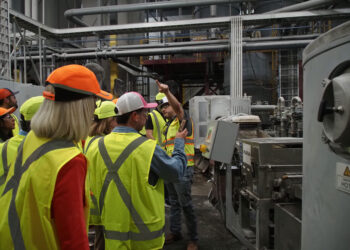
Perhaps the most important thing to publicize is that ours is an industry where there is no substitute for genuine hard work. I don’t mean any kind of hard work – I mean large labor pools performing the hard work of unloading trucks, sorting through old electronics and routing material through a complex operation to meet customer requirements. I am also talking about building and maintaining a sophisticated back office operation that handles sales, marketing, logistics, finance, IT, environmental health and safety, and compliance.
These things must be done while satisfying increasingly complex compliance requirements, fulfilling our obligation to protect the environment, and, oh yeah, turning a profit. All of those processes involve costs that the outside world doesn’t always recognize. If we hope to accomplish everything outlined above, we must communicate our purpose, value and business model to all relevant stakeholders. As an industry, we must be our own greatest advocates.
That communication means engaging organizations responsible for industry certifications that have begun to stray from their original intents. I am a firm believer in the concept of industry certifications and am hopeful that increased participation from industry stakeholders will bring about sensible modifications. Active dialogue and responsible sharing of information will be essential in helping to bring those certifications back in line with their founding intents.
Unfortunately, many upstream clients and suppliers don’t have the bandwidth or institutional knowledge to understand what all of this means. This lack of awareness means they tend to rubber stamp whatever the certification organizations think make sense. Those upstream partners are another key constituency to whom the challenges and realities of our industry must be relayed.
The communication required to advance our sector also extends to politicians and public servants. Our industry rates highly in entrepreneurialism and sustainability – two attributes highly valued by government officials. We have a duty to emphasize to policymakers that free and fair trade is an absolute requirement for the continued health and development of our economically valuable businesses. Concerted efforts from the U.S. government to ensure the unencumbered flow of working electronics and compliant electronic scrap commodities are essential to the future of our industry.
“The entrepreneurial spirit is alive and well in this industry.”
Global pricing pressure as a result of trade disputes with China and other nations are forcing companies to look for or develop alternative methods to process material. While the development of domestic processing capacity for many of these commodities will eventually benefit our industry and the U.S. economy, companies will incur significant costs to build the new facilities required to handle these materials. In the interim, we will see output commodities worth less than anything we’ve grown accustomed to over the last 15 years. Maintaining international outlets for material while simultaneously encouraging the development of additional domestic processes and capacity is crucial to companies engaged in asset recovery and recycling.
In the midst of these other changes, many of us are also dealing with the side effects of a strong economy. One in particular is the tight labor market and the associated increase in payroll costs. As mentioned, ours is an especially labor-intensive industry. And, with such valuable equipment and commodities flowing through our facilities every day, finding trustworthy employees is of the utmost importance.
At Regency, we are proud to employ a lot of great people and believe that it is a good thing for both our business and the industry as a whole. However, that headcount dictates that we build these increased costs into our business model in order to continue delivering our service at a high level. Effectively communicating the link between these added labor costs and the services we offer to our clients is crucial if we hope to recoup those added expenses in the form of higher service revenue.
We’re still young and adaptable
Clearly, there are a great number of challenges facing the electronics recycling and IT asset recovery industry. Fortunately, the business is still in its relative infancy. That youth is perhaps one of our greatest strengths. With so little history, there is nothing sacred that can’t be changed in response to new difficulties; there are no sacred cows.
Frankly, that’s one of the reasons that I am still energized every day. There is still so far to go. We have companies trying to improve technologies to recover everything from lithium to rare earth elements to precious metals. Robotics will likely soon be a common sight at any recycling facility. GPS technology allows us to track trucks carrying sensitive or valuable material in real-time. Companies are building dedicated and customizable enterprise resource planning (ERP) systems tailored to our growing industry. The right to repair and resell is here and not going away. And, most importantly, the entrepreneurial spirit is alive and well in this industry.
I have spoken to many other industry participants who share these same sentiments. I am sure there are countless others who feel the same that I have not yet had the pleasure to meet.
Providing the services of electronics recycling and IT asset recovery is valuable in so many ways. It’s important to make sure we are not shy about letting our clients, prospects and other stakeholders know what it takes to pull it off every day.
Jim Levine is president of Regency Technologies.
The views and opinions expressed are those of the author and do not imply endorsement by Resource Recycling, Inc. If you have a subject you wish to cover in an op-ed, please send a short proposal to news@resource-recycling.com for consideration.