






Resource Recycling
  • The Latest
  • Analysis
    • All
    • Certification Scorecard
    • Industry Announcements
    • Opinion

    Certification Scorecard — Week of March 30, 2026

    Certification scorecard – Week of March 23, 2026

    Certification Scorecard – Week of March 16, 2026

    Groups identify recovered plastics users in the Northeast

    Bale pricing for recycled plastics diverges

    Why global ITAD is stranded in the Gulf

    Why global ITAD is stranded in the Gulf

    Certification scorecard for the week of March 9, 2026

    Diversion Dynamics: Secondhand exports slow down fast fashion

    Certification scorecard for the week of March 2, 2026

    Industry announcements for January 2026

    Industry Announcements for March 2026

  • Conferences
  • Publications

    Other Topics

    Textiles
    Organics
    Packaging
    Glass
    Brand Owners

    Metals
    Technology
    Research
    Markets
    Grant Watch

    All Topics

Subscribe
No Result
View All Result
Resource Recycling
  • The Latest
  • Analysis
    • All
    • Certification Scorecard
    • Industry Announcements
    • Opinion

    Certification Scorecard — Week of March 30, 2026

    Certification scorecard – Week of March 23, 2026

    Certification Scorecard – Week of March 16, 2026

    Groups identify recovered plastics users in the Northeast

    Bale pricing for recycled plastics diverges

    Why global ITAD is stranded in the Gulf

    Why global ITAD is stranded in the Gulf

    Certification scorecard for the week of March 9, 2026

    Diversion Dynamics: Secondhand exports slow down fast fashion

    Certification scorecard for the week of March 2, 2026

    Industry announcements for January 2026

    Industry Announcements for March 2026

  • Conferences
  • Publications

    Other Topics

    Textiles
    Organics
    Packaging
    Glass
    Brand Owners

    Metals
    Technology
    Research
    Markets
    Grant Watch

    All Topics

Subscribe
No Result
View All Result
Resource Recycling
No Result
View All Result
Home E-Scrap

Repair rift continues among Basel stakeholders

Colin StaubbyColin Staub
May 16, 2019
in E-Scrap
Repair rift continues among Basel stakeholders

Photo Caption

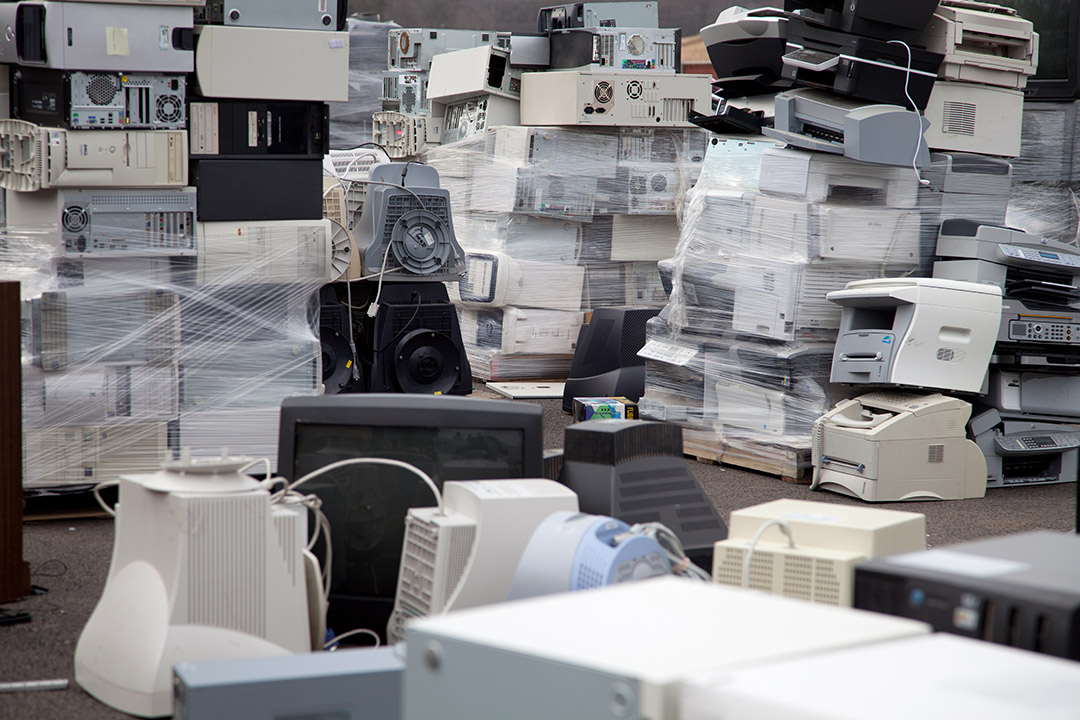
Final adoption of key international guidelines for e-scrap exports was once again punted as debate drags on over the definition of “repairable” devices.

The Basel Convention on the Control of Transboundary Movements of Hazardous Wastes and Their Disposal, which went into effect in 1992 and is supported by the United Nations, is an international pact that has the goal of limiting trade in hazardous wastes, especially between developed and developing countries. The United States has signed but not ratified the agreement, meaning it did not have a vote in last week’s discussions.

Basel countries have been deliberating since at least 2015 on technical guidelines to help countries that are party to the convention set their own national policies on e-scrap imports and exports. During the biannual Basel meeting of parties, which brings together all 187 countries, the guidelines were passed on an interim basis in the past two conferences (2015 and 2017).

Once again, during the 2019 conference held April 29 through March 10 in Geneva, Switzerland, the Basel countries “adopted, on an interim basis, the e-waste technical guidelines, which have been ‘in the works’ for some years now,” wrote the International Institute for Sustainable Development (IISD) Reporting Services division, an independent organization that provided detailed summaries of Basel conference activities.

“This was a compromise reached in order to allow time for the guidelines to be amended to ensure no loopholes remain,” the organization continued.

The guidelines were not finalized because of a key sticking point, one that has come up multiple times over the years: the language for what constitutes a repairable device, and how those devices are treated.

“The longstanding complaint from some developing countries is that it is easy for entities in developed countries to designate end-of-life products as repairable and ship them to developing countries,” where they immediately become waste, IISD wrote.

The Basel e-waste guidelines adopted on an interim basis include a section stating that devices will not be considered waste (and therefore won’t come under the purview of Basel controls) if they are destined for “failure analysis, or for repair or refurbishment with the intention of reuse … ” or several other scenarios. There are several steps shippers must take to prove the device falls into that category. But this section of the guidelines has raised significant concern among some Basel party countries, as well as environmental advocacy organizations.

The Basel Action Network (BAN), a watchdog organization focused on e-scrap exports, has long opposed the language surrounding repairable devices. In a release, BAN wrote that the exemption “would allow traders that claim their exports were for repair to avoid the trade controls of the Convention, which normally calls for countries to be notified before receiving such wastes and provides them with the right of refusal.”

However, proponents of a looser definition of repairable devices say overly strict language could deter refurbishment and reuse, and send repairable devices to disposal. For instance, the U.S. commented on the guidelines during a 2017 deliberation period.

“Guidelines that consider reusable goods as wastes could significantly impede trade in used equipment legitimately sent for repair or refurbishment by subjecting such trade to unnecessary procedures,” U.S. officials wrote.

BAN has issued an alternative set of guidelines, which are far more stringent about what constitutes a working device. Under BAN’s proposal, if a device is not “fully functional” and if any part of it is destined for disposal or recycling, the device is considered waste and falls under Basel controls.

According to a draft of the agreement voted on at the recent conference, the Basel parties acknowledge the need to address concerns “on the distinction between waste and non-waste to advance the work towards the finalization of the guidelines.”

In the meantime, according to the draft approval, party countries are invited to use the interim guidelines on a pilot basis.

In its summary of next steps, IISD included an “attempt to resolve long-standing impasses in the e-waste guidelines” as a significant priority for the group prior to the next gathering in two years.

Photo copyright ©BRSMEAS

 

Tags: Industry GroupsPolicy NowTrade & Tariffs
TweetShare
Colin Staub

Colin Staub

Colin Staub was a reporter and associate editor at Resource Recycling until August 2025.

Related Posts

Women in Circularity: Lisa Puckett

Women in Circularity: Lisa Puckett

byMaryEllen Etienne
March 30, 2026

In this series, we spotlight women moving us toward a circular economy. Today, we meet Lisa Puckett of BayArea Compliance.

Quebec PRO reflects on first year of packaging EPR

byAntoinette Smith
March 30, 2026

The province's all-packaging collection approach has simplified messaging while providing lessons for the PRO as well as for industry.

New Providence carts underpin recycling campaign

New Providence carts underpin recycling campaign

byBrian Clark Howard
March 23, 2026

With grant assistance, the Rhode Island capital is providing about 55,000 new collection carts to help boost its recycling rate,...

Australia battery recycling sector could reach A$6.9bn by 2050

Australia battery recycling sector could reach A$6.9bn by 2050

byScott Snowden
March 20, 2026

The country's battery recycling industry already contributes A$2.1 billion today, according to a new industry-funded report that calls for extended...

Why global ITAD is stranded in the Gulf

Why global ITAD is stranded in the Gulf

byDavid Daoud
March 16, 2026

As the war in Iran scrambles Middle East trade routes, Dubai’s carefully built role as a command center for global...

War-driven fuel costs compound recycling woes

War-driven fuel costs compound recycling woes

byAntoinette Smith
March 16, 2026

US and Israeli strikes in Iran and the subsequent blockade of the Strait of Hormuz have pushed diesel fuel prices...

Load More
Next Post

Basel changes may further disrupt e-plastic movement

More Posts

Quebec PRO reflects on first year of packaging EPR

March 30, 2026
Belgian and Flemish flags fly against a backdrop of an ocean beach

PureCycle receives €40m EU grant for new plant

March 26, 2026
#ESC2025 Speaker Spotlight: Matthew Young

From bootstrap to boom: EVR poised for growth after capital injection

March 26, 2026
Unilever shifting focus to flexibles targets

Unilever shifting focus to flexibles targets

March 23, 2026

Report pegs fire losses at $2.5b in US and Canada recycling industry

March 27, 2026
L-R: Koichiro Nishimura, CEO of ERI Japan and Manager, ITOCHU; John Shegerian, Chairman & CEO of ERI; and Daisuke Inoue, Deputy General Manager, ITOCHU, celebrate the announcement of ERI Japan.

ERI enters Japan through joint venture with Itochu

March 24, 2026
Groups identify recovered plastics users in the Northeast

Bale pricing for recycled plastics diverges

March 17, 2026
Auto Draft

Ball Corp. US recycled aluminum content drops

March 26, 2026

ReElement, Mitsubishi partner on rare earth supply chains

March 31, 2026
Envela reports stronger Q3 ITAD revenues

Top 5 reasons for the rise of US e-scrap recycling

March 23, 2026
Load More

About & Publications

About Us

Staff

Archive

Magazine

Work With Us

Advertise
Jobs
Contact
Terms and Privacy

Newsletter

Get the latest recycling news and analysis delivered to your inbox every week. Stay ahead on industry trends, policy updates, and insights from programs, processors, and innovators.

Subscribe

Welcome Back!

Login to your account below

Forgotten Password?

Retrieve your password

Please enter your username or email address to reset your password.

Log In

Add New Playlist

No Result
View All Result
  • The Latest
  • Analysis
  • Recycling
  • E-Scrap
  • Plastics
  • Policy Now
  • Conferences
    • E-Scrap Conference
    • Plastics Recycling Conference
    • Resource Recycling Conference
    • Textiles Recovery Summit
  • Magazine
  • About Us
  • Advertise
  • Archive
  • Jobs
  • Staff
Subscribe
This website uses cookies. By continuing to use this website you are giving consent to cookies being used. Visit our Privacy and Cookie Policy.