













Resource Recycling
  • The Latest
  • Analysis
    • All
    • Certification Scorecard
    • Industry Announcements
    • Opinion
    The electronics recycling industry is undergoing a transformation from labor-intensive manual operations to highly automated, AI-driven facilities that use advanced robotics, cleaner chemistry and digital tracking systems to extract critical materials.

    The cyber-physical MRF: AI and robotics reshape e-waste recovery

    Certification scorecard for the week of Feb. 9, 2026

    Meta-Corning deal signals IT hardware retirement wave

    Meta-Corning deal signals IT hardware retirement wave

    Malaysia clamps down on illegal e-waste imports amid probes

    Malaysia clamps down on illegal e-waste imports amid probes

    URT builds alliance to remake electronics plastics at scale

    ICYMI: Top 5 e-scrap stories from January 2026

    The electronics recycling industry is undergoing a transformation from labor-intensive manual operations to highly automated, AI-driven facilities that use advanced robotics, cleaner chemistry and digital tracking systems to extract critical materials.

    Certification scorecard for the week of Feb. 2, 2026

    Auditors warn EU may fall short on critical metals

    Auditors warn EU may fall short on critical metals

    Industry announcements for January 2026

    Industry announcements for February 2026

    ICYMI: Top 5 recycling stories from January 2026

  • Conferences
  • Publications

    Other Topics

    Textiles
    Organics
    Packaging
    Glass
    Brand Owners

    Metals
    Technology
    Research
    Markets
    Grant Watch

    All Topics

Subscribe
No Result
View All Result
Resource Recycling
  • The Latest
  • Analysis
    • All
    • Certification Scorecard
    • Industry Announcements
    • Opinion
    The electronics recycling industry is undergoing a transformation from labor-intensive manual operations to highly automated, AI-driven facilities that use advanced robotics, cleaner chemistry and digital tracking systems to extract critical materials.

    The cyber-physical MRF: AI and robotics reshape e-waste recovery

    Certification scorecard for the week of Feb. 9, 2026

    Meta-Corning deal signals IT hardware retirement wave

    Meta-Corning deal signals IT hardware retirement wave

    Malaysia clamps down on illegal e-waste imports amid probes

    Malaysia clamps down on illegal e-waste imports amid probes

    URT builds alliance to remake electronics plastics at scale

    ICYMI: Top 5 e-scrap stories from January 2026

    The electronics recycling industry is undergoing a transformation from labor-intensive manual operations to highly automated, AI-driven facilities that use advanced robotics, cleaner chemistry and digital tracking systems to extract critical materials.

    Certification scorecard for the week of Feb. 2, 2026

    Auditors warn EU may fall short on critical metals

    Auditors warn EU may fall short on critical metals

    Industry announcements for January 2026

    Industry announcements for February 2026

    ICYMI: Top 5 recycling stories from January 2026

  • Conferences
  • Publications

    Other Topics

    Textiles
    Organics
    Packaging
    Glass
    Brand Owners

    Metals
    Technology
    Research
    Markets
    Grant Watch

    All Topics

Subscribe
No Result
View All Result
Resource Recycling
No Result
View All Result
Home E-Scrap

Kuusakoski announces shifts in CRT glass plans

Bobby ElliottbyBobby Elliott
July 27, 2017
in E-Scrap
CRTs

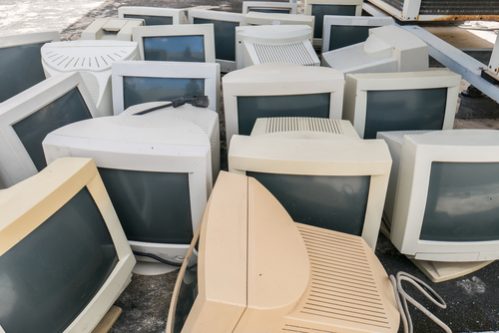
Kuusakoski U.S. will begin sending small amounts of leaded CRT glass to a smelter while utilizing non-leaded glass in an ongoing landfill construction project.

The company, which has relied on treating and storing crushed CRT glass on the site of a landfill in Illinois since 2015, announced the new initiatives in a press release last week. Kuusakoski U.S. is the American wing of the Finnish metals company Kuusakoski Recycling.

While it will not signal the end of Kuusakoski’s storage operation, which has been the subject of fierce debate within the e-scrap industry, it will reduce use of that option.

According to Rich Hipp, Kuusakoski’s CEO, all non-leaded panel glass will now be used in the construction of landfill gas extraction wells and wells that recirculate leachates, which are fluids that percolate through trash and collect at landfills. Kuusakoski’s customers will decide how leaded funnel glass is handled by the firm, he said.

Some leaded glass will continue to be treated and stored as part of Kuusakoski’s longstanding partnership with the Peoria Disposal Company (PDC), Hipp said. But some will also be sent to an unidentified North American smelter.

“Currently, the agreement is limited to two truckloads of glass per month. We are hopeful this will change and open up over time,” Hipp said.

There are not many North American smelters willing to take CRT glass, part of the reason Kuusakoski began its storage operation in the first place.

Missouri-based Doe Run is the only smelter in the U.S. known to accept CRT glass, while Glencore and Teck Resources in Canada also handle the material.

Kuusakoski’s storage concept, which was unveiled in 2015 to replace its use of treated CRT glass as alternative daily cover at landfills, has been controversial. Kuusakoski has argued that the material can be retrieved in the future for recycling, but critics, including the Institute of Scrap Recycling Industries, have argued that it’s a form of landfilling and undermines years of investment in recycling opportunities for CRT glass.

The new CRT glass pathways for leaded and non-leaded glass were made possible by the addition of a CRT separation process at Kuusakoski’s glass facility in Peoria, Ill. Previously, the firm crushed whole CRTs, treating and storing mixed glass at PDC’s nearby Indian Creek Landfill.

According to Hipp, separated panel glass will be used as an aggregate substitute in wells at the PDC site. Illinois EPA and the County of Tazewell recently approved of the project and PDC’s landfill is expected to have ongoing demand for the construction of new wells.

“It assures there is a demand and home for this recycled material,” Hipp said.

 

Tags: CRTsProcessors

TweetShare
Bobby Elliott

Bobby Elliott

Bobby Elliott worked with Resource Recycling, Inc. from 2013 to 2021.

Related Posts

Focus on recycling film, flexibles takes shape in two reports

byAntoinette Smith
February 13, 2026

The US Plastics Pact and the Alliance to End Plastic Waste released reports outlining necessary steps to improving recycling outcomes...

Certification scorecard for the week of Feb. 9, 2026

byEditorial Staff
February 11, 2026

The following facilities achieved, renewed or otherwise regained certifications recently.

Kentucky’s Global Polymers expanding, moving to Indiana

byAntoinette Smith
February 6, 2026

The polypropylene recycler will invest $8.5 million to fit an existing facility in Charlestown, across the Ohio River from its...

Greenchip launches fund for community impact and trust

byScott Snowden
February 5, 2026

The Greenchip Legacy Foundation formalizing the company's community work while reinforcing its 2026 focus on domestic processing, compliance and transparency...

Cirba Solutions: Battery fires stoking EPR bill movement

byStefanie Valentic
February 2, 2026

As batteries appear in everything from light-up shoes to electric vehicles, new EPR laws are reshaping recycling requirements.

From CES to the shredder: What 2026 PCs mean for ITAD

byDavid Daoud
January 15, 2026

Some of the most operationally relevant CES 2026 announcements for the e-scrap sector focused less on peak performance and more...

Load More
Next Post
WRAP: Tackle data security to increase device recovery

WRAP: Tackle data security to increase device recovery

More Posts

Oregon’s Recycling Modernization Act faces injunction

Court partially blocks Oregon EPR law, dismisses bulk of lawsuit

February 10, 2026
Chinese processing group details goals for US visit

AMP lays out vision of next-generation, AI-driven MRFs

July 24, 2024
Malaysia clamps down on illegal e-waste imports amid probes

Malaysia clamps down on illegal e-waste imports amid probes

February 6, 2026

REUSE Act heads to US House for consideration

February 9, 2026

ecoATM recycled 7.5M phones in 2025 as payouts hit $1.5B

February 10, 2026
Meta-Corning deal signals IT hardware retirement wave

Meta-Corning deal signals IT hardware retirement wave

February 9, 2026

APR, industry create proactive guidance for PET caps

February 12, 2026
Texas sues over dumped wind turbine blades

Texas sues over dumped wind turbine blades

February 10, 2026

Alpek talks PET overcapacity, soft demand

February 11, 2026
The electronics recycling industry is undergoing a transformation from labor-intensive manual operations to highly automated, AI-driven facilities that use advanced robotics, cleaner chemistry and digital tracking systems to extract critical materials.

The cyber-physical MRF: AI and robotics reshape e-waste recovery

February 12, 2026
Load More

About & Publications

About Us

Staff

Archive

Magazine

Work With Us

Advertise
Jobs
Contact
Terms and Privacy

Newsletter

Get the latest recycling news and analysis delivered to your inbox every week. Stay ahead on industry trends, policy updates, and insights from programs, processors, and innovators.

Subscribe

Welcome Back!

Login to your account below

Forgotten Password?

Retrieve your password

Please enter your username or email address to reset your password.

Log In

Add New Playlist

No Result
View All Result
  • The Latest
  • Analysis
  • Recycling
  • E-Scrap
  • Plastics
  • Policy Now
  • Conferences
    • E-Scrap Conference
    • Plastics Recycling Conference
    • Resource Recycling Conference
    • Textiles Recovery Summit
  • Magazine
  • About Us
  • Advertise
  • Archive
  • Jobs
  • Staff
Subscribe
This website uses cookies. By continuing to use this website you are giving consent to cookies being used. Visit our Privacy and Cookie Policy.