




Resource Recycling
  • The Latest
  • Analysis
    • All
    • Certification Scorecard
    • Industry Announcements
    • Opinion
    Following petition, Microsoft extends Windows 10 support

    Windows AI Recall is pushing data destruction upstream

    Certification Scorecard — Week of April 27, 2026

    Five trends shaping PCR packaging to 2031

    Intel sign on company building with blue sky and trees.

    Intel boosts margins by selling what it used to scrap

    Our top stories from April 2022

    Peters-Michaud named CEO, Houghton chair of Sage Sustainable Electronics

    Closeup of a printed circuitboard

    Can modular metals recovery challenge the smelter model?

  • Conferences
    • Resource Recycling Conference
    • Plastics Recycling Conference
    • E-Scrap: The Longevity Conference
    • Textiles Recovery Summit
  • Publications
    • E-Scrap News
    • Plastics Recycling Update
    • Policy Now
    • Resource Recycling
    • Other Topics
      • Brand Owners
      • Critical Minerals
      • Glass
      • Grant Watch
      • Markets
      • Organics
      • Packaging
      • Research
      • Technology
      • Textiles
      • All Topics
Subscribe
No Result
View All Result
Resource Recycling
  • The Latest
  • Analysis
    • All
    • Certification Scorecard
    • Industry Announcements
    • Opinion
    Following petition, Microsoft extends Windows 10 support

    Windows AI Recall is pushing data destruction upstream

    Certification Scorecard — Week of April 27, 2026

    Five trends shaping PCR packaging to 2031

    Intel sign on company building with blue sky and trees.

    Intel boosts margins by selling what it used to scrap

    Our top stories from April 2022

    Peters-Michaud named CEO, Houghton chair of Sage Sustainable Electronics

    Closeup of a printed circuitboard

    Can modular metals recovery challenge the smelter model?

  • Conferences
    • Resource Recycling Conference
    • Plastics Recycling Conference
    • E-Scrap: The Longevity Conference
    • Textiles Recovery Summit
  • Publications
    • E-Scrap News
    • Plastics Recycling Update
    • Policy Now
    • Resource Recycling
    • Other Topics
      • Brand Owners
      • Critical Minerals
      • Glass
      • Grant Watch
      • Markets
      • Organics
      • Packaging
      • Research
      • Technology
      • Textiles
      • All Topics
Subscribe
No Result
View All Result
Resource Recycling
No Result
View All Result
Home Analysis Opinion

In My Opinion: My family’s culture of clothing reuse

byAnanya Chandra
June 15, 2021
in Opinion

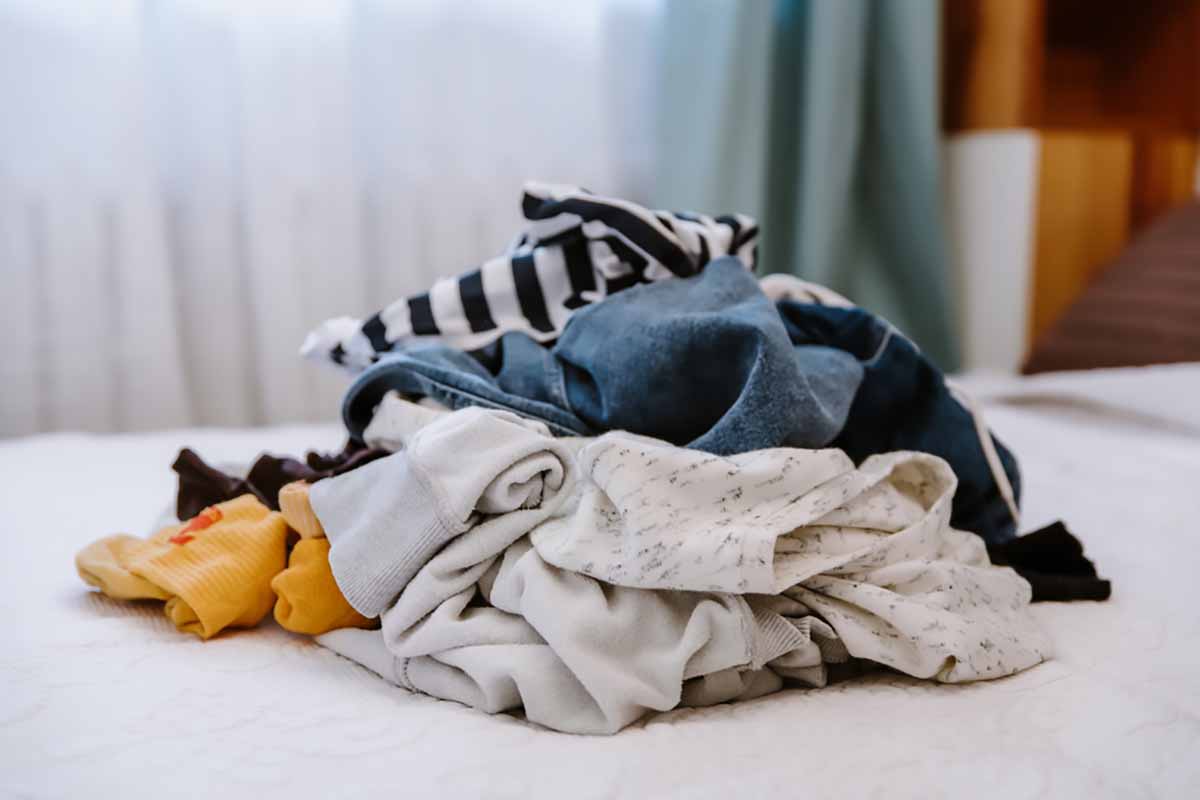
No longer my size and too short for my little sister, the polka-dotted yellow dress makes its way to the purple suitcase in our basement. Now half full, the suitcase is piled with dresses, tops, pants, and skirts, like a cargo ship being loaded at the docks. The purple suitcase is full of stories: the white button-up I wore to every single band concert in middle school, the poofy red dress my sister wore to her first birthday party at Chuck E. Cheese, the blue-striped pajama pants I lived in for a full week after my first break. The list goes on.

When the suitcase is stuffed with clothes and memories, it gets shipped to India, where my cousins give them a second (or sometimes third) life, and repeat the cycle with their extended family, and so on, across an ocean and through the generations of our extended family.

Eventually, once a piece of clothing has surpassed its wearable life-cycle, it becomes a rag or a pocha for cleaning. In our culture, there is no “throwing away,” you simply use until you no longer can.

Shared clothing, shares experiences

Ananya Chandra
Ananya Chandra

Every so often, someone in our WhatsApp family group chat shares photos, and I recognize a top or a skirt and smile to myself. Last year, I remember my aunt sharing a clip of my little cousin doing a school presentation on the circulatory system and, sure enough, there she was in a familiar white button-up. I wondered whether she was as nervous as I was when I last wore that top, performing in front of a crowd. I wondered whom the button-up would go to next, what they’ll be feeling and experiencing when they wear it, and what stories this white button-up would go on to experience.

As a second-generation American with no family here in the states, keeping close connections with my extended family can be difficult. The distance, in combination with language barriers, serve as obstacles but also as motivation to find new ways to bond. By passing clothing down, ordinary pieces turn into shared experiences, linking us together from opposite sides of the world. My family’s culture of hand-me-downs is just one example of how sustainability is woven into the fabric of our customs and upbringing. Sustainability is more than carrying around a tote bag with a reusable bottle. It’s about the impact of our everyday lifestyle choices.

The COVID-19 pandemic has revealed to us just how fragile our earth system is and how interconnected we are to one another and to our environment. As we recover from the damage inflicted by 2021 and shift our focus to other crises, including climate change, it is crucial that we think critically about our role as consumers and our impact on the planet.

Hyper-consumerism is embedded in U.S. culture, making it ever more important for the fashion industry to employ aggressive and innovative strategies to mitigate their impacts on the environment.

Environmental cost of fast fashion

The textile industry is one of the most emissions-costly sectors in the global economy. The fashion sector alone was responsible for about 2.1 billion metric tons of greenhouse gas (GHG) emissions in 2018, about 4% of the global total. To put this in perspective, the industry’s GHG emissions are roughly equivalent to those of the entire economies of France, Germany, and the United Kingdom combined. This volume of emissions, in combination with the quantity of non-biodegradable synthetic fibers being generated due to the popularization of fast fashion trends, has caused mountains of clothing to pile up in landfills. Fast fashion, clothing that is produced inexpensively by mass-market retailers in response to fickle mainstream trends, has increased the demands of the textile market; the average consumer today purchases 60% more clothing compared with 2000, but each garment is only kept half as long.

We are purchasing much more than we are capable of using, and the rate at which we are disposing of unwanted clothing is increasing alarmingly. In fact, three-quarters of all non-biodegradable fabrics end up in landfills or incineration plants, as there is no plausible way to recycle them. Hyper-consumerism is embedded in U.S. culture, making it ever more important for the fashion industry to employ aggressive and innovative strategies to mitigate their impacts on the environment.

We consumers must also look introspectively and strategize how to collectively use our individual power to our advantage. Rather than contributing to the growing problem of climate change, we can shop ethically – researching where and how brands source their textiles – and purchase pieces that have a longer lifespan, stretching across multiple generations. This can also be done through shopping and donating clothes at thrift and consignment stores, which keeps them out of landfills for longer.

Many social media influencers are making strides in this shift toward sustainability. Individuals such as Aditi Mayer, Green Girl Leah, and Diandra Marizet center their environmentalism and advocacy around intersectionalism, examining the nexus of environmental issues and the BIPOC (Black, Indigenous, and People of Color) experience. Many of these influencers also look at sustainability from the lens of consumerism; people like Levi Hildebrand break down sustainability measures made by major brands and The Consistency Project curates and repurposes clothing into unique second-hand pieces. These are just a few examples of some exemplary voices weaving the path toward a clean and equitable future, but you, too, can join the movement.

Together, we can beat the second-hand stigma, one purple suitcase at a time.

Ananya Chandra is a student of environment, sustainability and policy at the Renée Crown University Honors Program at ​Syracuse University. Chandra participated in the Young Voices of Science program through the Hubbard Brook Research Foundation.


 

TweetShare
Ananya Chandra

Ananya Chandra

Related Posts

GFL boasts record Q1 margin

byStefanie Valentic
April 30, 2026

The hauler also raised full-year guidance by CA$90m as it eyes an H2 close on its acquisition of SECURE Waste...

WM: Upgrades temporarily slow tons recovered

WM Q1 volumes rise despite headwinds

byStefanie Valentic
April 30, 2026

WM posted Q1 2026 revenue of $6.23 billion and free cash flow of $920 million as recycling automation and renewable...

Following petition, Microsoft extends Windows 10 support

Windows AI Recall is pushing data destruction upstream

byDavid Daoud
April 30, 2026

Here's what the ITAD industry needs to know.

Certification Scorecard — Week of April 27, 2026

byEditorial Staff
April 29, 2026

The following facilities have achieved, renewed or otherwise regained industry certifications.

Five trends shaping PCR packaging to 2031

bySmithers editorial
April 29, 2026

Growing steadily but falling short of legislative demands, the global market for PCR plastic packaging is at a crossroads.

Disney princesses Anna and Elsa

Disney, toy manufacturers look to reduce plastic packaging

byKeith Loria
April 29, 2026

Many consumers say they are on board with a push to use less plastic in packaging.

Load More
Next Post

How the recycling industry is preparing to tackle solar panels

More Posts

What Netflix’s ‘Plastic Detox’ gets wrong – and right

April 23, 2026
EPR fees are a market signal. Here’s what they’re telling you.

Oregon DEQ flags 250 producers for RMA noncompliance

April 21, 2026
Birch Plastics gets FDA green-light for post-industrial PP

LyondellBasell upgrade to PreZero assets on hold

April 23, 2026
Intel sign on company building with blue sky and trees.

Intel boosts margins by selling what it used to scrap

April 29, 2026

PCA keeping focus on virgin fiber products

April 27, 2026
Dow touts US PE advantage amid Iran war

Dow touts US PE advantage amid Iran war

April 24, 2026
Intel sign outside of company building.

What Intel’s blockbuster quarter means for ITAD

April 27, 2026
Float-sink technology at the Quantum Lifecycle Partners facility in Toronto, Canada enables the processing of e-plastics.

E-plastics recovery line opens in Canada

April 28, 2026
AT&T, Compudopt expand e-recycling program

AT&T, Compudopt expand e-recycling program

April 23, 2026
The independent ITAD at a crossroads

The independent ITAD at a crossroads

April 22, 2026
Load More

About & Publications

About Us

Staff

Archive

Magazine

Work With Us

Advertise
Jobs
Contact
Terms and Privacy

Newsletter

Get the latest recycling news and analysis delivered to your inbox every week. Stay ahead on industry trends, policy updates, and insights from programs, processors, and innovators.

Subscribe

Welcome Back!

Login to your account below

Forgotten Password?

Retrieve your password

Please enter your username or email address to reset your password.

Log In

Add New Playlist

No Result
View All Result
  • The Latest
  • Analysis
  • Recycling
  • E-Scrap
  • Plastics
  • Policy Now
  • Conferences
    • E-Scrap Conference
    • Plastics Recycling Conference
    • Resource Recycling Conference
    • Textiles Recovery Summit
  • Magazine
  • About Us
  • Advertise
  • Archive
  • Jobs
  • Staff
Subscribe
This website uses cookies. By continuing to use this website you are giving consent to cookies being used. Visit our Privacy and Cookie Policy.