






Resource Recycling
  • The Latest
  • Podcast
  • Analysis
    • All
    • Certification Scorecard
    • Industry Announcements
    • Opinion
    IT asset disposition and electronics recycling: Now and then

    Data center moratoriums cast development shadow

    Recycling tracking data is already on your truck

    Recycling tracking data is already on your truck

    A five star ranking with one under a microscope

    Certification scorecard — week of Nov. 9

    Data centers and AI combine to create ITAD ‘growth engine’

    Component shortages drive demand for data center hardware

    Ingram Micro again files to take company public

    Ingram Micro sees lifecycle services rise 35%

    Inside the Circle: Will we lose our shirts over CA textile EPR?

    Inside the Circle: Will we lose our shirts over CA textile EPR?

  • Conferences
    • Resource Recycling Conference
    • Plastics Recycling Conference
    • E-Scrap: The Longevity Conference
    • Textiles Recovery Summit
  • Publications
    • E-Scrap News
    • Plastics Recycling Update
    • Policy Now
    • Resource Recycling
    • Other Topics
      • All Topics
      • Brand Owners
      • Critical Minerals
      • Glass
      • Grant Watch / RFPs
      • Markets
      • Organics
      • Packaging
      • Research
      • Technology
      • Textiles
Subscribe
No Result
View All Result
Resource Recycling
No Result
View All Result
Home Analysis Opinion

Recycling tracking data is already on your truck

byKatie Kinnear, director of brand strategy, Routeware
November 11, 2026
in Opinion, Recycling
Recycling tracking data is already on your truck

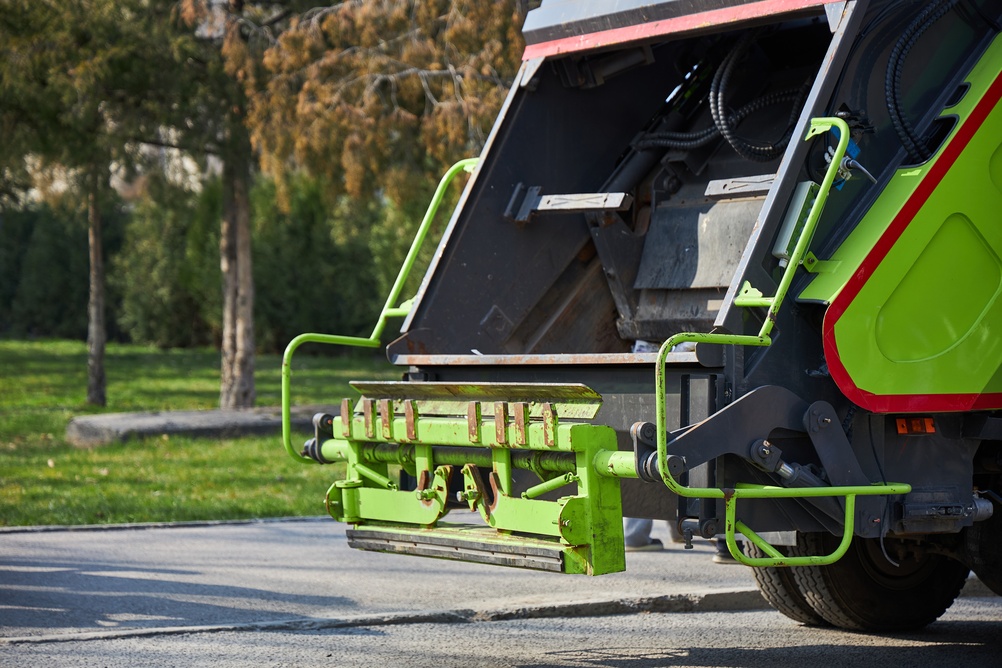
Sea_Inside_Soul / Shutterstock

For a dated recycling program, success or failure is often assessed from an autopsy.

Contamination turns up as a downgraded load at the sorting facility. Diversion surfaces in a year-end report built by hand from scale tickets. Participation becomes a question only when a grant form asks for a number nobody tracks. This information is vital, and yet it arrives after the fact, averaged across tens of thousands of households and stripped of any location data or material insights.

Meanwhile, the one part of the operation that touches every household on a fixed schedule generates a live, address-level record of exactly those things. The opportunity is on the collection truck.

Recycling tells you what already went wrong

Recycling performance is measured at two points, and both are lagging indicators. The first is the sorting facility, where inbound contamination is weighed and a load is rejected or sold at a discount.

The Recycling Partnership puts national inbound contamination near 17% by weight, and curbside programs recover only about a third of the recyclables within reach. Assessment at the sorting facility cannot tell a coordinator which neighborhoods are contaminating or whether last month’s mailer changed anything.

The second measure, the annual diversion report, is accurate to the ton but rarely includes any analysis of the materials themselves.

Here is the mismatch at the center of recycling measurement. Contamination and low participation are local and continuous. They happen one household at a time, every collection day.

The default approach is to measure them system-wide and periodically, once the material is mixed and the quarter is closed. A program cannot educate a 17% average or aim an intervention at a diversion rate, so most campaigns go out broad, land soft and get judged by a number that moved for a dozen reasons.

Every route already visits the problem

The collection truck is the only part of the system that meets the household where the behavior happens, and it does so again and again. A route passes every address several times a month, across seasons, year after year. No audit, survey or smart-bin pilot covers a service area that completely or that cheaply, because the coverage is a byproduct of a route the program already runs.

What the truck can record on each pass is recycling performance in its rawest, most local form. With AI image analysis, the cameras already mounted on many collection trucks can flag contamination as each cart is emptied and tie it to the service address, with no extra step for the driver.

Three signals carry most of the value. Set-out rates measure participation block by block, so a program sees which neighborhoods have improved or fallen off. Contamination tied to the service address turns averages into a street-by-street heat map, so outreach reaches the homes creating the problem, not every home on the route, saving time and money on resident engagement.

Tonnage by route and material shows where capture is won and lost long before it reaches an annual total. Read together, they convert recycling measurement from a number that arrives late into one that arrives in time to improve.

Put the number where someone can act on it

The bottleneck has never been capturing the data. It is connecting it to the people who act on it. After the Municipality of East Hants gave residents a self-service tool for what goes where and when, its recycling hotline calls fell 84%, the information reaching the household at the moment of the decision instead of after it. A signal that lands while it still means something is the one that changes an outcome.

The value of street-level data is not the dashboard. It is the shortened distance between noticing a problem and doing something about it. A coordinator who can see contamination cluster on a few routes can send targeted outreach to those blocks and watch the rate respond, instead of mailing the whole city and hoping.

A program that measures set-out can aim a participation push at the streets that have fallen off, instead of spreading the budget evenly. And a department that can break a diversion number down by route can show a council where the tons come from, and where the program can improve. Measurement and intervention finally sit close enough together to form an effective feedback loop.

None of this requires new trucks, new routes or a pilot. It requires treating the data the collection operation already produces as a performance instrument, and putting it in front of the people who run the recycling program.

The curb is the real scorecard

Recycling is a numbers business now, judged on diversion targets, contamination thresholds, capture rates, grant metrics and operational efficiency. The programs that do well are the ones that see those numbers early enough to bend them.

The richest and most current source of that data is not the sorting facility and not the year-end report. It is the collection truck, passing every cart, every week, and recording what it finds. The programs that learn from this data will be measuring recycling where it is decided, at the curb.


Tags: CollectionData
TweetShare
Katie Kinnear, director of brand strategy, Routeware

Katie Kinnear, director of brand strategy, Routeware

Katie Kinnear is director of brand strategy at Routeware, where she leads brand, messaging, events, and communications efforts across the company’s full product suite. A 2024 Waste360 40 Under 40 honoree, she is passionate about advancing meaningful dialogue around circular solutions, smart city technology, and the future of waste and recycling. Katie serves on the boards of the Utah Recycling Alliance and Recycle Utah, extending her commitment to sustainability beyond the workplace and into her community.

Related Posts

PET bottles for recycling

PET imports reshape US markets as demand grows

byAntoinette Smith
November 11, 2026

New NAPCOR data shows record RPET use in bottles even as US bottle recycling continues to fall.

Textile EPR needs end markets, not just collection

Textile EPR needs end markets, not just collection

byStefanie Valentic
November 10, 2026

Reju CEO Patrik Frisk said textile EPR programs will fall short unless they also create demand for recycled material.

UC Riverside expands reusable takeout program

UC Riverside expands reusable takeout program

byKeith Loria
November 6, 2026

UC Riverside has expanded its reusable takeout options, bringing national chains into the picture.

New CAA chief talks markets, industry support

New CAA chief talks markets, industry support

byAntoinette Smith
November 4, 2026

Interim CEO Jeff Meyers outlined the producer responsibility organization's strategy for navigating state EPR rollouts, building recycling markets and supporting...

California seeks input on embedded batteries

California to cut embedded battery fee cap

byStefanie Valentic
November 2, 2026

CalRecycle has logged 64,000 product line items and collected more than it expected. Recyclers say the smallest devices still don't...

NJ solar panel recycling rules face legal review

byStefanie Valentic
November 2, 2026

With no federal rule in sight, New Jersey, Washington, North Carolina and Texas are each taking a different approach to...

Load More
Next Post
PET bottles for recycling

PET imports reshape US markets as demand grows

2026 Buyers’ Guide

Equipment, services and technology suppliers serving the recycling industry.

Browse the Guide

More Posts

NexPoint Materials to shutter Alabama plastics plant

NexPoint Materials to shutter Alabama plastics plant

November 4, 2026
Blancco acquired by tech-focused investors

ITAD investors pursue capacity, services

October 30, 2026
PureCycle sees easing headwinds to R-PP adoption

PureCycle shifts focus, secures feedstock

November 5, 2026
Inside the Circle: Will we lose our shirts over CA textile EPR?

Inside the Circle: Will we lose our shirts over CA textile EPR?

November 9, 2026
Textile EPR needs end markets, not just collection

Textile EPR needs end markets, not just collection

November 10, 2026
The missing link in e-plastic recycling

The missing link in e-plastic recycling

October 28, 2026
UC Riverside expands reusable takeout program

UC Riverside expands reusable takeout program

November 6, 2026
PET bottles for recycling

PET imports reshape US markets as demand grows

November 11, 2026
New CAA chief talks markets, industry support

New CAA chief talks markets, industry support

November 4, 2026
Rhode Island bill would make brands pay for recycling

Midterms put e-scrap legislation in focus

November 6, 2026
Load More

About & Publications

About Us

Staff
Job Listings

Archive

Magazines

Work With Us

Advertise
Contact
Terms and Privacy

Newsletters

Get the latest recycling news and analysis delivered to your inbox every week. Stay ahead on industry trends, policy updates, and insights from programs, processors, and innovators.

Subscribe

Welcome Back!

Login to your account below

Forgotten Password?

Retrieve your password

Please enter your username or email address to reset your password.

Log In

Add New Playlist

No Result
View All Result
  • The Latest
  • Podcast
  • Analysis
  • Recycling
  • E-Scrap
  • Plastics
  • Policy Now
  • Conferences
    • E-Scrap Conference
    • Plastics Recycling Conference
    • Resource Recycling Conference
    • Textiles Recovery Summit
  • Magazines – Old
  • About Us
  • Advertise
  • Archive
  • Job Listings
  • Staff
Subscribe
This website uses cookies. By continuing to use this website you are giving consent to cookies being used. Visit our Privacy and Cookie Policy.