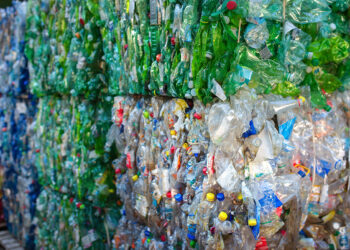




Canada’s plastic recycling sector is in a deep slump, and several producer responsibility organizations (PROs) are asking Ottawa for “more nimble tools” to help level the playing field.
“I’ve been in this business for almost 28 years and what we’re seeing right now, particularly in the PET sector, is sort of unprecedented,” Allen Langdon, CEO of Circular Materials, said on an Oct. 2 episode of Recycled Content, the podcast of the Association of Plastic Recyclers (APR). “It’s definitely the most severe downturn we’ve seen in decades.”
The collapse of RPET pricing over the past year has contributed to five recycling closures in Canada and slowdowns at other facilities, he said. Meanwhile, seven US RPET processing plants have closed, totaling 25% of capacity for Canada’s neighbor to the south.
Several federal lawmakers recently appealed to the US Trade Representative to help protect domestic RPET.
Canada lacks “nimble tools” to respond, said Elena Mantagaris, APR’s senior advisor on Canadian initiatives. The current trade remedy process doesn’t allow quick action for a sector “already facing a lot of issues and very thin margins.”
Eight provinces and one territory have adopted EPR, an expensive system built at government direction, Mantagaris said. Ignoring market conditions now threatens those policy goals. “You cannot have policy and regulation in isolation from understanding market impacts,” she said.
Circular Materials runs packaging EPR programs in Ontario, Alberta, New Brunswick, Nova Scotia and Yukon. The PRO owns the material it collects and sells the bales to offset producer fees, so low pricing hits stakeholders directly, Langdon said.
PET producers “are going to see a significant impact on the fees they pay for EPR programs,” he added.
Four asks for Ottawa
Although EPR rules were written province by province, trade, tariffs and markets are federal matters, Langdon said.
That’s why APR and Circular Materials, along with PROs Éco Entreprises Québec (EEQ), Recycle BC and SK Recycles, have formed a coalition to lobby the federal government. The four PROs represent more than 3,000 producers, alongside APR’s 300 members.
The coalition has proposed:
- A recycled-content tax credit for converters, passed through to brand owners and backed by receipts and certification, such as APR’s PCR certification program or other recognized programs.
- Clean-technology status for recycling, making it eligible for federal investment tax credits that now go largely to the energy sector.
- Tougher trade enforcement, including tariffs on dumped virgin or recycled resin and broader definitions of circumvention.
- Help de-risking novel infrastructure, especially for flexible plastics, which EPR requires PROs to collect but which lack mature recycling systems.
Carrots over mandates
Like the US, Canada has no federal minimum recycled-content requirement, though APR has backed mandatory recycled-content laws since 2006.
Langdon said, “Given everything else that’s going on, regulations is a tough place to be right now.”
As such, he favors “some sort of carrot-based approach” to keep producers moving toward recycled content while they reel from “huge economic dislocation” caused by trade fights.
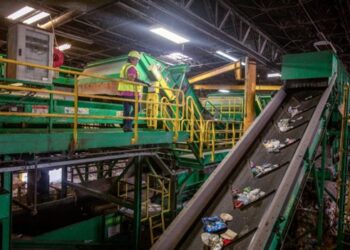
Producers face significant recovery targets “starting in 2027 in some jurisdictions,” he added. To get there, Circular Materials has issued calls for expressions of interest in sorting/recycling and AI technologies, created a tolling arrangement for flexible plastics in Alberta, and established a material access program that returns recycled material to producers.
International trade ‘Whac-A-Mole’
Circular Materials sells collected materials to the US that it can’t process domestically, but none of it is subject to US tariffs, so the effect is indirect, mainly through shifting virgin resin flows, Langdon said.
As in the US, global overproduction of PET and cheap imports have resulted in very low virgin resin prices that have pushed brand owners to retreat from voluntary recycled-content commitments.
A Canadian APR member won a ruling against PET dumping by China and Pakistan, Mantagaris said, but material is now arriving from other countries instead. She called it “a little bit of a ‘Whac-A-Mole’ situation,” driven by transshipping, or “origin washing.”
Mantagaris said the coalition’s talks with Ottawa are in early days, but she sees “a lot of receptivity” at the federal level.