



While sustainability reports usually explain environmental performance, SK tes’ 2025 Sustainability Report also offers a useful look at how a technology lifecycle services provider sees its business changing.
One theme stands out: SK tes believes data centers and artificial intelligence are changing the equipment mix it handles. The company also believes both will become more important to IT asset disposition going forward.
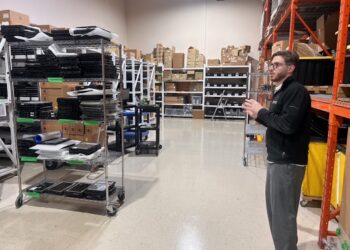
SK tes reported processing approximately 127.6 million kilograms of electronic material in 2025, down about 6% from the previous year. Of that, 100.1 million kilograms was recycled and 20.7 million kilograms was reused. The company also reports 2.59 million reused devices, down from 3.22 million in 2024.
The comparison is noteworthy. Reused units fell about 20%, while reused tonnage declined only about 3%. Reuse also increased slightly as a percentage of total material managed, from 15.64% to 16.19%. The figures are consistent with a shift toward fewer, heavier assets, but do not by themselves establish what caused it. There is another caveat: SK tes’ reused-unit figures exclude parts, accessories and peripherals. If more equipment is being harvested for reusable components instead of remarketed as complete systems, that could also contribute to a declining unit count.
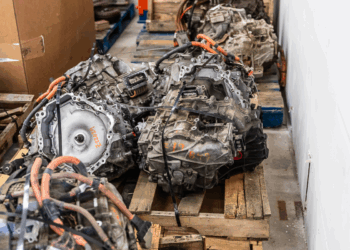
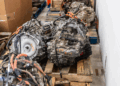
SK tes offers its own explanation. The company says a greater share of its 2025 intake consisted of servers and server components such as high-performance processors and memory. It also cites other data center hardware, describing the portfolio as weighted toward material of greater value and complexity.
AI enters the disposition cycle
The company argues that AI is contributing to shorter hardware refresh cycles. In data centers, equipment is frequently retired before reaching the end of its functional life because it no longer meets the performance requirements of evolving workloads.
The report describes a widening gap between technical obsolescence and physical lifespan. It sees an expanding role for secure decommissioning and testing. Refurbishment, component harvesting and material recovery are also part of that role.
Processors and memory modules receive particular attention, along with storage devices and networking equipment. Where full-system reuse is not viable, SK tes confirmed that these components can retain significant functional value for secondary markets or less performance-intensive applications.
The company is also aligning its organization with that view. It says its 2025 restructuring included a stronger focus on ITAD and data center services, as well as AI-related activities.
And so while the report provides an industry signal, it is not sufficient on its own to prove an industry-wide shift.
The numbers require careful reading
The report contains substantial operating data, including some results that moved in the wrong direction. For instance, energy intensity increased approximately 12% in 2025, from 0.554 to 0.623 GJ per ton processed. SK tes says a greater proportion of throughput involved energy-intensive materials and technologies, including high-performance computing and AI-related equipment.
Parts of the report’s narrative conflict with its own data tables. SK tes reports processing volume falling about 6% in 2025 and energy intensity rising about 12%. Yet elsewhere it attributes higher electricity consumption to a “substantial increase in processing volumes,” describes throughput as growing, and refers to “continued growth in processing volumes.”
Although that does not invalidate the underlying data, it does mean the report’s numerical disclosures need to be distinguished from the narrative built around them.
The same caution applies to SK tes’ discussion of AI. The report describes accelerating replacement cycles and changing hardware requirements, but it does not quantify a future data center decommissioning wave. It provides no installed-base analysis, retirement curves or future unit forecast.
The direction is SK tes’ argument. The magnitude remains an open research question.
The downstream challenge
SK tes also reports progress in waste diversion. Landfill alone declined substantially from 2,720 tons in 2024 to 154 tons in 2025, a reduction of roughly 94%. Landfill and incineration without energy recovery combined fell from 2,791 tons to 232 tons, approximately 92%. Overall reuse, recycling and recovery reached 99.82%.
But there is an important boundary issue. The company says its previous zero-waste-to-landfill goal measured performance at the first downstream tier. Its renewed ambition extends accountability toward final disposition across the downstream chain. Its measurable SIG 9 target is to commence a zero-waste-to-landfill certification program for sites in 2027.
Traceability presents a related challenge. SK tes says it is establishing its current baseline and working with partners to improve visibility through the downstream chain. The goal is to know where material ultimately ends its journey.
The company also acknowledges that the final destination of resold equipment is “not always fully visible.” SK tes judges that extending the life of those devices produces benefits that outweigh the risks associated with limited traceability. It also says it intends to close that visibility gap.
A signal, not a forecast
SK tes describes its own shift toward servers and high-performance processors, along with memory and other data center hardware. Its reuse data provides indirect support: unit count declined much more than tonnage, and it is also putting more organizational focus on ITAD, data center services and AI-related activities.
The broader questions remain unanswered: How much data center equipment will enter disposition channels, where is it coming from, when will it arrive, and what processing and remarketing capabilities will be needed? What downstream capabilities will be needed when it does?