



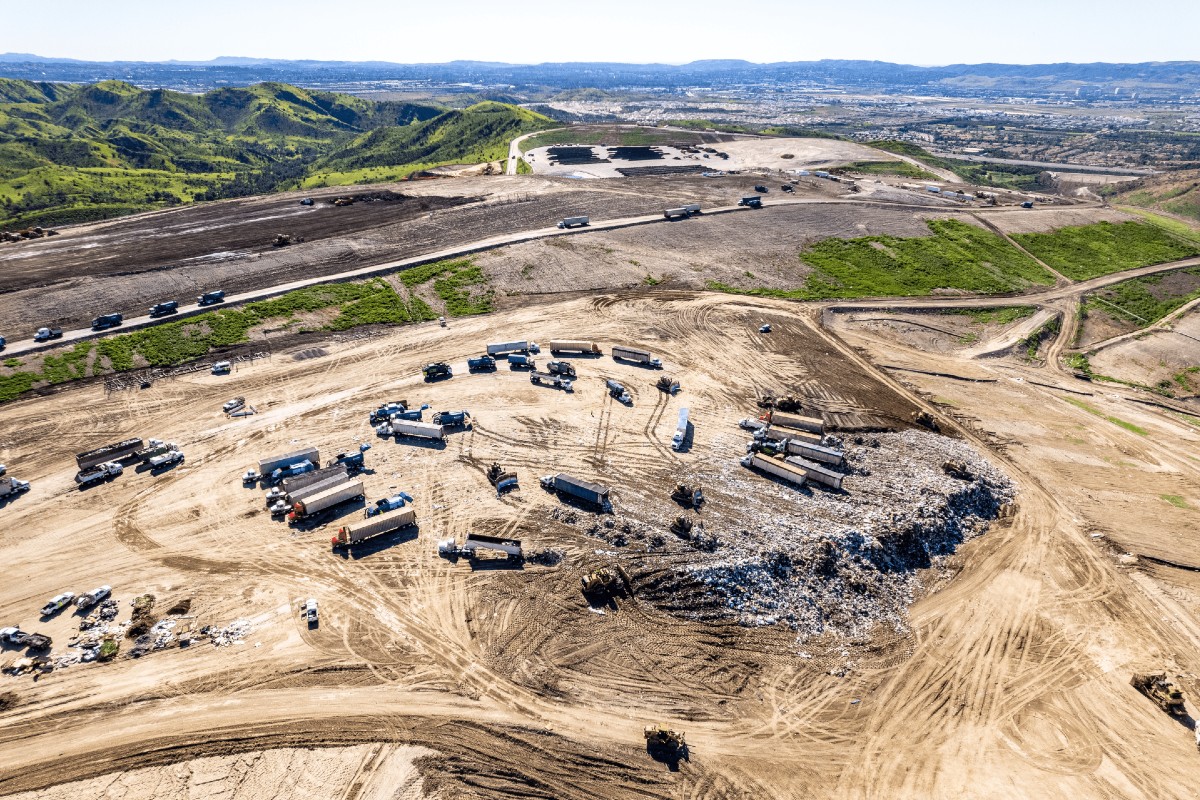
In July, landfill disposal rates in Southern California’s Orange County will increase from $43.89 to $67 per ton — a 53% hike overnight.
The following year, the rate will be $74 per ton. In year three it will be $81 per ton, and in year four it will be $81 per ton plus the Consumer Price Index (CPI) annually. This rise in landfill fees, also known as tipping fees, may eventually lead to more recycling in the county, officials say.
For facility managers, the rising tipping fees mean “higher hauling costs, tighter budgets, and more urgency to reduce landfill dependence now,” Certified Waste Solutions writes in its blog. The Orange County-based company provides a range of waste management solutions to clients in 42 states.
The county’s rate hike is the result of new Waste Infrastructure System Enterprise (WISE) Agreements, 10-year contracts between Orange County and local cities, facility operators and sanitary districts, effective July 1.
“These agreements replace the existing Waste Disposal Agreements (WDA), and support and fund the county’s waste management system, including landfill operations and long-term maintenance and sustainability of buried waste in perpetuity,” Tom Koutroulis, director at OC Waste & Recycling, told Resource Recycling.
“OC Waste & Recycling is a government enterprise fund in which it operates on a cost-recovery business model,” Koutroulis added. “As such, the rates reflect the rising costs of construction for disposal capacity, maintaining landfill operations, meeting new regulations and state recycling mandates, permitting, and increasing environmental quality standards.”
The rate adjustments were negotiated with the Orange County City Managers Association over the past year, with discussions starting in 2024. The adjustment reflects cost increases accumulated over approximately 16 years without significant rate restructuring, Koutroulis said.
Even with the increase, Orange County landfill rates remain among the lowest in California, he noted. The Golden State’s average tipping fees were $71.73 a ton in 2023, according to the Environmental Research & Education Foundation. That was higher than most neighboring states but less than the average for the Northeast ($84.44) as a region. The national average was $56.80.
Koutroulis said the landfill fee increases are not directly intended to change recycling behavior, which he says is linked to a number of complex factors, such as education, outreach, convenience and commitment.
But, he said, “in general, when landfilling costs less than recycling, there may be less financial incentive to separate recyclable materials before disposal. Conversely, when landfill tipping fees exceed recycling costs, businesses and others may be more incentivized to pursue recycling and other waste diversion options.”
Orange County has 34 cities and sanitary districts and serves 3.2 million people.
Closing a landfill
Part of the increased infrastructure costs in the county relate to the Olinda Alpha Landfill in Brea, which is nearing maximum capacity and is scheduled for closure by 2036. “The phased closure has helped extend the acceptance of solid waste at this location for as long as possible,” said Koutroulis.
“In preparation for the closure, infrastructure and improvements at the two remaining county landfills (Frank R. Bowerman in Irvine and Prima Deshecha in San Juan Capistrano) will support the long-term security and cost structure of these important essential services,” said Koutroulis.
Certified Waste Solutions wrote that “higher tipping fees don’t stay at the landfill gate.” Instead, “they flow directly into your waste hauling contracts, but how much, and how quickly, depends on your hauler. Some contracts pass through landfill cost increases directly; others build in markups or adjust on renewal cycles. Either way, facility managers should expect waste-related line items to increase 20-30% as haulers adjust their pricing to reflect the new disposal environment.”
Resource Recycling reached out to several haulers and recyclers in Orange County to discuss the impacts on their business but none would speak on the record.
Koutroulis stressed that the cost of disposal at county landfills is only one element of the total cost of waste collection that makes up a customer’s bill. Each jurisdiction “negotiates and manages their own solid waste contracts with haulers, implements local ordinances and enforces compliance based on their local needs,” he said.
“The WISE Agreement provides flexibility for each to determine how to best adjust as needed within their jurisdictions,” he said.
Koutroulis noted that the new agreement also includes an optional Organics Service Agreement, with a stable rate for residential organics recycling. The agreement offers a $67 per ton rate in year one, followed by $67 per ton plus the consumer price index (CPI) in the following years for the term of the contract.