





A trio of experts in the circularity space argued in a webinar Tuesday that reuse of consumer packaging can and should be part of extended producer responsibility (EPR) systems around the world.
“EPR is a policy approach that requires producers to take end-of-life responsibility for the product or packaging which is placed on the market,” said Isabelle Borkowski of consultancy Resource Recycling Systems, which hosted the webinar, titled “Beyond Recycling: EPR Meets Reuse.”
Seven US states currently have EPR laws for packaging (California, Colorado, Maine, Maryland, Minnesota, Oregon and Washington) and a few more including New York are considering similar laws.
In order to achieve a truly sustainable future, reuse must be an important part of the solution, said Sydney Harris, policy director at the Upstream nonprofit. “A reuse economy,” she said during the webinar, “is at the base of a circular economy.
“We do that by normalizing reuse, growing and supporting the emerging reuse service industry and ensuring a supportive policy environment for reuse.”
EPR states
Reuse currently appears in all seven state EPR packaging laws, Harris said, but the specifics vary. In addition, the bipartisan REUSE Act was introduced in the US House of Representatives in February.
“Maryland took a lot of reuse things out of their law,” she said. Oregon and Washington have grant programs to support reuse. Maine is allowing reusable packaging to be serviced through alternative collection programs, which can mean lower costs. There are also differences in how reuse is incentivized across states.
One critical incentive is that reusable packaging is assessed an EPR fee only the first time it is introduced, said Harris, so it isn’t penalized for repeat uses. That is the case in the Oregon and Minnesota laws but not Maryland, for instance. Harris said her team would also like to see clear definitions for reusable packaging.
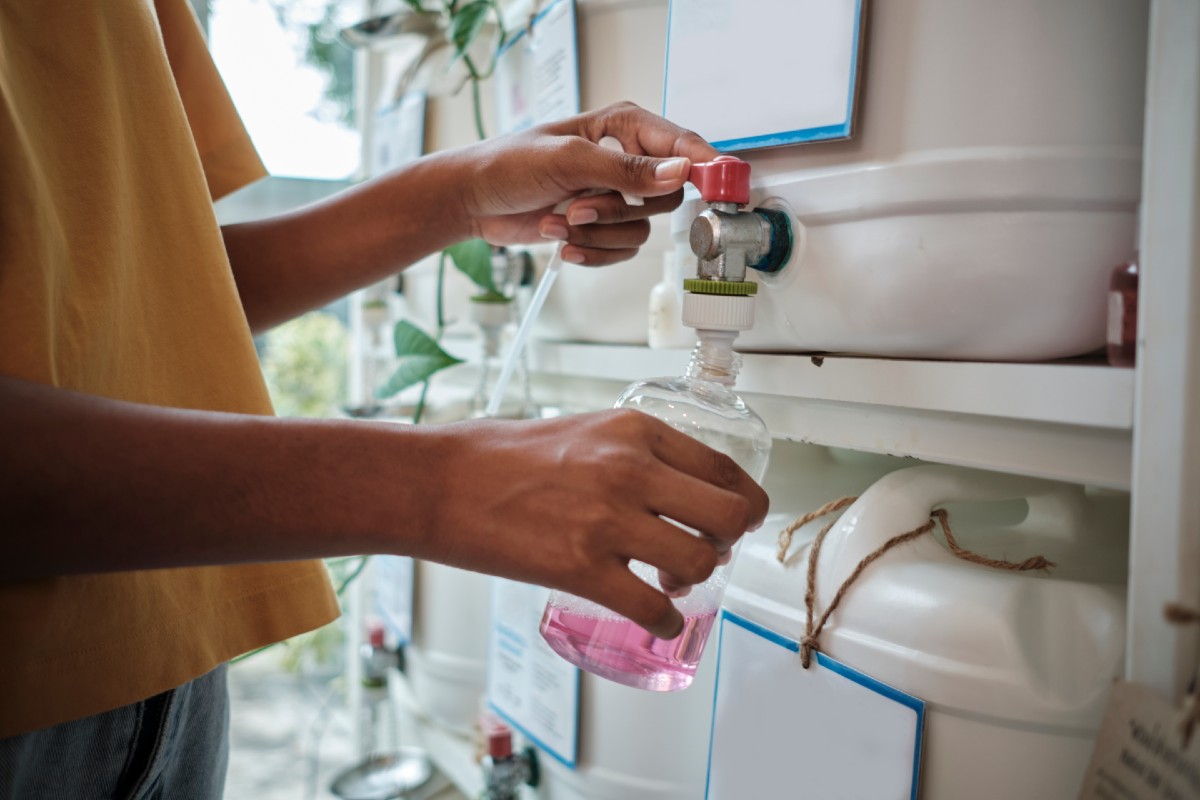
Harris added, “The real bang for the buck, environmentally and economically, is returnable packaging. We strongly encourage everyone to be thinking not just foodservice and not just refillable, but returnable packaging.” She explained that in a refillable model, the consumer owns the packaging, although that’s not the case with returnable containers.
Reusable packaging needs to be collected and washed. Locating the wash centers near MRFs can reduce their footprint and allow for easy transfer of materials back and forth, if the wrong items are tossed into a cart, for example.
Beverages “are always number one” when it comes to reuse, said Harris, although she pointed out there is great potential for reuse in personal care, food service, household supplies and even small formats.
Learnings from France
During the webinar, Valentin Fournel, director of innovation, eco-design and reuse at French producer responsibility organization (PRO) Citeo, talked about efforts to encourage reuse of packaging.
France passed a law in 2020 that mandated that 10% of packaging used there by 2027 must be reused. On the road to that goal, Citeo must dedicate 5% of its contributions to development of reuse every year (about €50 million or $59 million per year).
In addition, the European Union’s Packaging and Packaging Waste Regulation (PPWR) requires 40% reuse by 2040, with a number of exemptions, including wine, spirits, milk and more.
Fournel said €120 million ($141 million) has been spent in the last three years on some 550 experimental reuse projects in France. A lot has been learned, he said. One important result is movement toward standardization of packaging forms in the country, so there aren’t so many different forms to deal with. Another is the use of the color purple in labeling to signal that a package is reusable. Much thought is also going into collection and washing operations.
“We need to find a system that will work for everyone in the market,” said Fournel, who noted the biggest challenge remains the business model. Reusable packaging can cost more up front, causing resistance from the market. But over time costs should come down, he said, and eventually subsidies from PROs will no longer be needed.
Yet Harris said the reuse sector is growing, with “more reuse companies coming online every day” and a push toward standardization. A new reuse symbol is getting adopted. “Think of it like the chasing arrows symbol for recycling but far less fraught,” she said.
“Reuse is the future of packaging,” said Harris.