






Extended producer responsibility, or EPR, is increasingly shaping how recycling systems are funded and managed. As part of Resource Recycling’s Earth Day 2026 coverage, this explainer takes a closer look at what it means, how it works and why it matters.
In essence, EPR is a policy approach that makes companies responsible for what happens to their products after people are done using them. Instead of local governments and taxpayers paying to collect and recycle waste, those costs are shifted to the manufacturers, brand owners and importers that put the products on the market.
One of the most visible ways EPR shows up in practice is through product design. When companies are responsible for the cost of collecting and recycling their products, there is a stronger incentive to use materials that are easier to process, reduce unnecessary packaging and avoid combinations of materials that are difficult to separate. At the same time, those producer-funded systems can expand collection programs and processing capacity, helping to increase recycling rates by providing more consistent and dedicated funding.
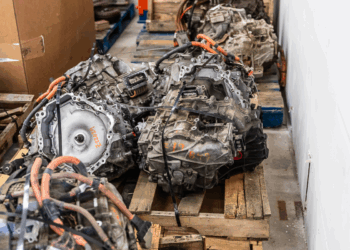
This is particularly evident in consumer products, primarily smartphones, laptop and desktop computers, televisions and even cars. At its core, it comes down to how these products are designed and developed, which directly affects whether they can be repaired, disassembled and ultimately recycled.
The past
EPR as a policy concept dates back to the early 1990s, when governments in Europe began exploring ways to shift the cost of waste management away from municipalities and onto producers. The approach was later formalized and promoted by the Organisation for Economic Co-operation and Development (OECD), which defined EPR as a strategy for extending producer responsibility to the post-consumer stage of a product’s life cycle.
Early EPR programs focused primarily on waste streams that were costly or complex to manage, including packaging, paint and certain types of electronics. In the United States, the first EPR laws appeared on rechargeable batteries in Minnesota and New Jersey in 1991. EPR later took shape through more comprehensive state-level product stewardship laws beginning in the 2000s, including early electronics recycling requirements and paint stewardship programs, rather than through a single national framework.
These early systems were largely designed to improve collection and ensure safe handling of materials, with less emphasis on influencing product design. Over time, policymakers began to view EPR not only as a funding mechanism for recycling, but also as a tool to encourage more durable, repairable and recyclable products.
The present
Historically, manufacturers have created consumer goods with little or no forethought for end of life. Instead, they have opted for the most cost-efficient designs that are often impossible to repair and difficult to easily break down into component parts for recycling.
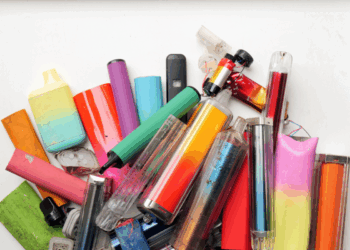
Today, manufacturers may be required to help fund systems that collect and process materials such as packaging, paints, electronics and batteries, often through fees paid into organizations that manage recycling programs, invest in infrastructure and support public education, according to the OECD. The goal is to encourage less waste, more recyclable materials and product designs that are easier to manage when they become obsolete.
“Holding manufacturers accountable for end-of-life management is critically important,” Matt Zieminski, vice president of partnerships for iFixit, told Resource Recycling. “If producers are responsible for end-of-life costs, they have an incentive to support durability, disassembly and product life extension.”
Founded in 2003 and based in San Luis Obispo, California, iFixit has played a significant role in advancing the right-to-repair movement and, by extension, shaping how EPR is understood in practice. Through its widely used online repair guides, product tear-downs and open-access documentation platform, the company has helped demystify consumer electronics and highlight how design choices affect repairability and end-of-life outcomes.
Its work has both educated consumers and applied pressure on manufacturers, leading to partnerships with companies including Google, Microsoft and previously Samsung to provide repair parts and guidance. By promoting repair as a practical alternative to disposal and building a global community around product longevity, iFixit has helped shift industry and policy conversations toward greater accountability, durability and material recovery.
“There has historically been a big disconnect between what manufacturers produce and what happens at the end of a product’s life,” Chris Bross, former vice president of business development at iFixit and now director of business development for Closing the Loop, told Resource Recycling.
The future
The US should be looking at ways to adopt emerging European rules tying repairability and product design more closely to environmental policy, Zieminski said. “Good EPR should be rewarding repair and reuse and durability at the same time,” he said.
In Europe, policymakers are moving more aggressively to combine product design, repairability and end-of-life management into a single regulatory framework. In recent years, European regulators have introduced Ecodesign rules and new energy labeling requirements for smartphones and tablets that are pushing manufacturers to improve durability, enable battery replacement and provide clearer repair information, according to the European Commission.
Those measures sit alongside broader EPR systems that are already well established across the European Union, particularly for packaging and electronics. The result is a more integrated approach that links how products are designed with how they are ultimately collected, reused or recycled, creating stronger incentives for manufacturers to consider the full life cycle from the outset.
In the US, EPR policy remains more fragmented but is gaining momentum at the state level. Packaging EPR laws have been adopted in seven states: Maine, Oregon, Colorado, California, Minnesota, Maryland and Washington, while California has also introduced new requirements aimed at improving battery accessibility and safety in consumer devices.
Some manufacturers and industry groups have pushed back on EPR programs, arguing that added fees and compliance obligations can increase costs and create operational complexity, particularly in states with differing rules. These efforts signal a gradual shift toward holding producers more accountable for downstream impacts, even as implementation varies widely across jurisdictions.
Looking ahead, EPR is likely to expand beyond its traditional focus on recycling to place greater emphasis on repair, reuse and product longevity, with policymakers and manufacturers gradually recognizing that the most effective way to manage waste is to delay or avoid creating it in the first place.