

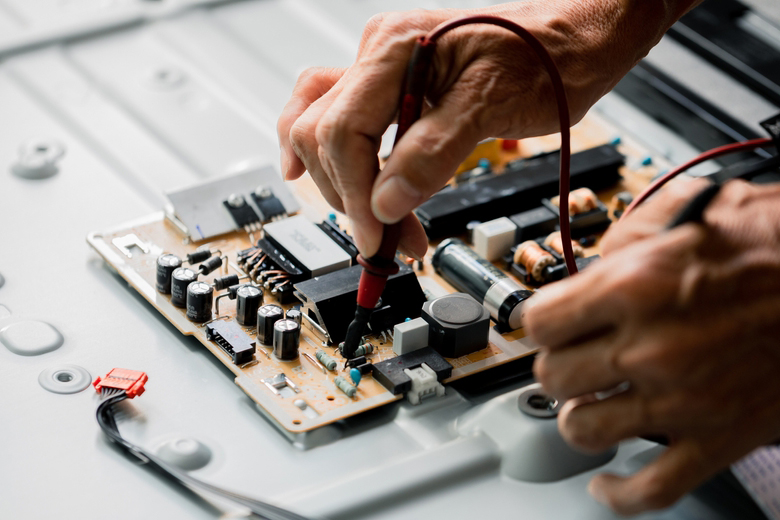
A new Colorado law expanding consumers’ right to repair electronic devices took effect this month, requiring manufacturers to provide access to parts, tools, software and repair documentation for many products sold or first used in the state.
The law, House Bill 24-1121, builds on Colorado’s earlier right-to-repair statutes covering agricultural equipment and powered wheelchairs by extending those requirements to digital electronic equipment manufactured and sold or first used in Colorado from July 1, 2021.
Covered products include cell phones, laptops, printers, household appliances, HVAC systems, servers, routers and other IT equipment, according to the Colorado Public Interest Research Group. The statute requires manufacturers to make available the parts, tools and documentation needed to diagnose, maintain and repair covered devices, either to owners or independent repair providers. Failure to comply is treated as a deceptive trade practice under Colorado law.
Rather than relying solely on manufacturer-authorized repair services, consumers may choose to repair products themselves or use independent repair businesses. Advocates say software-based restrictions have increasingly limited those options.
“It seems kind of shocking that we had to pass a law to do that,” Danny Katz, executive director of the Colorado Public Interest Research Group told ABC7 Denver. “Over the last 10 to 15 years, more and more of our stuff became smart.”
The law also restricts parts pairing, a software practice that links individual components to a device through unique identifiers. For equipment sold or first used in Colorado after Jan. 1, 2026, manufacturers may not use parts pairing to prevent installation of replacement parts, reduce functionality or performance, or display misleading alerts about unidentified components.
Parts pairing may still be used to record and display information related to repairs and for standalone biometric components used for authentication purposes, according to the bill summary.
Lawmakers said negotiations over compliance contributed to delays before final passage.
“They don’t want to comply, or they want to comply to a certain degree,” said Democratic state Rep. Brianna Titone, the bill’s sponsor.
Titone said the bill’s timeline was affected by manufacturer concerns. “That was one of the reasons why the bill was delayed,” she said, citing Apple’s need to adjust phone design to comply.
The statute includes exemptions for motor vehicles, aviation and marine equipment, medical devices other than powered wheelchairs, certain safety and security systems, some construction and energy equipment and video game consoles.
The law does not require manufacturers to provide source code or tools that would bypass privacy or anti-theft protections. Independent repair providers must disclose that they are not authorized by the manufacturer and must state whether replacement parts are new or used and sourced outside the manufacturer.
Consumer advocacy organizations said the law will reduce repair costs and waste.
“Consumer Reports strongly supports laws to protect a consumer’s right to repair their own products,” said Justin Brookman, director of tech policy at Consumer Reports.